


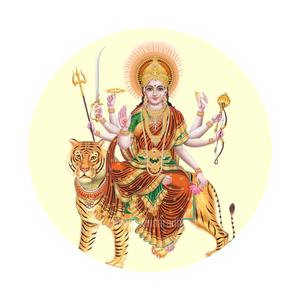
Located in the Birbhum district of West Bengal, Shri Vakreshwar Shaktipeeth (Bakreshwar) is one of the most revered and sacred pilgrimage centers of Sanatana Dharma. Situated along the banks of the sacred Bakreshwar River (also known as the Papahara River), this holy shrine stands as a harmonious confluence of the Shaiva and Shakta traditions.
Introduction
Vakreshwar Shaktipeeth is situated in the village of Bakreshwar under the Dubrajpur block of Birbhum district, West Bengal. Here, the Divine Mother Bhagavati is venerated in Her form as Mahishamardini, accompanied by Lord Shiva as the Bhairava named Vakranath. Blessed with sacred natural thermal springs and profound spiritual vibrations, this holy Kshetra has attracted seekers and devotees for centuries.
The story of the Shaktipeeth
According to sacred Puranic traditions, when Sati sacrificed Her mortal body in the sacrificial fire of Prajapati Daksha’s yajna, grief-stricken Lord Shiva wandered the universe carrying Her sacred form. To restore balance to creation, Lord Vishnu used His Sudarshana Chakra to divide Sati’s mortal remains into various parts. Wherever those sacred limbs and ornaments fell, those holy places became consecrated as Shaktipeeths.
Sati’s body part or ornament
According to the sacred tantric text Peethanirnaya (Tantrachudamani), it was the mind (Manas) of Mother Sati that fell at Vakreshwar. Regional tradition and oral lore also associate this sacred spot with the center between the eyebrows (Bhrumadhya or Ajna Chakra).
vakreśvare manaḥpāto vakranāthastu bhairavaḥ |
nadī pāpaharā tatra devī mahiṣamardinī ||
The name of the Devi
The presiding Goddess of this Shaktipeeth is worshiped as Mahishamardini. In this majestic manifestation, Devi vanquishes ignorance, negative tendencies, and ego, serving as the eternal protectress and refuge for humble seekers.
Bhairava
The Bhairava stationed here is revered as Vakranath (Vakreshwar). A prominent temple dedicated to Lord Shiva stands within the complex, where pilgrims offer sacred prayers and jalabhisheka to Mahadeva alongside their darshan of the Devi.
Religious significance
In Shakta philosophy, the mind and the eyebrow center represent the core of consciousness and inner focus. Hence, performing spiritual sadhana here is believed to still turbulent mental fluctuations. Furthermore, the waters of the sacred Papahara River and the adjoining holy kundas are regarded by devotees as a divine medium for spiritual purification.
Puja and darshan
At the temple, worship of Maa Mahishamardini is performed following harmonious tantric and Vedic rites. Devotees visit daily to present incense, lamps, and sacred offerings to the Devi, and perform ablutions and prayers before the holy Shiva Lingam.
Major festivals
The festival of Maha Shivaratri is observed here with immense devotion, drawing vast gatherings of pilgrims and hosting a grand traditional fair. Additionally, Sharadiya and Vasantiya Navratri, Kali Puja, and Magha Purnima are celebrated with special rituals, worship, and devotional observances.
History
The temple architecture of Vakreshwar exhibits the graceful influences of ancient Bengal and Odishan shikhara styles. Epigraphical records and historical accounts indicate that significant renovations to the temple were carried out in the eighteenth century (around 1761 CE). Local lore also reverently associates the sanctity of this site with the intense penance performed by Maharishi Ashtavakra.
How to reach
To reach Vakreshwar, the nearest railway stations are Dubrajpur (around 12 km away) and the district headquarters at Suri (approximately 20 km away). Regular buses, auto-rickshaws, and taxis connect both stations to the temple. The sacred shrine is also conveniently accessible by road from Bolpur (Santiniketan).
Darshan timings
The temple gates are generally open for darshan from 6:00 AM to 12:30 PM, and again from 3:30 PM to 8:30 PM. Operating hours are usually extended on major festival days to accommodate the inflow of pilgrims.
Distinctive traditions
The temple grounds are renowned for their natural hot water springs, including Agni Kunda, Surya Kunda, Bhairava Kunda, and Brahma Kunda. Devotees hold the sacred tradition of taking an ablution in these holy kundas before offering prayers to Maa Mahishamardini and Lord Vakranath to seek peace and spiritual renewal.
Spiritual message
Shri Vakreshwar Shaktipeeth inspires seekers to surrender restless worldly thoughts at the lotus feet of the Divine Mother and cultivate inner stillness. The legend of Maharishi Ashtavakra's austerity teaches that true closeness to the Divine arises not from outward appearances, but from deep inner sincerity, devotion, and unwavering faith.