

Located on the banks of the Panchaganga River in the holy city of Kolhapur, Maharashtra, Shri Karavira Shaktipeeth is revered among the most consecrated and spiritually vibrant pilgrimage destinations in Sanatana Dharma. According to sacred scriptures such as the Tantra Chudamani and the Peetha Nirnaya Tantra, the three eyes of Bhagavati Sati fell here. The supreme Goddess enshrined at this sacred Peetha is known as Mahishmardini or Karavira-Nivasini Mahalakshmi, and her guarding Bhairava is Krodhisha.
Introduction
The ancient Karavira region is known today as the city of Kolhapur in Maharashtra. In regional tradition, this revered pilgrimage center is lovingly called the Ambabai Temple. It is not only revered among the 51 Shaktipeeths, but also occupies the foremost place among the famous 'three and a half Shaktipeeths' of Maharashtra. In the Devi Gita, Bhagavati herself extols the sacredness of this shrine:
Kolapure mahasthanam yatra Lakshmh sada sthita.
The story of the Shaktipeeth
According to sacred tradition, during the grand sacrificial ceremony convened by Prajapati Daksha, when Lord Shiva was dishonored, Mata Sati offered her physical body to the yogic fire of the sacrificial altar. Overcome with deep grief, Lord Shiva lifted Sati's sacred body upon his shoulders and commenced the cosmic dance of destruction. To restore order and preserve the universe, Lord Vishnu divided Sati's mortal remains into fifty-one parts using his Sudarshana Chakra.
Wherever the holy limbs and divine ornaments of Mata Sati fell across the sacred geography of Bharatvarsha, those sacred spots became revered Shaktipeeths bestowing spiritual protection and benediction upon seekers.
Sati’s body part or ornament
According to authoritative Shakta treatises, particularly the Peetha Nirnaya Tantra and the Tantra Chudamani, the three eyes (Trinetra) of Mata Sati fell at Karavira. Because the divine eyes fell here, this sanctified Kshetra is regarded as a sovereign Siddhapeeth that bestows divine wisdom, inner insight, and spiritual liberation.
The name of the Devi
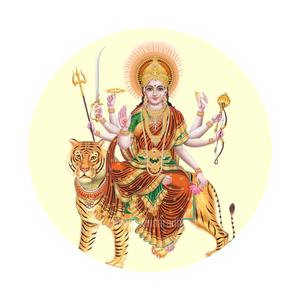
The presiding Goddess of Karavira Shaktipeeth is celebrated in the scriptures as Mahishmardini and in living tradition as Karavira-Nivasini Mahalakshmi or Ambabai. The Pradhanika Rahasya of the Devi Mahatmya (found in the Markandeya Purana) provides a comprehensive description of the consecrated murti of the Goddess:
Matulungam gadam khetam panapatram cha bibhrati.
Nagam lingam cha yonim cha bibhrati nripa murdhani.
Bhagavati is depicted with four arms, holding a matulunga (citron fruit), mace, shield, and drinking vessel. Upon her crown rests a Shiva Linga sheltered beneath the five-hooded divine serpent Sheshanaga, symbolizing the inseparable union of Shiva and Shakti.
Bhairava
As with every traditional Shaktipeeth, the sacred realm of Karavira is guarded by a specific form of Lord Shiva known as Bhairava. The Bhairava established here is worshipped as Krodhisha. The worship of Shakti remains complete with reverent remembrance of Bhairava, ensuring that devotees receive both divine protection and spiritual peace.
Religious significance
The Padma Purana and the Skanda Purana revere the Karavira region as an exalted center of spiritual release. Sacred verses highlight that the spiritual merit of Karavira is profoundly elevated, even compared alongside Kashi:
Varanasyadhikam kshetram karavirapuram mahat.
Bhuktimuktipradam nrinam varanasya yavadhikam.
Seekers performing worship here are blessed with worldly welfare as well as final spiritual release. Furthermore, a long-cherished tradition holds that the pilgrimage to Tirupati Balaji attains its supreme completion when the devotee visits Kolhapur to receive the blessings of Mata Mahalakshmi.
Puja and darshan
Daily worship at the temple is conducted following traditional Vedic and Agama rituals. The day begins in the early morning with Padya Puja and Kakad Aarti. This is followed by Panchamrita Abhishek, afternoon Mahanaivedya and Shankhatirtha, and conclusion in the night with Shej Aarti. Devotees offer heartfelt prayers through Kumkumarchana and the chanting of the sacred Sri Suktam.
Major festivals
The festivals of Ashwin and Chaitra Navratri are celebrated with devotion and grandeur. During Navratri, the sacred palanquin procession of the Goddess is taken out with elaborate traditional adornments. In addition, the annual Rathotsava (chariot festival), Deepavali, Tripurari Purnima, and every Thursday during the sacred month of Margashirsha are observed with special community worship.
History
The temple architecture stands as a magnificent testament to the Hemadpanthi and Chalukyan styles. Inscriptions indicate that the foundation of the shrine dates back to the reign of the Badami Chalukyas in the 7th century CE. During the 11th century, King Gandaraditya of the Shilahara dynasty expanded the temple complex, adding circumambulation pathways and subsidiary shrines. Subsequently, the Seuna (Yadava) rulers and later the Chhatrapati rulers of Maharashtra patronized and preserved the temple complex.
How to reach
By Rail: The Chhatrapati Shahu Maharaj Terminus (CSMT) at Kolhapur is well connected with regular train services to major cities including Mumbai, Pune, Bengaluru, and New Delhi.
By Road: Situated along National Highway 48 (Pune-Bengaluru highway), Kolhapur is accessible via extensive state and private bus networks from major cities across Maharashtra and Karnataka.
By Air: Kolhapur Airport (located at Ujalaiwadi) operates domestic flights connecting to select regional hubs. In addition, Pune International Airport is located approximately 240 kilometers away.
Darshan timings
The customary darshan and aarti timings of the temple are observed as follows:
04:30 AM – 05:00 AM: Temple opening and Padya Puja.
05:00 AM – 05:30 AM: Kakad Aarti.
08:30 AM – 09:30 AM: Abhishek and morning Aarti.
11:30 AM – 12:30 PM: Mahanaivedya and Shankhatirtha (Alankara Darshan).
07:30 PM – 08:15 PM: Dhup Aarti.
10:00 PM – 10:15 PM: Shej Aarti (the temple closes for rest at approximately 10:30 PM).
Distinctive traditions
The famed Kirnotsav (Sun Ray Festival) is an extraordinary marvel of ancient architectural planning and astronomical alignment. Twice a year (typically from 31 January to 2 February and 9 to 11 November), the rays of the setting sun pass through the main entrance of the temple and directly illuminate the feet, waist, and face of the sacred deity. According to the Karavira Mahatmya, Bhagavati vanquished the demon Kolhasura in this region, and upon his final request, the sacred place came to be called Kolhapur.
Spiritual message
Shri Karavira Shaktipeeth inspires every seeker to transcend ego, anger, and internal discord. The sacred presence of the Shiva Linga upon the crest of Bhagavati's crown serves as a continuous reminder that Shiva and Shakti are inseparable manifestations of the one supreme reality. Sincere and selfless devotion here purifies the heart and guides the soul toward inner illumination and everlasting peace.