


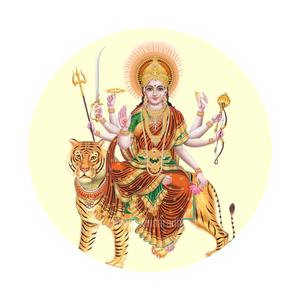
Located in the sacred city of Kanchipuram in South India, Shri Kanchi Shaktipeeth holds a revered place in Sanatana Dharma. Here, the Divine Mother, Shri Lalita Maha Tripura Sundari, blesses devotees as Devi Kamakshi, bestowing boundless grace, motherly affection, and peace.
Introduction
Enshrined in the historic city of Kanchipuram in Tamil Nadu, the Kamakshi Amman Temple is one of the most prominent Shakta shrines in South India. Since antiquity, Kanchipuram has been venerated as 'Mokshapuri', one of the seven sacred cities that grant liberation. The city has historically flourished as a cultural confluence of Shiva Kanchi, Vishnu Kanchi, and Jaina Kanchi. At the spiritual heart of this entire sacred region stands the divine abode of Devi Kamakshi, where the Shri Chakra consecrated by Jagadguru Adi Shankaracharya is worshipped daily.
The story of the Shaktipeeth
According to sacred lore, when Devi Sati relinquished her life in the yogic fire after witnessing the humiliation of her husband, Lord Shiva, at Daksha's sacrificial altar, Lord Shiva carried her sacred body and traversed the cosmos in grief. To restore cosmic harmony and preserve the universe, Lord Vishnu used his Sudarshana Chakra to divide Sati's form into holy fragments. The sacred places where parts of Devi Sati's body and ornaments descended became known as the holy Shaktipeethas.
Sati’s body part or ornament
According to traditional texts such as the Tantrachudamani and Pithanirnaya, the Kankala (skeletal form or backbone) of Devi Sati sanctified the holy region of Kanchi. In South Indian regional Shakta lore and local temple traditions, this sacred kshetra is also revered in connection with the Devi's Nabhi (navel) or the Oddiyana Peetha (girdle/waistband).
The name of the Devi
In classical Peetha scriptures, the presiding Shakti of this shrine is addressed as Devagarbha. In living worship and local temple tradition, the Divine Mother is lovingly adored as Kamakshi and Shri Lalita Maha Tripura Sundari, whose benevolent eyes shower an unbroken stream of compassion and grace upon all beings.
Bhairava
According to classical Tantric tradition, the protective Bhairava of Kanchi Shaktipeeth is Ruru. Within the temple complex, Lord Kala Bhairava is also enshrined as the Kshetrapala, guarding the sanctity of the sacred shrine.
Religious significance
Kanchi Peetham is celebrated as a foremost center of Shri Vidya Upasana. A unique architectural and spiritual aspect of Kanchipuram is that other ancient Shiva temples in the city, such as the historic Ekambareswarar Temple, do not possess a separate sanctum for the Devi. It is traditionally believed that the primal Shakti of all Kanchi is concentrated in Devi Kamakshi herself. Furthermore, the temple premises also encompass 'Tirukkalvanur' (Kalla Perumal), revered among the 108 Vaishnava Divya Desams, illustrating a harmonious synthesis of Shaiva, Shakta, and Vaishnava devotional traditions.
In the Soundarya Lahari, Jagadguru Adi Shankaracharya extols the supreme splendor of the Divine Mother:
Sudhasindhor madhye suravitapivati parivrte manidvipe nipopavanavati cintamanigrhe |
Sivakare mance paramasivaparyankanilayam bhajanti tvam dhanyah katicana cidanandalaharim ||
Puja and darshan
The sanctum sanctorum of the temple is known as the 'Gayatri Mandapam'. Here, Devi Kamakshi sits majestically in the Padmasana posture. The four-armed Goddess holds an Ikshu-dhanush (sugarcane bow), Pancha-bana (five floral arrows), Pasha (noose), and Ankusha (goad). In front of the primary deity rests the sacred Shri Chakra, upon which the principal Kumkumarchana and Abhishekam are performed.
Major festivals
The annual Brahmotsavam is celebrated with deep devotion and grand festivities during the Tamil month of Masi (February–March). Additionally, Sharad Navratri, Vasantotsavam, Chitra Pournami, every Pournami (full moon day), and Fridays witness special pujas and rituals drawing numerous pilgrims.
History
The history of Kanchipuram is intrinsically linked with the imperial patronage of the Pallava, Chola, and Vijayanagara dynasties. Successive rulers contributed substantially to the expansion of its grand gopurams, mandapams, and outer prakarams. Jagadguru Adi Shankaracharya consecrated the Shri Chakra before the deity, mollifying the fierce aspect and revealing Devi Kamakshi in her compassionate, benevolent form, establishing the shrine's enduring spiritual prominence as Kamakoti Peetha.
How to reach
Kanchipuram is situated approximately 75 kilometers southwest of Chennai, the capital of Tamil Nadu. Chennai International Airport serves as the nearest air hub. Kanchipuram railway station connects smoothly with Chennai, Tirupati, Vellore, and Bengaluru, while Tamil Nadu State Transport buses operate frequent services from all major towns and cities.
Darshan timings
The temple generally remains open for darshan from 5:30 AM to 12:15 PM and from 4:00 PM to 8:15 PM. Timings may vary on Fridays, Pournami days, and during major festivals. Devotees are encouraged to check the official portal of Shri Kamakshi Ambal Devasthanam for the most recent schedule.
Distinctive traditions
According to spiritual belief, the name 'Kamakshi' holds profound meaning: 'Ka' represents Goddess Saraswati (embodiment of wisdom) and 'Ma' represents Goddess Lakshmi (embodiment of auspiciousness and prosperity), who dwell in her eyes and serve her divine form. Devotees believe that sincere prayers offered in quiet contemplation before Devi Kamakshi bestow peace of mind, discernment, and spiritual clarity.
Spiritual message
The benevolent presence of Devi Kamakshi guides seekers toward mastery over worldly desires and the realization of the true self. The noose and goad in her hands symbolize the restraint of erratic thoughts and the cultivation of wisdom. Mother Kamakshi's loving darshan lifts the soul beyond transient illusions toward supreme divine bliss.