


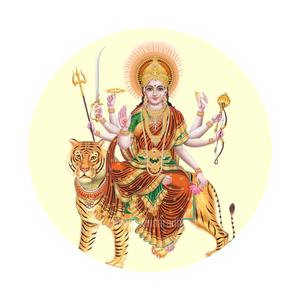
Shri Kamakhya Shaktipeeth, situated atop the sacred Nilachal Hill in Guwahati, Assam, is one of the most revered sanctuaries of Sanatana Dharma and the supreme center of Tantric sadhana. Highly venerated among the 51 Shaktipeethas and the four Adi Shaktipeethas, this sacred shrine is renowned as the Yoni Peetha or Mahamudra Peetha. Located on the banks of the mighty Brahmaputra River, this holy abode symbolizes the divine creative power of Bhagavati, where millions of seekers and devotees bow their heads in devotion every year.
Introduction
Kamakhya Shaktipeeth graces Nilachal Hill in the western part of Guwahati in Kamrup Metropolitan district, Assam. In Puranic geography, this sacred expanse is known as Kamarupa or Kamagiri. The entire hill is regarded as a preeminent seat of Shakti worship, housing individual shrines dedicated to the Dashamahavidyas (the ten Mahavidyas).
The story of the Shaktipeeth
According to sacred tradition, Mata Sati relinquished Her physical body in the yogic fire upon witnessing the humiliation of Her consort, Lord Shiva, at Prajapati Daksha’s yajna. When grief-stricken Lord Shiva performed the cosmic Tandava carrying Sati’s sacred body, Lord Vishnu utilized the Sudarshana Chakra to sever the body into parts to preserve cosmic order. Wherever Her holy limbs and ornaments fell, sacred Shaktipeethas were established. Mata Sati’s Yoni fell upon Nilachal Hill, establishing this sacred site as a premier Mahapeetha.
Sati’s body part or ornament
According to the Kalika Purana and Devi Bhagavata Purana, the Yoni Mandala (Mahamudra) of Bhagavati Sati fell at this spot. Therefore, this holy pilgrimage is revered as the rarest Yoni Peetha among all Shakti shrines.
The name of the Devi
The presiding Goddess here is worshipped as Mata Kamakhya. In classical scriptures, She is also venerated as Kameshvari, Mahamaya, and Shodashi (Tripura Sundari). The Devi is known to fulfill the pure and sincere prayers of Her devotees.
Bhairava
The guardian Bhairava of the Kamakhya Shaktipeeth is Lord Umananda. His revered temple stands on Bhasmachal (Peacock) Island amidst the Brahmaputra River. In addition, Kameshvara Mahadeva is also worshipped alongside the Devi on Nilachal Hill.
Religious significance
The Kalika Purana recounts that Kamadeva regained his divine form at this holy site through devoted worship of Mata Kamakhya after being consumed by the fire of Lord Shiva’s third eye. Hence, this region came to be known as Kamarupa. There is no carved idol in the sanctum sanctorum; instead, a natural rock fissure (yoni-shila) continuously nourished by an underground perennial natural spring is venerated as the manifestation of the Mother.
Puja and darshan
To enter the sanctum sanctorum (garbhagriha), devotees descend flight steps into a dimly lit natural rock cave. There, the sacred stone washed by natural spring water is adorned with red cloth, vermilion, and flowers. Devotees receive the charanamrita of the spring and experience deep spiritual peace through sparsha darshan. It is also customary to circumambulate Saubhagya Kunda and offer prayers to Shri Ganesha before entering the main inner shrine.
Major festivals
The most sacred celebration at Kamakhya is the Ambubachi Mela (Ambubachi Mahayoga), observed during the Hindu month of Ashadha. According to astronomical reckonings, when the Sun enters the Ardra Nakshatra, Mother Earth is believed to undergo Her annual cycle of regeneration. During this three-day period, the temple doors remain entirely closed. On the fourth morning, after sacred purification baths and rituals, the doors reopen, and pilgrims receive pieces of the sanctified red cloth (angodaka vastra) as prasad. Additionally, Sharadiya Durga Puja, the Deodhani dance festival, and the Hara-Gauri Vivaha (Pushyabisheka) in the month of Pausha are celebrated with deep devotion.
History
Nilachal Hill has supported continuous Shakti worship since antiquity. The lower stone plinth and intricate sculptures trace back to early and medieval Kamarupa dynasties. Following damage from invasions in the 16th century, King Naranarayan of Koch Bihar and his illustrious commander-brother Chilarai rebuilt the temple in Saka 1487 (1565 CE). The present beehive-shaped dome architecture (Nilachal style) dates to this monumental revival. Later, the Ahom kings provided royal patronage, constructing several subsidiary temples, pathways, and protective structures across the hill.
How to reach
By Air: Lokpriya Gopinath Bordoloi International Airport (GAU) in Guwahati is approximately 20 kilometers from the shrine, with taxis and airport buses readily available.
By Rail: Kamakhya Junction Railway Station lies merely 3 to 4 kilometers from the base of the hill, while Guwahati Central Railway Station is about 8 kilometers away.
By Road: A well-paved motorable road leads directly from Guwahati city to the top of Nilachal Hill, served by auto-rickshaws, taxis, and public buses. Devotees may also ascend on foot via the traditional stone stairway known as Narakasur Path. For official pilgrim arrangements, visit the Maa Kamakhya Devalaya website.
Darshan timings
The daily schedule of Maa Kamakhya Devalaya is generally observed as follows:
• Morning Snana and Nitya Puja: 05:30 AM to 08:00 AM
• Morning Public Darshan: 08:00 AM to 01:00 PM
• Midday Bhog Recess: 01:00 PM to 02:30 PM (Sanctum closed)
• Afternoon Public Darshan: 02:30 PM to 05:30 PM
• Evening Aarti and Temple Closure: 05:30 PM
(Note: Temple doors remain completely closed for three full days during the annual Ambubachi Mela.)
Distinctive traditions
Devotees believe that earnest worship at Kamakhya dispels inner anxieties and bestows spiritual fortitude. Keeping a piece of the sacred red cloth obtained after Ambubachi in one’s home is regarded as highly auspicious for protection and serenity. Nilachal Hill is considered a unique vortex of cosmic energy because all ten Mahavidyas reside together on the same sacred hill.
Spiritual message
Mata Kamakhya conveys a timeless message of reverence and gratitude toward nature, motherhood, and the primordial creative force. This holy pilgrimage reminds humanity that life’s primal energy is divine, and through pure devotion, restraint, and reverence, the soul attains lasting peace, spiritual elevation, and Moksha.