

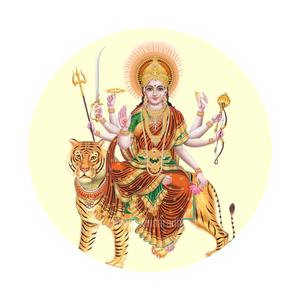
Nestled in the sacred Dharmakshetra Kurukshetra in Haryana, Shri Devikoop Bhadrakali Shaktipeeth is deeply revered among the fifty-one sacred Shaktipeethas of Sanatana Dharma. Located on Jhansa Road in the historic town of Thanesar, this holy sanctuary is known as Devikoop, Savitri Peetha, and Maa Bhadrakali Shaktipeeth.
Introduction
Shri Devikoop Bhadrakali Temple is recognized as the sole Shaktipeeth in Haryana. This sacred shrine forms an integral part of Kurukshetra’s historic forty-eight kos parikrama pilgrimage circuit. Within the temple grounds lies a sacred ancient well known as the Devikoop.
Directly above this holy well rests an exquisite white marble lotus flower, upon which the holy footprints of Bhagavati are enshrined. Devotees visit daily to seek the blessings of Maa Bhadrakali in Her serene and compassionate form.
The story of the Shaktipeeth
According to sacred tradition, Prajapati Daksha organized a grand yajna but deliberately neglected to invite Mahadeva Lord Shiva and his own daughter, Sati. Pained by the deep dishonor shown toward Her divine consort, Mata Sati gave up Her mortal body in the yogic fires of the sacrificial altar.
Grief-stricken by the passing of Sati, Lord Shiva bore Her sacred form upon His shoulders and performed the cosmic Tandava across the universe. To preserve cosmic order, Lord Vishnu released His Sudarshana Chakra, dividing Sati’s mortal remains into fifty-one holy portions. Wherever Her sacred parts and ornaments fell across the sacred land, divine Shaktipeethas were established.
Sati’s body part or ornament
According to scriptural traditions and Shakti lore, the right ankle (gulpha) of Mata Sati fell at this revered spot in Kurukshetra.
The sacred well that received Her divine ankle came to be known as Devikoop. Today, the sacred lotus carved in pure white marble in the inner sanctum bears the divine footprints that symbolize this sacred limb of the Goddess.
The name of the Devi
In the Tantra Chudamani and classical Shakti scriptures, the presiding Mahashakti of this holy Peetha is named Savitri.
In northern devotional practice and regional tradition, devotees lovingly venerate Bhagavati here as Maa Bhadrakali or Kalika.
Bhairava
In alignment with the sacred tradition of all Shaktipeethas, Lord Shiva resides here alongside Shakti in His guardian manifestation. The presiding Bhairava of this Peetha is known as Sthanu.
Sthanu Bhairava is traditionally linked to the ancient Sthaneshwar Mahadev temple in Kurukshetra. It is believed that a pilgrimage to this Shaktipeeth is made complete by honoring Sthanu Bhairava.
Religious significance
The spiritual importance of Shri Devikoop Shaktipeeth connects deeply with the Mahabharata era. Tradition recounts that before the great war of Dharma, Lord Krishna and the Pandavas offered heartfelt prayers to Maa Bhadrakali here, seeking Her divine grace for victory.
Regional lore also preserves the sacred belief that Lord Krishna and His elder brother Balarama had their traditional first tonsure (mundan sanskar) performed at this holy pilgrimage site. Because of this association, many families visit to perform sacred lifecycle rites for their children.
Puja and darshan
The temple observes regular morning and evening Panchopachara and Shodashopachara worship, concluded with soulful Aarti ceremonies. Pilgrims enter the sanctum to offer humble prayers before the holy footprints of the Devi.
Devotees customarily offer coconuts, chunri, fresh fruits, and traditional sweets to invoke the benevolence of Bhagavati. The temple maintains a quiet, contemplative atmosphere well-suited for japa, meditation, and devotional remembrance.
Major festivals
Both Chaitra and Sharadiya Navratri are celebrated with profound joy and devotion at the temple. During these nine sacred nights, thousands of devotees travel from across the region to have darshan of the Mother.
Saturdays witness a steady flow of pilgrims throughout the year. In addition, special pujas and devotional gatherings take place on Shri Krishna Janmashtami and Maha Shivaratri.
History
The heritage of Kurukshetra and Thanesar traces back uninterrupted to Vedic antiquity. Mentions of Devikoop appear across several Puranic texts and medieval accounts as a premier holy spot in Dharmakshetra.
The temple structure has been lovingly preserved and expanded under the stewardship of the Shri Devikoop Bhadrakali Temple Trust along with the devotional community, reflecting timeless Sanatana temple architecture.
How to reach
By Rail: Kurukshetra Junction Railway Station is situated on the main Delhi-Amritsar line. The temple is located approximately 4 kilometers from the station along Jhansa Road. Auto-rickshaws and e-rickshaws are readily accessible.
By Road: Kurukshetra is easily accessible via National Highway 44. The temple is about 8 kilometers from the Pipli bus stand. The driving distance is around 160 kilometers from Delhi and roughly 85 kilometers from Chandigarh.
By Air: The nearest domestic airport is at Chandigarh (approx. 85 km), while the nearest major international airport is Indira Gandhi International Airport in New Delhi (approx. 170 km).
Darshan timings
Temple timings are organized seasonally by the managing trust to accommodate devotees comfortably.
In the summer months, the temple remains open from 5:30 AM to 8:00 PM. During winter, darshan timings are from 6:00 AM to 7:30 PM. On Saturdays and during the festive days of Navratri, darshan often remains open until 8:30 PM.
Distinctive traditions
A distinctive feature of this Shaktipeeth is the devotional offering of miniature horses upon the fulfillment of heartfelt prayers. Tradition recounts that upon achieving victory in the Mahabharata war, the Pandavas presented their finest horses in gratitude to the Devi.
Continuing this lineage of faith, devotees today present symbolic horses crafted from terracotta, clay, brass, or silver when their prayers are answered. The temple also remains a favored holy site for child mundan rites.
Spiritual message
The sacred abode of Maa Bhadrakali teaches the eternal path of righteousness, truth, and unconditional surrender. The wisdom of the Mahabharata reminds us that divine grace and Shakti naturally accompany righteous conduct grounded in Dharma.
The offering of horses symbolizes surrendering the restless mind, wandering senses, and pride at the feet of the Divine Mother.