

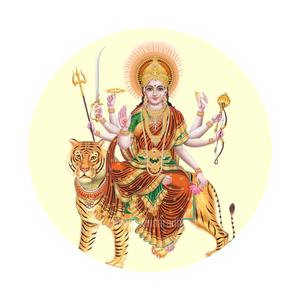
In the sacred Shakta tradition of Sanatana Dharma, the fifty-one Shaktipeeths hold an auspicious and revered place. Among them, Bhairavparvat Shaktipeeth is a living sanctuary commemorating the fall of Bhagavati Sati’s sacred limb and celebrating the eternal union of Shiva and Shakti.
Introduction
Bhairavparvat Shaktipeeth is a sacred pilgrimage described in traditional Tantric texts. According to the classical text Tantrachudamani, the upper lip of Bhagavati Sati fell here. At this sanctum, the Divine Mother is venerated as Shakti Avanti, accompanied by Lord Shiva as Bhairava Lambakarna. Geographically, tradition largely associates this holy site with the Bhairavgarh area along the banks of the sacred Shipra River in the ancient city of Avantika, known today as Ujjain in Madhya Pradesh, while another tradition references the Bhairav hill on Mount Girnar in Gujarat.
The story of the Shaktipeeth
According to Puranic traditions, Mata Sati sacrificed Her mortal form in the yogic fire after being unable to bear the insult inflicted upon Lord Shiva at the grand sacrificial rite organised by Daksha Prajapati. Overcome with deep grief, Lord Shiva carried Her sacred body across the cosmos in a state of intense detachment and sorrow. To restore cosmic harmony and balance, Lord Vishnu released His Sudarshana Chakra, dividing Sati’s mortal form into fifty-one parts. Wherever Her sacred limbs and ornaments descended upon the earth, those sacred places arose as vibrant Shaktipeeths.
Sati’s body part or ornament
According to the Pithanirnaya verse of Tantrachudamani, Mata Sati’s Urdhvoshta, or upper lip, fell upon Bhairavparvat. The sanctifying descent of this sacred portion associated with speech and divine expression imbued this holy ground with spiritual energy.
The name of the Devi
At this Shaktipeeth, Bhagavati is worshipped under the name of Avanti. This sacred appellation bears witness to the deep and inseparable scriptural connection between this sanctum and the ancient city of Avantika.
Bhairava
As at all Shaktipeeths, Lord Shiva resides here as the eternal protector of Shakti. The presiding Bhairava of the Bhairavparvat Peetha is Lambakarna, who is reverently venerated alongside Bhagavati.
Religious significance
Bhairavparvat Shaktipeeth is a sacred centre of penance and divine grace for spiritual seekers. Because it enshrines the upper lip of the Mother, it is revered as a holy pilgrimage inspiring truthful expression, sacred speech, and inner purification. The holy waters of the Shipra River flowing through Ujjain further enhance the divine sanctity of this region.
Puja and darshan
Devotees offer regular prayers with deep faith at the Maa Gadhkalika Temple and the adjacent Bhairav hillock situated in the Bhairavgarh area of Ujjain. Offerings of kumkum, sacred flowers, coconuts, and traditional chunri are presented to the Devi. Pilgrims participate in the morning and evening Aarti, contemplating upon Bhagavati Avanti and Lambakarna Bhairava.
Major festivals
Both Chaitra Navratri and Sharadiya Navratri are celebrated here with immense devotion and joy. In addition, special Puja and Abhisheka rituals are conducted on the auspicious occasions of Mahashivratri and Bhairava Ashtami.
History
Historically and scripturally, Avantika has been a venerable confluence of Shakta, Shaiva, and Vaishnava worship. Since antiquity, the Bhairavgarh area and the sacred Kalika mound along the northern course of the Shipra have been recognized as potent spiritual centres. While the temple structures have undergone renovations across different eras, reverence for this sacred landscape as a Shaktipeeth has endured for centuries.
How to reach
Ujjain is well-connected by railway networks to major cities across India. The Bhairavgarh area is located approximately 5 kilometres from Ujjain Junction railway station. For pilgrims travelling by air, the nearest airport is Devi Ahilyabai Holkar Airport in Indore, situated about 55 kilometres away. For administrative and travel assistance, devotees may visit the District Administration Ujjain Tourism Portal.
Darshan timings
On regular days, darshan at the shrines in the Gadhkalika and Bhairavgarh area is typically open from 6:00 AM to 9:30 PM. The morning Aarti takes place at approximately 6:30 AM, and the evening Aarti is performed around 7:30 PM. Timings may be extended during major festivals and Navratri celebrations.
Distinctive traditions
According to local traditions, Ujjain is home to two distinct Shaktipeeth traditions: the revered Maa Harsiddhi Temple on the banks of Rudrasagar (where Mata Sati’s elbow fell) and the Bhairavparvat Peetha in the Bhairavgarh area (where Her upper lip fell). Because traditional texts explicitly reference the name Avanti, many scholars and devotees identify Bhairavparvat with this sacred precinct of Ujjain.
Spiritual message
Bhairavparvat Shaktipeeth imparts the sacred teaching that truth and restrained speech are elevated expressions of Dharma. Devotion to Bhagavati Avanti and Lambakarna Bhairava brings tranquillity to the mind and nurtures the virtues of truthfulness, self-control, and genuine Bhakti.