


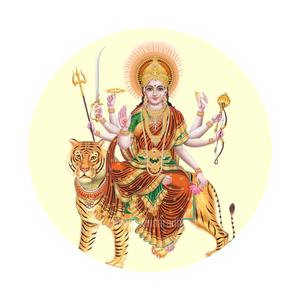
Nestled amidst the serene rural landscapes of Labhpur in the Birbhum district of West Bengal, the sacred abode of Maa Phullara is venerated in the Shakta tradition as the Attahas Shaktipeeth. Situated on the banks of the Ishani river and surrounded by tranquil groves, this holy pilgrimage site remains a revered sanctuary of profound sadhana and quiet devotion for seekers of the Divine Mother.
Introduction
Attahas Shaktipeeth holds a venerated place among the sacred Shaktipeeths and is locally known as Maa Phullara Tala or the Fullara Temple. Situated in the sanctified land of Birbhum, this pilgrimage destination is celebrated for its natural peacefulness and ancient spiritual significance. Devotees visiting this sacred shrine experience serene contemplation, invoking the benevolence of Adishakti.
The story of the Shaktipeeth
According to sacred lore, when Sati gave up Her life in yogic fire after witnessing the dishonour of Her consort Lord Shiva at Daksha's sacrificial rite, Lord Shiva wandered across creation in deep grief carrying Her sacred body. To avert universal dissolution and restore cosmic balance, Lord Vishnu released the Sudarshana Chakra, dividing Her mortal frame into holy fragments. The sacred spots where Devi Sati's divine limbs and ornaments fell became consecrated as Shaktipeeths.
Sati’s body part or ornament
According to the Peethanirnaya Tantra and traditional Shakta texts, the lower lip (adharoshtha) of Devi Sati sanctified the ground at Attahas. This divine part is reverently held to bestow blessings of purified speech, adherence to truth, and the spiritual virtue of vak-siddhi.
The name of the Devi
The presiding Goddess of this sacred peetha is venerated as Maa Phullara. Phullara signifies one who is radiant, joyfully blossoming, and replete with divine grace akin to a full-blown lotus, dissolving the inner anguish and sorrows of devotees who seek Her shelter.
Bhairava
In accordance with the sacred tradition of the Shaktipeeths, the guardian Bhairava is eternally present alongside the Devi. The Bhairava of Attahas is worshipped as Lord Vishvesha or Vishweshwar. The Peethanirnaya records this divine association:
aṭṭahāse coṣṭhapāto devī sā phullarā smṛtā .
viśveśo bhairavastatra sarvābhīṣṭapradāyakaḥ ..
Religious significance
Attahas Shaktipeeth is deeply revered for cultivating inner purity and refined speech. Shakta practitioners believe that offering heartfelt prayers at this sacred seat where the lower lip of Devi fell purifies one's voice, clears mental afflictions, and liberates the seeker from fear and delusion.
Puja and darshan
In the sanctum sanctorum of the temple, there is no conventional anthropomorphic metal or stone idol. Instead, a large natural sacred rock measuring nearly fifteen to eighteen feet is smeared with vermilion and worshipped as the sacred lower lip of the Mother. Adjacent to the sanctum stands a separate shrine dedicated to Lord Vishvesha, where pilgrims offer prayers to both Shiva and Shakti.
Major festivals
The annual ten-day Phullara Mela, celebrated during Magha Purnima, attracts devotees from across the region. Additionally, Sharadiya and Vasanti Navratri, Durga Puja, and Maha Shivratri are observed here with special devotional rituals, sacred offerings, and continuous kirtan.
History
Mentions of Attahas appear across ancient tantric texts and medieval Bengali Mangalkavya literature. For centuries, this sacred peetha has remained an essential destination on the Shakta pilgrimage route of Birbhum. The present shrine and surrounding compound have been preserved and renovated across generations through the loving service of local devotees.
How to reach
Attahas Shaktipeeth is situated near the town of Labhpur in the Birbhum district of West Bengal. Labhpur has a local railway station, while major railway hubs like Ahmadpur Junction and Bolpur-Shantiniketan are approximately thirty kilometres away. The temple can also be comfortably accessed by road from Kolkata and nearby towns.
Darshan timings
Under regular daily schedules, the temple doors open around 6:00 AM and close briefly in the afternoon following the midday bhog offering. The sanctum reopens in the afternoon for evening darshan and concludes after the shayan aarti around 8:30 PM. Timings may be extended during auspicious festivals.
Distinctive traditions
Near the temple premises lies an ancient holy pond. Regional traditions and local folk retellings associated with the Ramayana narrate that during the Treta Yuga, prior to the battle of Lanka, Lord Rama performed the Akal Bodhan worship of Devi Durga, and it was from this sacred pond that Hanuman gathered the hundred and eight blue lotuses for the puja.
Spiritual message
In Sanskrit, Attahas signifies the profound and resounding divine laughter of the Goddess that shatters ignorance, illusion, and darkness. Maa Phullara inspires seekers to preserve inner joy amidst life's shifting trials and to cultivate unconditional surrender to the divine presence of Shiva and Shakti.