

Located in the Purba Bardhaman district of West Bengal, Kshirgram is a profoundly revered and spiritually awakened pilgrimage center. Celebrated among the fifty-one Shaktipeethas as Shri Yugadhya Shaktipeeth (locally revered as Ma Yogadhya), this sacred sanctuary brings together Shakti worship, heartfelt folk devotion, and ancient epic traditions.
Introduction
Shri Yugadhya Shaktipeeth is situated in Kshirgram village under the Mangalkote block of Purba Bardhaman district, West Bengal. It lies approximately 21 km from Katwa and about 40 km from Bardhaman city. Nestled in a peaceful rural setting, this holy site is renowned for its tranquil spiritual energy, drawing devotees of Bhagavati from far and wide throughout the year.
The story of the Shaktipeeth
According to sacred lore, when Devi Sati relinquished Her mortal body in the sacrificial fire at the yajna of Her father, Prajapati Daksha, Lord Shiva wandered across the universe in deep sorrow carrying Her sacred remains. To restore harmony and balance to creation, Lord Vishnu used His Sudarshana Chakra to divide Sati’s body into fifty-one sacred parts. Each holy spot where Her body parts, garments, or ornaments landed became sanctified as an eternal Shaktipeetha.
Sati’s body part or ornament
According to traditional belief and canonical Tantric texts, the great toe of Devi Sati’s right foot (Dakshina Padangushtha) fell at Kshirgram. For this reason, the shrine is regarded as exceptionally awakened and auspicious for Devi worship.
The name of the Devi
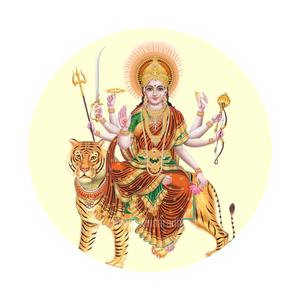
The presiding Goddess of this Shaktipeetha is worshiped as Yugadhya, also revered as Bhutadhatri Mahamaya. In local devotion, She is affectionately addressed as Ma Yogadhya. She is traditionally venerated in the form of ten-armed Bhadrakali riding a lion, dispelling fear and bestowing peace and protection upon Her devotees.
Bhairava
In the Shaktipeetha tradition, each shrine of the Goddess is guarded by a manifestation of Lord Shiva as Bhairava. At Yugadhya Shaktipeeth, the presiding Bhairava is Lord Shiva as Kshirakanthaka, known locally as Lord Kshireshwar. It is considered customary and spiritually essential to seek the blessings of the Bhairava alongside Devi darshan.
Religious significance
The Peethanirnaya chapter of the Tantrachudamani accords distinct reverence to this pilgrimage center, declaring that contemplation of this Peetha dispels obstacles and inner fears. Classical scriptures such as the Kubjika Tantra, Brihannila Tantra, Gandharva Tantra, and the famed poetic work Annadamangal by Bharat Chandra Ray also celebrate its spiritual glory.
Puja and darshan
Kshirgram features two primary sacred sites: the historic brick temple known locally as Ma-er Bari within the village, and the modern temple situated on the banks of the sacred lake, Kshir Dighi. Regular daily Puja and Aarti take place at the lakeside temple, where a representative murti of the Goddess is consecrated for devotees. Nearby, pilgrims also offer water and bael leaves at the Lord Kshireshwar Bhairava temple.
Major festivals
The most prominent celebration here is the Yugadhya Mela, held during Vaishakha Sankranti (the final day of the first month of the traditional Bengali calendar). In addition, Sharadiya Navratri, Chaitra Durga Puja, and Maha Shivratri are celebrated with deep devotion and sacred observances.
History
This sacred tirtha holds deep antiquity. During the eighteenth century, Maharaja Kirti Chand Rai of the Bardhaman royal dynasty undertook the reconstruction and renovation of the temple complex. In modern times, local devotees and spiritual committees have contributed to the building and maintenance of the shrine along the banks of Kshir Dighi.
How to reach
The pilgrimage center is well connected by road from both Bardhaman and Katwa. The nearest local railway station is Kaichar Halt (approximately 4 km away), from where local e-rickshaws (totos) are easily available. Major railway junctions include Bardhaman (around 40 km) and Katwa (around 21 km), both offering regular buses and taxis to Kshirgram.
Darshan timings
At the lakeside temple, general darshan is usually open from 6:00 AM to 12:30 PM, and from 4:00 PM to 8:30 PM. The sanctum remains closed in the afternoon during the sacred Bhog and Aarti. Special extended darshan arrangements are organized during the annual festival of Vaishakha Sankranti.
Distinctive traditions
The most unique tradition at Kshirgram centers on the holy lake, Kshir Dighi. The original ancient stone murti of the Goddess is kept submerged in the sacred waters of the lake throughout the year. Only once annually, on the auspicious occasion of Vaishakha Sankranti, the sacred murti is gently brought out for special worship and darshan, after which it is reverently returned to the waters. Regional Bengali lore associated with the Krittivasi Ramayana also narrates that Shri Hanuman brought the murti of Bhadrakali worshiped by Ahiravana from Patala loka to this sacred land.
Spiritual message
Shri Yugadhya Shaktipeeth brings the timeless message that the Divine Mother’s grace is ever-present, protective, and serene. Just as the sacred murti rests peacefully within the depths of the holy waters, a devotee is reminded to nurture quiet devotion within the depths of the heart, remaining steadfast and composed amidst life’s changing tides.