


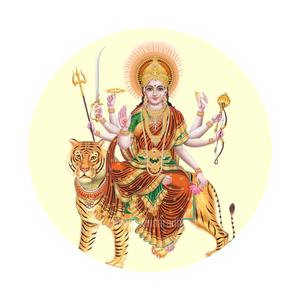
Tirtharaj Prayag, situated at the sacred confluence of the Ganga, Yamuna and the invisible Saraswati, is one of the most revered pilgrimage centres of Sanatana Dharma. Along with the sacred Triveni Sangam, Magh Mela and the great Kumbh tradition, Prayag is also worshipped as an ancient Shaktipeeth associated with Bhagavati Sati. Puranic and Shakta traditions regard Prayag as an important centre of divine Shakti, pilgrimage and spiritual sadhana.
Introduction
Prayag Shaktipeeth is located in Prayagraj, formerly known as Allahabad, in Uttar Pradesh. Here, the ancient traditions of sacred bathing and Shakti worship come together in a unique spiritual setting.
There are different traditions regarding the exact physical location of the Shaktipeeth within Prayagraj. The Maa Lalita Devi Temple at Meerapur, Maa Alop Shankari Temple at Alopibagh and Maa Kalyani Devi Temple are all associated with the sacred Shakti tradition of Prayag. Among them, the Lalita Devi Temple at Meerapur is especially renowned as the Shaktipeeth of Maa Lalita.
The Story of the Shaktipeeth
According to sacred tradition, when Devi Sati relinquished Her mortal body during Daksha Yajna after being deeply distressed by the insult directed at Lord Shiva, Mahadeva became overwhelmed with grief and carried Her sacred form across the worlds.
To restore cosmic balance, Lord Vishnu used His Sudarshana Chakra to divide the mortal body of Devi Sati. The sacred places where Her limbs or ornaments fell later came to be revered as Shaktipeeths.
Sati's Body Part or Ornament
According to the traditional Shaktipeeth accounts, the fingers of Devi Sati's hand, known as Hastanguli, are believed to have fallen at Prayag. For this reason, Prayag is revered not only as Tirtharaj but also as an important centre of Shakti worship.
Some local traditions further connect the sacred presence of Sati's fingers with different holy sites within Prayagraj, particularly Lalita Devi, Kalyani Devi and Alopi. This is one reason why more than one temple in the city is associated with the ancient Prayag Shaktipeeth tradition.
The Name of the Devi
The presiding Shakti of Prayag is traditionally worshipped as Bhagavati Lalita. Puranic traditions also preserve the name Lalita in association with Prayag.
Varanasyam Vishalakshi Naimishe Lingadharini.
Prayage Lalita Devi Kamuka Gandhamadane.
This traditional verse reflects the ancient association of Bhagavati Lalita with Prayag. In local worship, the same sacred feminine presence is also revered through forms such as Maa Kalyani and Maa Alop Shankari.
Different devotional and Stotra traditions preserve additional names for the Shakti of Prayag. These names are best understood within their respective textual and regional traditions rather than treated as a single uniform identification.
Bhairava
In the traditional Shaktipeeth system, the Shakti of Prayag is identified as Bhagavati Lalita, while Her guardian Bhairava is worshipped as Lord Bhava.
In Shakta philosophy, every Shaktipeeth is traditionally understood in relation to a Bhairava form of Shiva, symbolising the inseparable unity of Shiva and Shakti and the protective presence of the divine masculine principle.
Different Traditions Regarding the Location of Prayag Shaktipeeth
There has long been more than one tradition regarding the precise location of Prayag Shaktipeeth within the city.
One prominent tradition identifies the Maa Lalita Devi Temple at Meerapur with the Prayag Shaktipeeth. The temple is widely revered as an important Siddha Peetha dedicated to Maa Lalita.
Another tradition associates the Shaktipeeth with the Maa Alop Shankari Temple at Alopibagh. This shrine is unique because, instead of a conventional anthropomorphic Murti of the Goddess, devotees worship a sacred cradle or Jhoola as the symbol of Her divine presence.
The Maa Kalyani Devi Temple is also closely connected with the ancient Shakti tradition of Prayag. Traditional Prayag Mahatmya narratives preserve a close association between Lalita and Kalyani.
For this reason, it is more balanced to understand Prayag Shaktipeeth as part of the wider sacred Shakti geography of Prayagraj rather than restricting the tradition exclusively to one modern temple.
Religious Significance
Prayag has been revered since ancient times as Tirtharaj, the king of pilgrimage places. The confluence of the Ganga, Yamuna and invisible Saraswati makes the region especially sacred for Snana, Japa, Daan, Tapasya, Shraddha and spiritual discipline.
From the perspective of Shakti worship, Prayag also holds exceptional importance. Devotees traditionally take a holy dip at Triveni Sangam and then visit the sacred Devi temples, seeking spiritual purification and the grace of Bhagavati.
The region also represents a remarkable confluence of Shaiva, Shakta and Vaishnava traditions, making Prayag one of the most spiritually diverse pilgrimage centres of Bharat.
Puja and Darshan
The major temples associated with the Prayag Shaktipeeth tradition follow distinct forms of worship.
At the Maa Lalita Devi Temple in Meerapur, Bhagavati is worshipped in a traditional manifested form, and the temple preserves a strong Shakta devotional tradition.
At the Maa Alop Shankari Temple in Alopibagh, no conventional stone Murti of the Goddess is worshipped. Instead, a sacred cradle or Jhoola is venerated as the symbol of Bhagavati's formless presence.
At the Maa Kalyani Devi Temple, devotees worship the sacred Vigraha of Bhagavati according to established temple rituals. Local devotees hold all three shrines in deep reverence as important centres of the sacred Shakti tradition of Prayag.
Akshayavat and the Shakti Tradition of Prayag
Akshayavat holds a highly significant place in the sacred geography of Prayag. This ancient banyan tree is associated with the Patalpuri Temple area within the Prayagraj Fort and is traditionally regarded as a symbol of immortality, spiritual continuity and Moksha.
Older pilgrimage traditions also associate the sacred presence of Maa Lalita with the wider region around Akshayavat and the Yamuna. For this reason, Lalita Devi, Akshayavat, Patalpuri and nearby Shiva shrines are often understood as interconnected parts of the broader sacred landscape of Prayag.
Laliteshwar Mahadev
The local pilgrimage tradition of Prayag also accords importance to Laliteshwar Mahadev, who is associated with Maa Lalita.
The worship of Lalita Devi together with Mahadev reflects a fundamental principle of Shakta philosophy—that Shiva and Shakti are inseparable and together represent the complete reality of consciousness and divine energy.
Major Festivals
Chaitra Navratri and Sharadiya Navratri are celebrated with great devotion at the major Devi temples of Prayagraj. During Navratri, especially large numbers of devotees visit Maa Lalita Devi and Maa Alop Shankari for darshan and Puja.
Prayagraj is also renowned for the annual Magh Mela, held on the banks of the Triveni Sangam during the sacred month of Magh. During this period, many devotees reside in the Sangam region while observing Snana, Japa, Daan and spiritual discipline. This sacred practice is known as Kalpavas.
At specific sacred intervals, Prayagraj also hosts the Kumbh, one of the greatest pilgrimage gatherings in Sanatana Dharma. Pilgrims who come for the holy Sangam bath traditionally also visit the ancient temples and sacred sites of the city.
History
The sacred history of Prayag is extremely ancient. Numerous Puranas and Tirtha Mahatmya traditions describe the glory of Prayag, Triveni Sangam, Akshayavat and the many sacred temples associated with the region.
Puranic tradition identifies the Devi of Prayag as Lalita. Over the centuries, as the city expanded and its sacred geography evolved, different temple traditions developed around the worship of Bhagavati.
This historical development helps explain why Maa Lalita Devi, Maa Kalyani Devi and Maa Alop Shankari are all associated today with the wider Shakti tradition of Prayag.
Magh Mela and Kalpavas
The annual Magh Mela is one of the most important living religious traditions of Prayagraj. During the sacred period of Magh, pilgrims reside near the Sangam and observe regular bathing, Japa, Puja, Daan and spiritual discipline.
This period of temporary sacred residence is known as Kalpavas. Kalpavas is not merely a ritual stay but a disciplined spiritual practice centred on restraint, purification, devotion and self-reflection.
Visiting the ancient Devi temples of Prayag during this period is also regarded by many devotees as an important part of the pilgrimage experience.
Other Major Sacred Sites in Prayag
Prayagraj is revered not only for its Shaktipeeth tradition but also for many ancient temples and sacred sites.
Near the Triveni Sangam stands the famous Bade Hanuman Ji Temple, known for its distinctive reclining form of Lord Hanuman.
Other important sacred sites include Patalpuri Temple, Akshayavat, Mankameshwar Mahadev, Nagvasuki Temple, Bharadwaj Ashram and several other ancient pilgrimage locations that together form the spiritual landscape of Prayag.
How to Reach
By Rail: Prayagraj Junction is one of the principal railway stations of North India. Local taxis, auto-rickshaws and e-rickshaws are available from the station for Lalita Devi, Alop Shankari and Kalyani Devi temples.
By Air: The nearest airport is Prayagraj Airport, from where the principal pilgrimage sites of the city can be reached by road.
By Road: Prayagraj is well connected by national and state highways with major cities of Uttar Pradesh and other parts of Bharat.
Darshan Timings
The temples associated with the Prayag Shaktipeeth tradition follow different daily schedules. Darshan timings may also change during Navratri, Magh Mela, Kumbh and other major festivals. Devotees are therefore advised to confirm the current timings of the particular temple before planning their visit.
Distinctive Traditions and Beliefs
A well-known belief associated with Maa Alop Shankari states that the sacred presence of Bhagavati became Alop, or unmanifest, at this place. For this reason, a sacred cradle or Jhoola is worshipped instead of a conventional Murti, representing the formless presence of the Divine Mother.
Maa Lalita Devi holds special importance as the principal Shakti associated with Prayag. Devotees believe that sincere worship of Bhagavati brings inner peace, spiritual strength and the fulfilment of righteous desires.
Akshayavat is also deeply connected with the Moksha tradition of Prayag. A pilgrimage combining Sangam Snana, the darshan of Akshayavat and worship of Bhagavati is regarded as spiritually significant by many devotees.
Spiritual Message
Prayag Shaktipeeth conveys the profound unity of Shakti and Tirtha. Just as the waters of the Ganga, Yamuna and invisible Saraswati unite at Triveni Sangam, the worship of Bhagavati brings together Jnana, Bhakti and Karma within the seeker.
The worship of Maa Lalita inspires grace, balance and purity of consciousness. Tirtharaj Prayag reminds the pilgrim that a true pilgrimage is not only an outward journey to a sacred place but also an inward journey in which ego, impurity and attachment are gradually surrendered before the Divine.