


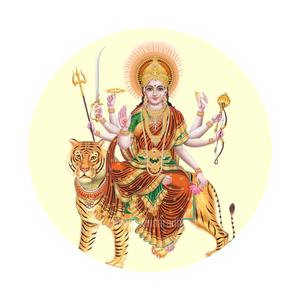
Shri Janasthan Shaktipeeth is regarded as one of the ancient and revered Shaktipeeths of the Sanatana tradition. Associated with the sacred Godavari region of Nashik and the Ramayana landscape of Panchavati, this holy kshetra brings together Shakta worship, Rama Bhakti and the wider pilgrimage tradition of Nashik. According to the Shaktipeeth tradition, the chin or Chibuka of Mata Sati is believed to have fallen here, while the presiding Devi is remembered as Maa Bhramari and the associated Bhairava as Vikritaksha.
Introduction
Janasthan is traditionally associated with the ancient Nashik-Panchavati region of Maharashtra. In the Ramayana tradition, this wider area forms part of the sacred forest landscape where Lord Rama, Mata Sita and Lakshmana spent a portion of their exile.
There are differing traditions regarding the precise modern identification of Janasthan Shaktipeeth. The ancient Bhadrakali Temple in Nashik is associated with the Peetha in one important regional tradition, while other traditions identify Saptashrungi Devi at Vani in Nashik district with Janasthan-Bhramari Shaktipeeth.
For this reason, Janasthan is best understood as part of the wider sacred Shakti geography of the Nashik region rather than being restricted exclusively to one modern temple.
The Story of the Shaktipeeth
According to sacred tradition, Mata Sati relinquished Her mortal body during the Yajna of Prajapati Daksha after being deeply distressed by the dishonour shown to Lord Shiva.
Overwhelmed with grief, Lord Shiva carried Her sacred form across the universe. To restore cosmic balance, Lord Vishnu used His Sudarshana Chakra to divide the mortal body of Mata Sati. The sacred places where Her limbs or ornaments fell later came to be revered as Shaktipeeths.
Sati's Body Part or Ornament
According to the Peethanirnaya tradition, the Chibuka, or chin, of Mata Sati is believed to have fallen at Janasthan.
Chibuke Bhramari Devi Vikritaksho Janasthale.
Some later traditions preserve variant identifications, but the association of Janasthan with the chin of Mata Sati remains one of the most widely cited descriptions.
The Name of the Devi
The presiding Shakti of Janasthan is remembered as Maa Bhramari. The name Bhramari is associated with the Divine Mother's bee-form, in which Bhagavati manifests through countless Bhramaras to destroy powerful Adharmic forces.
In the local religious tradition of Nashik, this sacred Shakti is also associated with Maa Bhadrakali. In another regional tradition, Saptashrungi Devi at Vani is connected with Janasthan-Bhramari. These identifications are best understood within their respective local and textual traditions.
Bhairava
The Bhairava associated with Janasthan Shaktipeeth is Vikritaksha. In the Shaktipeeth tradition, Bhairava represents the Shiva principle that protects and spiritually completes the sacred Peetha.
Different Traditions Regarding the Location
There are two prominent traditions regarding the modern location of Janasthan Shaktipeeth.
One associates the Peetha with the Bhadrakali Temple in Nashik city, where Maa Bhadrakali is also revered as an important guardian Goddess of the city.
Another identifies the sacred Janasthan-Bhramari tradition with Saptashrungi Devi at Vani in Nashik district.
Since ancient Janasthan referred to a wider geographical region rather than to the name of one specific modern shrine, the existence of these parallel traditions is understandable.
Connection with the Ramayana
The religious importance of Janasthan extends beyond the Shaktipeeth tradition. In the Ramayana, Janasthan is associated with the broader forest region around present-day Nashik and Panchavati.
Lord Rama, Mata Sita and Lakshmana are traditionally believed to have lived in this region during their exile. Important episodes connected with Shurpanakha, Khara and Dushana, and the events preceding the abduction of Mata Sita are associated with the wider Janasthan landscape.
This makes the region a sacred meeting point of Shakta devotion and Rama Bhakti.
The Bhadrakali Temple Tradition
The ancient Bhadrakali Temple of Nashik forms one of the principal local identifications of Janasthan Shaktipeeth.
Maa Bhadrakali is also revered locally as a protective Goddess of Nashik. Older temple traditions describe the shrine as having been designed in a relatively subdued, Matha-like architectural form rather than with a prominent towering Shikhara.
This distinctive architectural style is traditionally linked with efforts to protect the shrine during periods of political instability.
The Form of Maa Bhadrakali
Older local accounts describe Maa Bhadrakali in a powerful eighteen-armed form, holding various divine weapons.
This iconography represents the protective and fierce dimension of Bhagavati, who destroys fear, Adharma and negative forces while granting courage to Her devotees.
Religious Significance
Janasthan draws its importance from three overlapping traditions: the Shaktipeeth heritage, the sacred Ramayana geography of Nashik and Panchavati, and the pilgrimage culture of the Godavari region.
Devotees worship Maa Bhramari while praying for protection from fear, inner instability and spiritual weakness.
The association of the Peetha with the chin is also interpreted symbolically by some devotees as representing truthful speech, inner resolve and courage. This should be understood as a devotional interpretation rather than a fixed scriptural promise.
Puja and Darshan
Older traditions of the Bhadrakali shrine describe a system of Trikala Puja, with worship, Naivedya and Aarti performed in the morning, midday and evening.
Devotees offer Kumkum, flowers, coconuts, Chunri and other traditional items to the Goddess. Special recitations, lamps and Devi worship form an important part of the Navratri observances.
Tradition of Vedic Learning
Older accounts of the Bhadrakali Temple also refer to a tradition of Vedic and classical religious study associated with the shrine.
Students were trained in Veda, Vedanga and ritual practice within a Guru-Shishya framework, while local Brahmin families participated in supporting the temple's daily worship, Naivedya, Devi Path and Nandadeep traditions.
Major Festivals
Chaitra Navratri and Sharadiya Navratri are among the most important festivals associated with the Janasthan Shakti tradition.
Older local tradition refers to special celebrations and the lighting of the Nandadeep from Ashvin Shukla Pratipada through Kojagiri Purnima.
The broader sacred calendar of Nashik also brings large numbers of pilgrims during Ram Navami, Mahashivratri and major pilgrimage gatherings associated with the city.
History
The sacred identity of Janasthan is rooted in the ancient Ramayana tradition, while the present Bhadrakali Temple reflects later historical development.
Older regional accounts place an important reconstruction or renovation of the shrine in the late eighteenth century. The temple was also traditionally known as the Devi Matha.
The absence of a prominent traditional Shikhara or Kalasha remains one of its distinctive architectural characteristics and is locally associated with the protective design of the shrine in earlier times.
Saptashrungi Devi and the Janasthan Tradition
Saptashrungi Devi at Vani in Nashik district is one of Maharashtra's most revered Goddess traditions. Some Shaktipeeth lists and regional traditions identify Saptashrungi with the Janasthan-Bhramari Peetha.
For this reason, both Bhadrakali and Saptashrungi traditions are important when understanding the wider sacred geography of Janasthan. It is more balanced to acknowledge both than to dismiss one tradition entirely.
How to Reach
By Rail: Nashik Road Railway Station is the principal railway station serving Nashik city. Local taxis, auto-rickshaws and buses are available for Bhadrakali, Panchavati and other sacred sites.
By Road: Nashik is well connected by road with Mumbai, Pune, Chhatrapati Sambhajinagar and other major cities of Maharashtra.
By Air: Nashik Airport at Ozar is one of the nearest air connectivity options for the city.
Darshan Timings
Darshan timings differ among the temples associated with the Janasthan tradition and may change during Navratri and other major festivals.
Devotees are therefore advised to confirm the current schedule directly with the specific temple they intend to visit rather than relying on a single fixed timing for the entire Janasthan tradition.
Distinctive Traditions and Beliefs
Maa Bhramari is remembered by devotees as a protective form of Shakti who removes fear, mental distress and unseen obstacles.
The wider Janasthan region of Nashik is sacred in both Shakta and Ramayana traditions, which is why several Goddess shrines across the region are viewed as expressions of a broader sacred Shakti landscape.
Spiritual Message
Janasthan Shaktipeeth teaches the importance of truth, courage and steadfast adherence to Dharma during times of difficulty.
The traditional association with Mata Sati's chin can be understood symbolically as an invitation to cultivate truthful speech, inner strength and disciplined expression.
The meeting of Ramayana sacred geography and Shakti worship also reminds the seeker that Bhakti is not only worship, but the resolve to remain firmly established in Dharma.