


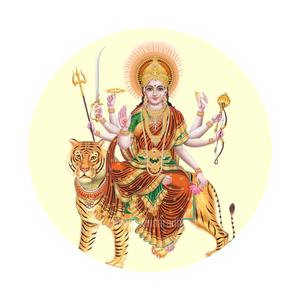
Associated with the historic sacred region of Jalandhar in Punjab, Shri Jalandhar Shaktipeeth is one of the ancient and revered centres of Shakti worship in the Sanatana tradition. Tantric traditions regard Jalandhar Peetha as an important Siddha Peetha. Here, the Divine Mother is worshipped as Mata Tripuramalini, while Lord Shiva is revered in the form of Bheeshan Bhairava.
Ambika Siddhidanamni Stanam Jalandhare Mama.
Bhishano Bhairavas Tatra Devi Tripuramalini.
Introduction
In present-day Jalandhar, the renowned Shri Devi Talab Mandir is closely associated with the Jalandhar Shaktipeeth tradition. Mata Tripuramalini is worshipped here with great devotion, and the temple tradition identifies the shrine with the sacred Shaktipeeth of Jalandhar.
However, there are differing views regarding the exact geographical identity of the ancient Jalandhar Peetha. Historical Jalandhar, also associated with the wider Trigarta region, extended beyond the boundaries of the modern city and included parts of present-day Punjab and the Kangra region.
The Story of the Shaktipeeth
According to sacred tradition, Mata Sati relinquished Her mortal body during the Yajna of Prajapati Daksha after being deeply distressed by the insult directed toward Lord Shiva.
Overwhelmed with grief, Lord Shiva carried Her sacred form across the cosmos. To restore cosmic order, Lord Vishnu used His Sudarshana Chakra to divide the mortal body of Mata Sati. The sacred places where Her limbs or ornaments fell later became revered as Shaktipeeths.
Sati's Body Part or Ornament
According to the Peethanirnaya tradition, the breast of Mata Sati fell in the Jalandhar region. For this reason, the Peetha is also known as a Stanapeetha.
Ambika Siddhidanamni Stanam Jalandhare Mama.
Bhishano Bhairavas Tatra Devi Tripuramalini.
Different regional traditions vary on whether the right or left breast is associated with the Peetha. Since the principal traditional verse simply refers to the breast, describing Jalandhar as the sacred Stanapeetha is the most balanced formulation.
The Name of the Devi
The presiding Shakti of Jalandhar Peetha is worshipped as Mata Tripuramalini, also rendered as Tripura Malini.
The name Tripura points toward the Supreme Shakti who transcends the gross, subtle and causal dimensions of existence. In devotional tradition, Mata Tripuramalini is revered as the Divine Mother who grants protection, inner strength and spiritual grace.
Bhairava
The Bhairava associated with Jalandhar Shaktipeeth is Lord Bheeshan. The traditional Peetha verse explicitly remembers Bheeshan Bhairava together with Devi Tripuramalini.
In Shakta philosophy, the Devi and Bhairava represent the inseparable principles of Shakti and Shiva. For this reason, remembrance of the corresponding Bhairava is an important part of the Shaktipeeth tradition.
Different Traditions Regarding the Location
There are differing traditions regarding the precise location of the ancient Jalandhar Shaktipeeth.
The Shri Devi Talab Mandir in present-day Jalandhar identifies itself with the sacred Shaktipeeth tradition and worships Mata Tripuramalini as the presiding Goddess.
At the same time, historical accounts indicate that the ancient Jalandhar or Trigarta region was considerably larger than the modern city. Its cultural and political influence extended across areas corresponding to present-day Jalandhar, Hoshiarpur and the Kangra valley.
For this reason, some traditional interpretations connect the ancient Jalandhar Peetha with the broader Shakti geography of the Trigarta region rather than exclusively with one modern temple site.
Jalandhar and the Ancient Trigarta Region
Ancient geographical traditions preserve a close association between Jalandhar and Trigarta. The historical Trigarta region extended across parts of present-day Punjab and Himachal Pradesh.
This broader geographical background helps explain why traditions connected with Jalandhar Peetha also appear in the sacred landscapes of the Kangra valley and surrounding regions.
Religious Significance
Jalandhar Peetha holds an important place in Shakta and Tantric traditions and has long been regarded as a sacred centre of Devi worship and spiritual practice.
As a Stanapeetha, the shrine carries a profound symbolic association with motherhood, nourishment and the life-sustaining grace of the Divine Mother.
The breast of the Divine Mother represents protection, nurturing and the universal principle through which all beings are sustained.
Puja and Darshan
Today, devotees visit the Shri Devi Talab Mandir in Jalandhar to worship Mata Tripuramalini and other divine forms enshrined within the temple complex.
Pilgrims offer flowers, Chunri, fruits, Naivedya and other traditional offerings and participate in morning and evening Aarti.
The temple complex also provides facilities for devotees and remains an important centre of religious activity in Jalandhar.
Major Festivals
Chaitra Navratri and Sharadiya Navratri are celebrated with special devotion and enthusiasm at the temple.
During Navratri, special Puja, devotional programmes and religious gatherings dedicated to Mata Tripuramalini are organised.
The Devi Talab Mandir also remains an important religious and cultural centre of Jalandhar throughout the year, hosting various devotional events and community programmes.
History
The religious and historical traditions of the Jalandhar region are extremely ancient. Historical sources associate ancient Jalandhar with the wider Trigarta kingdom, whose influence extended from the plains of Punjab toward the Kangra valley.
The present Shri Devi Talab Mandir has preserved the living tradition of Shakti worship in modern Jalandhar and is today one of the city's most important Devi temples.
Ancient Jalandhar Peetha and the Shakti Tradition of Kangra
Older religious descriptions sometimes connect Jalandhar Peetha with the wider Kangra and Trigarta region. The Kangra valley has been home to several ancient and highly revered centres of Devi worship.
Sacred traditions associated with Jwala Ji, Vajreshwari and other Devi shrines demonstrate that the broader Trigarta region has remained an important centre of Shakti worship since ancient times.
For this reason, the term 'Jalandhar' in older religious texts should not always be interpreted as referring only to the boundaries of the present-day city.
How to Reach
By Rail: The nearest major railway station is Jalandhar City Railway Station. Auto-rickshaws, e-rickshaws and taxis are readily available for reaching Devi Talab Mandir.
By Road: Jalandhar is well connected by road with Amritsar, Ludhiana, Chandigarh, Delhi and other major cities of North India.
By Air: Sri Guru Ram Dass Jee International Airport, Amritsar is one of the principal air-connectivity options for travellers visiting Jalandhar.
For current temple information, devotees may also refer to the official website at shreedevitalabmandir.org.
Darshan Timings
Daily darshan and Aarti timings at Shri Devi Talab Mandir may vary according to the season, Navratri and other major religious occasions. Devotees are advised to confirm the current schedule with the temple administration or its official website before planning their visit.
Distinctive Traditions and Beliefs
Jalandhar Shaktipeeth is traditionally associated with the nurturing and protective grace of the Divine Mother. Devotees believe that sincere worship of Mata Tripuramalini brings inner strength, peace and freedom from fear and distress.
Ancient tradition also remembers the wider Jalandhar-Trigarta region as a land of Siddhas, Rishis and practitioners of Shakti worship. The many sacred Devi shrines across this region reflect the continuity of this ancient spiritual heritage.
Spiritual Message
The Stanapeetha symbolism of Jalandhar Shaktipeeth conveys the profound spiritual qualities of motherhood, nourishment and compassion.
Just as a mother nourishes and protects her child, Adishakti sustains and protects the entire universe. The worship of Mata Tripuramalini reminds the seeker that true spiritual strength is expressed not only through power but also through compassion, care and selfless protection.
Faith, humility and freedom from ego bring the devotee closer to the grace of Bhagavati.