


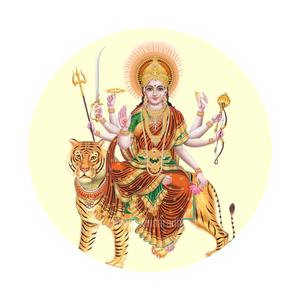
Situated in the Arasur region of the Aravalli range in Banaskantha district, Gujarat, Shri Ambaji Shaktipeeth is one of the most revered centres of the Sanatana Shakta tradition. Dedicated to Maa Bhagavati Arasuri Ambaji, this sacred pilgrimage is honoured among the principal Shaktipeeths and remains a major centre of devotion for pilgrims from India and abroad.
Introduction
Ambaji is situated near the Gujarat-Rajasthan border in the Danta region of Banaskantha district. This sacred landscape has been associated with the worship of Adishakti since ancient times.
About four kilometres from the main Ambaji Temple stands Gabbar Hill, which is traditionally revered as the original sacred seat and manifestation site of Maa Amba. The main temple and Gabbar together form the broader pilgrimage tradition of Ambaji.
The sacred shrine is administered by the Shri Arasuri Ambaji Mata Devasthan Trust.
The Story of the Shaktipeeth
According to sacred tradition, when Mata Sati relinquished Her mortal body during the Yajna of Prajapati Daksha, grief-stricken Lord Shiva wandered across the universe carrying Her sacred form.
To restore cosmic balance, Lord Vishnu used His Sudarshana Chakra to divide the mortal body of Mata Sati. The sacred places where Her limbs or ornaments fell later came to be revered as Shaktipeeths.
Sati's Body Part or Ornament
According to the living Shakta tradition associated with Arasur and Gabbar Hill, the heart of Mata Sati is believed to have fallen in this sacred region. For this reason, Ambaji is revered as a Shaktipeeth associated with the Divine Mother's heart.
The Name of the Devi
The Divine Mother is worshipped here as Maa Amba, Arasuri Amba or Arasuri Ambaji. The name Amba itself means Mother and reflects the compassionate, protective and nurturing nature of Jagadamba.
Bhairava
Bhairava worship also forms part of the broader sacred tradition of Ambaji. Among the holy places associated with Gabbar Hill is a shrine connected with Kaal Bhairava.
Different regional traditions preserve varying Bhairava identifications, so it is more appropriate to understand Bhairava worship here as part of the wider Shakta landscape rather than assign one universally accepted name to every textual tradition.
Gabbar Hill — The Original Sacred Seat of Maa Amba
Gabbar Hill, located a few kilometres from Ambaji town, is traditionally regarded as the original sacred seat of Maa Ambaji.
At the summit, devotees worship the sacred footprints of the Goddess and an Akhand Jyoti, or eternal flame, which is regarded as a symbol of the continuous divine presence of Maa Amba.
Pilgrims can climb Gabbar Hill using the traditional steps or use the available ropeway facility. Temple tradition refers to more than 999 steps leading toward the sacred summit.
Shree Visa Yantra
The most distinctive feature of the main Ambaji Temple is that there is no anthropomorphic Murti of the Goddess within the sanctum. Instead, the sacred Shree Visa Yantra is worshipped as the principal divine presence.
The Yantra represents the subtle and formless dimension of Adishakti. Direct viewing and photography of the sacred Yantra are restricted.
The priests adorn the sacred Gokh around the Yantra with garments, ornaments and a crown in such a way that devotees experience the graceful maternal presence of Maa Amba in a visible devotional form.
Religious Significance
Ambaji is one of Gujarat's most important centres of Shakti worship. The sacred Yantra in the main temple and the eternal flame and divine footprints on Gabbar Hill together create a profound synthesis of formless and manifested worship.
Sarvamangala Mangalye Shive Sarvartha Sadhike.
Sharanye Tryambake Gauri Narayani Namostu Te.
Devotees worship Maa Amba while praying for protection, family well-being, strength, auspiciousness and inner peace.
Puja and Darshan
Daily worship at the main temple centres on the sacred Shree Visa Yantra. The Yantra is ritually worshipped, adorned and honoured through Aarti and traditional offerings.
Devotees offer Chunri, flowers, coconuts, Prasad and other traditional items to Maa Amba.
Many pilgrims consider the pilgrimage complete only after visiting both the main Ambaji Temple and Gabbar Hill to receive Darshan of the eternal flame and the sacred footprints of the Goddess.
Major Festivals
Chaitra Navratri and Sharadiya Navratri are celebrated with great devotion at Ambaji. Garba, Yajna, Bhajan and special Puja form an important part of the festivities.
Bhadarvi Poonam is the most celebrated annual pilgrimage festival of Ambaji. Large numbers of devotees from Gujarat, Rajasthan and other parts of Bharat undertake Padayatra to seek the blessings of Maa Amba.
Mohanthal is among the best-known traditional offerings associated with Maa Ambaji and is widely received by devotees as Prasad.
Other Sacred Places on Gabbar Hill
Gabbar Hill is associated with several sacred and devotional places in addition to the eternal flame.
Temple tradition refers to places such as Mataji's Jhula, a shrine associated with Kaal Bhairava, and other sacred points visited by pilgrims during their ascent.
The summit also offers expansive views of the surrounding Aravalli landscape, giving pilgrims an experience that combines sacred pilgrimage with the natural stillness of the hills.
Krishna and the Gabbar Tradition
A local devotional tradition also connects Gabbar with the childhood of Lord Krishna.
According to this belief, Nanda Baba and Mata Yashoda brought child Krishna to the sacred region and performed His Chudakarma ceremony after receiving the blessings of Maa Amba and Lord Shiva.
This tradition connects Ambaji not only with Shakta worship but also with the wider devotional heritage of the Vaishnava tradition.
History
The worship of Maa Amba in the Arasur region is regarded as extremely ancient, although the earliest construction of the present temple cannot be assigned with certainty to a single historical date.
The temple underwent significant redevelopment and expansion in the modern period. Its present form is especially known for its white marble architecture, elevated Shikhara and golden ornamentation.
Successive generations of devotees, patrons and temple administrators have contributed to preserving Ambaji as one of western India's most important Shakti pilgrimage centres.
How to Reach
By Rail: The nearest major railway station is Abu Road Railway Station in Rajasthan, approximately 20 kilometres from Ambaji.
By Road: Ambaji is well connected by road with important cities and towns of Gujarat and Rajasthan, including Palanpur, Abu Road, Mount Abu and Ahmedabad.
By Air: Sardar Vallabhbhai Patel International Airport, Ahmedabad is a major airport option for pilgrims travelling from distant parts of India or abroad.
Gabbar Hill can be reached either by climbing the traditional steps or by using the ropeway facility.
Darshan Timings
Darshan and Aarti timings at Ambaji Temple vary according to the season, lunar calendar and festival schedule. The temple generally follows separate morning, afternoon and evening Darshan sessions.
Because the Trust periodically revises the schedule, devotees should check the current Darshan and Aarti timings on the official temple website before planning their visit.
Distinctive Traditions and Beliefs
The Akhand Jyoti on Gabbar Hill is regarded as a symbol of the continuous divine presence of Maa Amba. Devotees believe that receiving its Darshan with faith brings inner courage, peace and a sense of maternal protection.
The worship of a Yantra rather than an anthropomorphic Murti in the main sanctum conveys a profound spiritual principle: Bhagavati is not confined to any single physical form. She may be worshipped as formless cosmic Shakti while also being experienced through the loving form of the Divine Mother.
Spiritual Message
Shri Ambaji Shaktipeeth teaches that the Supreme Shakti can be worshipped in both manifested and formless dimensions.
The sacred Yantra represents the subtle reality of the Goddess, while the devotional Shringara allows the devotee to experience Her as the compassionate Mother.
The eternal flame of Gabbar reminds the seeker that divine consciousness never fades. Through faith, surrender and purity of intention, that same spiritual light can be awakened within the heart of the devotee.