


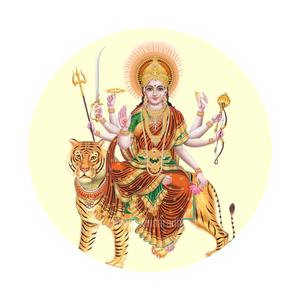
In the Sanatana tradition, Shaktipeeths hold immense significance. These are the sacred sites where Devi Sati's body parts or ornaments fell when Lord Shiva performed the Tandava dance carrying her mortal remains, and Lord Vishnu fragmented Sati's body with his Sudarshan Chakra to save creation from destruction. Shon Shaktipeeth is one such holy place, with various beliefs prevalent regarding its location and the associated body part.
Introduction
Shon Shaktipeeth is one of the 51 sacred Shaktipeeths dedicated to Devi Sati, which are counted among the most revered pilgrimage sites. Various religious traditions and texts present differing views regarding the actual location of this Peetha and the fallen body part of Mother Sati, which complicates its identification. Primarily, two locations are recognized as Shon Shaktipeeth: Amarkantak in Madhya Pradesh and Sasaram in Bihar.
The story of the Shaktipeeth
The origin story of the Shaktipeeths is mythological, involving Devi Sati's self-immolation in Daksha Prajapati's yajna, Lord Shiva's fierce Tandava, and Lord Vishnu fragmenting Sati's body with the Sudarshan Chakra to save creation from deluge. The places where Sati's body parts or ornaments fell became known as Shaktipeeths. Shon Shaktipeeth is also a result of this divine play, where Mother Bhagavati resides in her Shakti form, offering darshan to devotees.
Sati’s body part or ornament
Two main locations are associated with different beliefs regarding Shon Shaktipeeth:
- Amarkantak, Madhya Pradesh: According to the prevalent belief here, Mother Sati’s right buttock (hip) fell. Some references also call it the "southern buttock".
- Sasaram, Bihar: The belief associated with the Tarachandi Temple is that Mother Sati’s right eye fell here.
The name of the Devi
At the various sites of Shon Shaktipeeth, Devi is worshipped by different names:
- In Amarkantak: Here, Mother Sati is worshipped as "Narmada" or "Shonakshi" (or Sonakshi).
- In Sasaram: At this Peetha, Devi is primarily enshrined as Mother "Tarachandi".
Bhairava
Along with Devi, her protector Bhairava is also enshrined in Shaktipeeths. In the context of Shon Shaktipeeth:
- In Amarkantak: Here, Lord Shiva is worshipped as "Bhadrasena" Bhairava. In some references, the name of Bhairava is also found as "Bhimasena".
- In Sasaram: At the Tarachandi Temple, Lord Shiva resides in his Bhairava form alongside Devi Tarachandi, although his specific name is less frequently mentioned.
Religious significance
Shon Shaktipeeth, whether in Amarkantak or Sasaram, is a supremely sacred pilgrimage site for devotees. There is a deep faith that darshan and worship at these sites bring spiritual peace and the fulfillment of desires. A pilgrimage to the Shaktipeeths is considered a must-do once in a lifetime, where devotees experience the divine power of the Devi.
Puja and darshan
At both sites, daily worship and rituals are performed for Devi. Devotees come here to offer their reverence, participate in the Aarti, and receive the blessings of the Devi. Special puja methods are also prevalent according to local traditions.
Major festivals
At both locations associated with Shon Shaktipeeth, grand events are organized especially during Navaratri. Thousands of devotees throng here during Chaitra and Sharad Navaratri. Additionally, religious rituals and festivals are celebrated throughout the year on various Hindu festivals and special dates.
History
- Amarkantak Temple: This temple is considered ancient, with some traditions claiming it to be 6000 years old. Queen Ahilyabai undertook the renovation of this temple, which highlights its historicity and importance. This place is also the origin point of the Narmada River, which is itself a sacred river.
- Tarachandi Temple of Sasaram: An inscription from the 12th century exists in this temple, mentioning King Pratap Dhawal Dev of the Kharwar dynasty, which proves the antiquity and fame of this place. There is also a tradition that Sage Vishwamitra named this Peetha 'Tara' and Parashurama worshipped Devi Tara here. The name 'Tarachandi' came about after Devi became 'Chandi' by slaying the demon Chanda.
How to reach
Pilgrims can reach these holy sites according to their convenience:
To reach Amarkantak, Madhya Pradesh:
- By Air: The nearest airports are Jabalpur (approximately 240-250 km) and Raipur (approximately 230-245 km).
- By Road: Bus services are available from Shahdol, Umaria, Jabalpur, Rewa, Bilaspur, Anuppur, and Pendra Road to Amarkantak.
To reach Sasaram, Bihar:
- By Air: The nearest airports are Patna, Gaya, and Varanasi.
- By Rail: Sasaram Railway Station is the nearest railway access point.
- By Road: It is located on the ancient G.T. Road and is well-connected by road.
Darshan timings
Generally, the daily darshan timings for these temples are from morning till evening. During special festivals, such as Navaratri, darshan timings may change, and the temples may remain open for longer hours. Devotees are advised to contact the local temple management for precise timing information before their visit.
Distinctive traditions
Apart from the two main locations, another belief regarding Shon Shaktipeeth is prevalent. Some scholars believe that a Devi temple located a short distance from Dehri-on-Sone station on the Delhi-Howrah main railway line is indeed Shon Shaktipeeth. However, disagreement persists regarding this location, and detailed information on its authenticity is unavailable. The stories associated with Sage Vishwamitra and Parashurama in Sasaram also highlight the special significance of this Peetha.
Spiritual message
Shon Shaktipeeth conveys the spiritual message that the divine power pervading the universe manifests in many forms. By visiting these sacred sites of Mother Bhagavati, devotees not only find liberation from material sufferings but also attain inner peace and self-knowledge. This Peetha inspires us to walk the path of Shraddha (faith), Bhakti (devotion), and Dharma (righteousness), where every living being is worthy of Mother Devi's grace.