


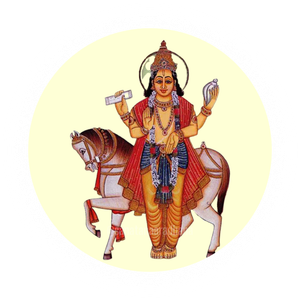
In the Navagraha tradition of Sanatana Dharma, Shri Shukra Dev is revered as the divine representative of knowledge, art, beauty, love, prosperity, and worldly pleasures guided by Dharma. Being associated with the lineage of Maharishi Bhrigu, he is also known as Bhargava, Kavya, and Shukracharya. According to Hindu tradition, the worship of Shukra Dev inspires devotees to cultivate gentleness, sensitivity, righteous conduct, and balance in life.
In Vedic astrology, Venus is regarded as one of the principal naturally benefic planets. Shukra is considered a significator of love, marriage, artistic expression, music, beauty, vehicles, material comforts, and creative talent. According to traditional Jyotisha, a favourably placed Venus in the birth chart is associated with harmony in relationships, artistic appreciation, refined living, and prosperity.
Introduction
In Puranic tradition, Shukra Dev is regarded as the son of Maharishi Bhrigu and the great spiritual preceptor of the Daityas and Asuras. He is widely known as Shukracharya and is revered as a profound scholar of ethics, sacred Mantras, Tapasya, and the Shastras. Like Devguru Brihaspati, the preceptor of the Devas, Shukracharya guides his disciples in matters of knowledge, principles, and duty.
According to Puranic narratives, Shukracharya performed intense Tapasya to please Lord Shiva and received the divine knowledge of Mrita Sanjivani Vidya, the power of restoring life to the dead. Through this sacred knowledge, he is traditionally believed to have revived fallen Asuras. This story symbolises the extraordinary power of spiritual discipline, determination, and knowledge.
Shukra Dev represents not only material pleasures but also wisdom, love, aesthetic appreciation, and harmony in life. His worship teaches us that worldly comforts should be enjoyed with self-restraint, responsibility, and respect for Dharma.
Vedic and Puranic Significance
In Puranic narratives, Shukracharya holds a prominent position as the Guru of the Asuras. He is regarded as a protector of his disciples' interests, a scholar of Niti Shastra (ethical and political principles), and a devoted worshipper of Lord Shiva. The traditions of Devguru Brihaspati and Daityaguru Shukracharya reflect different dimensions of knowledge, guidance, and ethical thought in Hindu religious literature.
The Shukra Niti, a traditional work associated with Shukracharya, contains teachings on governance, economics, administration, justice, and social conduct. This tradition highlights that the value of knowledge extends beyond personal success to the responsible organisation and welfare of society.
Divine Form and Traditional Depiction
In Puranic descriptions and traditional iconography, Shri Shukra Dev is depicted as a radiant, gentle, and peaceful deity. His complexion is compared to the purity and brilliance of snow, the white Kunda flower, and the stem of a white lotus. Various representations show him wearing white garments and divine ornaments. In some traditions, he is depicted riding a chariot drawn by white horses.
The Navagraha Stotra, traditionally attributed to Maharishi Vedavyasa, offers the following prayer to Shukra Dev:
Himakundamrinalabham Daityanam Paramam Gurum ।
Sarvashastrapravaktaram Bhargavam Pranamamyaham ॥
Meaning: I bow to Shukracharya, the descendant of Maharishi Bhrigu, whose radiance resembles snow, the white Kunda flower, and the lotus stem, who is the supreme Guru of the Daityas and a learned teacher of all the Shastras.
Significance of Venus in Vedic Astrology
In Vedic astrology, Shukra is regarded as a principal significator of love, marital harmony, art, music, beauty, clothing, ornaments, vehicles, comforts, and material prosperity. In traditional Jyotisha, a favourably placed Venus is associated with an attractive personality, artistic talent, pleasant behaviour, and harmony in relationships.
Venus rules Taurus (Vrishabha) and Libra (Tula). Pisces (Meena) is his sign of exaltation, while Virgo (Kanya) is his sign of debilitation. Venus reaches his exact exaltation point at 27 degrees of Pisces and his exact debilitation point at 27 degrees of Virgo. According to the commonly followed Parashari tradition, the first 15 degrees of Libra form Venus's Moolatrikona region.
Principal Significations of Venus
In traditional Jyotisha, Venus is associated with love, marriage, marital happiness, art, music, dance, beauty, creativity, vehicles, and a comfortable life. A favourably placed Venus is traditionally linked with pleasant speech, harmonious behaviour, artistic appreciation, and the ability to maintain balance in life.
Venus's Aspect and Planetary Relationships
According to Parashari Jyotisha, Venus has a seventh-house aspect. His traditional influence is interpreted according to his zodiac sign, house placement, conjunctions, aspects, and relationships with other planets in the birth chart. Although Venus is classified as a naturally benefic planet, he is not considered equally favourable in every astrological situation.
Venus's Nakshatras, Mahadasha, and Transit
Shukra is the planetary ruler of three Nakshatras: Bharani, Purva Phalguni, and Purva Ashadha. In the Vimshottari Dasha system, Venus's Mahadasha lasts for 20 years, making it the longest Mahadasha in this system. In Vedic astrology, Venus's movement from one zodiac sign to another is known as Shukra Gochar, or Venus transit. Its traditional significance is considered in matters related to love, marriage, artistic expression, comforts, and relationships.
Venus's favourable or unfavourable influence cannot be determined solely from his exaltation, placement in his own sign, or Mahadasha. House lordship, planetary strength, conjunctions, aspects, the Navamsha chart, and other astrological factors are also considered important in traditional interpretations.
Religious Significance
In Sanatana tradition, Shukra Dev represents knowledge, love, beauty, and the pleasant experiences of life. The Puranic character of Shukracharya highlights the importance of Tapasya, learning, and ethical knowledge. The spiritual purpose of Shukra worship is not limited to seeking material prosperity, but also includes practising self-restraint, righteousness, and Dharma while enjoying worldly comforts.
In various Hindu traditions, Shukra is also associated with the worship of Bhagavati Mahalakshmi. Mata Lakshmi is revered as the divine goddess of prosperity, good fortune, and an auspicious life. Friday is considered especially significant for her worship.
Puja and Worship of Shukra Dev
Friday, known as Shukravar, is regarded as especially auspicious for the worship of Shri Shukra Dev. Devotees traditionally begin the day with a bath, wear clean white or light-coloured garments, meditate upon Shukra Dev, and offer white flowers, Akshata (unbroken rice), sandalwood paste, fragrant substances, and Sattvic Naivedya. According to their family traditions, devotees may also worship Bhagavati Mahalakshmi.
Shukra Hora and the Nakshatras Bharani, Purva Phalguni, and Purva Ashadha are traditionally considered favourable for Mantra Japa. In specific Venus Graha Shanti rituals, 16,000 repetitions of the Shukra Beej Mantra are commonly prescribed. Such elaborate rituals are best performed under the guidance of a qualified Acharya.
Shukra Puranic Mantra
Himakundamrinalabham Daityanam Paramam Gurum ।
Sarvashastrapravaktaram Bhargavam Pranamamyaham ॥
Shukra Vedic Puja Mantra
Om Annat Parisruto Rasam Brahmana Vyapibat Kshatram Payah Somam Prajapatih ।
Ritena Satyam Indriyam Vipan Shukram Andhasa Indrasyendriyam Idam Payo Amritam Madhu ॥
This Vedic Mantra belongs to the Yajna tradition and is used in certain Navagraha Puja systems during the invocation of Venus. Variations in pronunciation and textual recitation may occur across different Vedic Shakhas. For formal rituals, devotees should follow their Vedic tradition and the guidance of a qualified Acharya.
Shukra Beej Mantra
Om Dram Dreem Draum Sah Shukraya Namah ॥
Shukra Nama Mantra
Om Shum Shukraya Namah ॥
Sattvic Remedies and Charitable Offerings
According to religious and astrological traditions, donating white clothes, rice, Mishri (rock sugar), milk, white flowers, and useful items for people in need on Fridays is considered auspicious. Donations should be made to deserving recipients according to one's means and devotion.
Worshipping Bhagavati Mahalakshmi, maintaining cleanliness at home, respecting parents and one's spouse, providing food to those in need, and treating women with dignity are regarded as meaningful Sattvic practices associated with Shukra Tattva.
In traditional Jyotisha, the diamond (Heera) is the principal gemstone associated with Venus. However, it is not considered equally suitable for everyone. Any decision to wear this gemstone should be based on a comprehensive assessment of the birth chart rather than the zodiac sign or Venus Mahadasha alone.
Major Festivals and Auspicious Occasions
Every Friday (Shukravar) is regarded as a special day for the regular worship of Shri Shukra Dev. Friday fasting and the worship of Bhagavati Mahalakshmi are also observed in various family and regional traditions. Devotees may perform Mantra Japa, Deep Daan (offering of lamps), and Sattvic Puja according to their faith and customs.
The Nakshatras Bharani, Purva Phalguni, and Purva Ashadha are also considered significant for Shukra Mantra Japa. During Navratri, Diwali, and other festivals associated with Mahalakshmi, devotees worship the Divine Mother for prosperity, blessings, and well-being. These are not exclusively festivals of Shukra Dev, but they share devotional associations with prosperity, good fortune, and harmony.
Spiritual Message
The divine character of Shri Shukra Dev teaches us that beauty, love, art, and material comforts have their own meaningful place in life, but their true value is realised when they are guided by truth, self-discipline, and Dharma. Worldly pleasures may bring comfort and happiness, yet excessive attachment to them can distract us from our higher purpose.
The essence of Shukra Dev worship is to unite love with purity, beauty with righteous conduct, and prosperity with service and gratitude. When individuals maintain dignity, compassion, and devotion to the Divine in their worldly lives, material comforts can also become supportive of spiritual growth.