


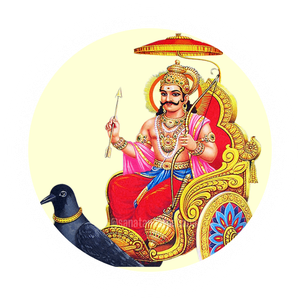
In the Navagraha tradition of Sanatana Dharma, Lord Shani Dev is revered as the presiding deity of Karma, justice, discipline, and detachment. According to Puranic tradition, he is the son of Lord Surya and Mata Chhaya, and the elder brother of Dharmaraja Yama. Shani Dev is regarded as the impartial dispenser of karmic results, rewarding or challenging living beings according to their actions and inspiring them to follow the path of Dharma, truth, and righteous conduct.
In Vedic astrology, Saturn is regarded as a principal significator of hard work, patience, discipline, service, longevity, time, and responsibility. Although Saturn is traditionally classified as a natural malefic planet in Jyotisha, his influence is not considered limited to hardship or obstacles. A favourably placed Saturn is also associated with determination, perseverance, stability, and lasting achievements.
Introduction
According to Puranic tradition, Shani Dev is the son of Lord Surya and Mata Chhaya. He is known as Shanaishchara, meaning "the slow-moving one", because of his gradual movement through the zodiac. Astronomically, Saturn is the sixth planet from the Sun and completes one revolution around the Sun in approximately 29.5 Earth years.
The divine character of Shani Dev represents justice, self-restraint, and the importance of Karma. According to religious belief, he does not favour or discriminate against anyone but grants the results of actions impartially. His worship encourages devotees to overcome fear, purify their conduct, abandon arrogance, and remain committed to their duties.
Vedic and Puranic Significance
Puranic narratives associate Shani Dev with Lord Surya, Mata Chhaya, and the worship of Lord Shiva. Various religious traditions describe his intense Tapasya and the blessings he received from Lord Shiva. These beliefs form an important part of his traditional identity as a deity associated with justice and the consequences of Karma.
Shani Dev's role as Karmaphaladata, the dispenser of karmic results, reminds us that every individual is responsible for their actions. Righteous conduct, truthfulness, hard work, and respect for the rights of others are essential principles for leading a balanced and meaningful life.
Divine Form and Traditional Depiction
In Puranic descriptions and traditional iconography, Lord Shani Dev is depicted with a dark blue or black complexion. He wears deep blue or black garments and is represented in various forms holding a staff, bow, arrows, or other weapons. His vehicle is commonly depicted as a crow, while some traditions also associate him with a vulture.
The Navagraha Stotra, traditionally attributed to Maharishi Vedavyasa, offers the following prayer to Shani Dev:
Nilanjanasamabhasam Raviputram Yamagrajam ।
Chhayamartandasambhutam Tam Namami Shanaishcharam ॥
Meaning: I bow to Lord Shanaishchara, whose radiance resembles dark blue collyrium, who is the son of Lord Surya, the elder brother of Dharmaraja Yama, and who was born to Mata Chhaya and the Sun.
Significance of Saturn in Vedic Astrology
In Vedic astrology, Saturn is regarded as a principal significator of Karma, hard work, discipline, patience, longevity, service, old age, and life's responsibilities. Saturn's slow movement symbolises time, perseverance, and gradual development. In traditional Jyotisha, a favourably placed Saturn is associated with sustained effort, self-discipline, and long-term achievements.
Saturn rules Capricorn (Makara) and Aquarius (Kumbha). Libra (Tula) is his sign of exaltation, while Aries (Mesha) is his sign of debilitation. Saturn reaches his exact exaltation point at 20 degrees of Libra and his exact debilitation point at 20 degrees of Aries. According to the commonly followed Parashari tradition, the first 20 degrees of Aquarius form Saturn's Moolatrikona region.
Principal Significations of Saturn
In traditional Jyotisha, Saturn is associated with labour, discipline, time, service, justice, longevity, elderly people, workers, patience, and detachment. A favourably placed Saturn is believed to signify perseverance, responsibility, serious thinking, and stability in life.
Special Aspects of Saturn
According to Parashari Jyotisha, Saturn has special aspects on the third, seventh, and tenth houses from his position. The third aspect is traditionally examined in matters of effort, courage, and hard work; the seventh in relationships and partnerships; and the tenth in Karma, profession, and responsibility. The interpretation of these aspects depends on the houses involved and the overall planetary configuration of the birth chart.
Saturn's Nakshatras, Mahadasha, and Transit
Shani is the planetary ruler of three Nakshatras: Pushya, Anuradha, and Uttara Bhadrapada. In the Vimshottari Dasha system, Saturn's Mahadasha lasts for 19 years. In Vedic astrology, Saturn's movement from one zodiac sign to another is known as Shani Gochar, or Saturn transit. Saturn generally remains in one zodiac sign for approximately two and a half years, although retrograde motion may affect the actual duration.
Saturn's favourable or unfavourable influence cannot be determined solely from his exaltation, placement in his own sign, or Mahadasha. His house lordship, planetary strength, aspects, conjunctions, Dasha periods, and other conditions in the birth chart are also considered important.
Shani Sade Sati and Dhaiya
Shani Sade Sati and Shani Dhaiya hold particular importance in traditional Vedic transit astrology. When Saturn transits the twelfth, first, and second zodiac signs counted from the natal Moon sign, this approximately seven-and-a-half-year period is known as Shani Sade Sati.
Similarly, Saturn's transit through the fourth or eighth sign from the natal Moon is commonly known as Shani Dhaiya. Its duration is approximately two and a half years. In traditional Jyotisha, these periods are associated with patience, responsibility, hard work, and changes in life circumstances.
However, Sade Sati or Dhaiya does not necessarily indicate unfavourable results for everyone. Traditional interpretations vary according to the complete birth chart, the prevailing Dasha, Saturn's placement, and other planetary influences. Rather than approaching these periods with fear, devotees are encouraged to practise discipline, patience, and righteous conduct.
Religious Significance
In Sanatana tradition, Lord Shani Dev is revered as Karmaphaladata and a deity of impartial justice. His divine character reminds us that every individual is accountable for their actions and should follow the path of Dharma, truth, and fairness. In Shani worship, humility, service, honesty, and purity of conduct are considered more meaningful than outward displays of devotion.
The worship of Lord Shiva and Shri Hanuman Ji is also associated with Shani Dev in various religious traditions. In particular, reciting the Hanuman Chalisa and Sundarkand is a widely followed devotional practice among devotees seeking the blessings of Shani Dev.
Puja and Worship of Shani Dev
Saturday, known as Shanivar, is regarded as especially auspicious for the worship of Lord Shani Dev. Devotees traditionally begin their worship with a bath, wear clean clothes, meditate upon Shani Dev, and offer flowers, Sattvic Naivedya, and a lamp lit with sesame oil. Saturday evening is considered particularly significant for Mantra Japa and Deep Daan (offering of lamps).
Shani Hora and the Nakshatras Pushya, Anuradha, and Uttara Bhadrapada are also traditionally considered favourable for Mantra Japa. In certain Graha Shanti rituals, 23,000 repetitions of the Shani Beej Mantra are commonly prescribed, although other counts are found in different worship traditions. Such elaborate rituals are best performed under the guidance of a qualified Acharya.
Shani Puranic Mantra
Nilanjanasamabhasam Raviputram Yamagrajam ।
Chhayamartandasambhutam Tam Namami Shanaishcharam ॥
Shani Vedic Mantra
Om Sham No Devirabhishtaya Apo Bhavantu Pitaye ।
Sham Yorabhisravantu Nah ॥
This Vedic Mantra is originally a prayer invoking the beneficial and life-sustaining qualities of water. In the Navagraha worship tradition, it is also recited during the Vedic invocation of Saturn.
Shani Beej Mantra
Om Pram Preem Praum Sah Shanaishcharaya Namah ॥
Shani Nama Mantra
Om Sham Shanaishcharaya Namah ॥
Sattvic Remedies and Charitable Offerings
According to religious and astrological traditions, donating black sesame seeds, whole Urad Dal (black gram), mustard oil, dark-coloured clothes, and iron utensils on Saturdays is considered auspicious. Donations should be made to deserving recipients or people in need according to one's means and devotion.
Serving elderly people, workers, individuals facing hardship, and those in need holds particular importance in Shani worship. Treating employees fairly, avoiding exploitation, helping the disadvantaged, and fulfilling one's responsibilities with honesty are regarded as meaningful Sattvic practices.
In many traditions, devotees also light a lamp with sesame or mustard oil near a Peepal tree on Saturday evenings. Appropriate fire safety and care for the tree should always be maintained. Showing compassion towards animals and birds, and providing them with suitable food, is another meaningful expression of kindness and service.
In traditional Jyotisha, the blue sapphire gemstone (Neelam) is associated with Saturn. However, it is not considered equally suitable for everyone. Any decision to wear this gemstone should be based on a comprehensive assessment of the birth chart rather than the zodiac sign or Sade Sati alone.
Major Pilgrimage Sites of Shani Dev
Shani Shingnapur, located in Maharashtra, is one of the most prominent pilgrimage sites dedicated to Lord Shani Dev. The temple is known for its sacred stone representation of Shani Dev, traditionally believed to be Swayambhu (self-manifested). The site is especially revered for its distinctive local traditions and the deep devotion of its worshippers.
Another important pilgrimage destination is the Shri Dharbaranyeswarar Temple at Thirunallar, situated in the Karaikal region of the Union Territory of Puducherry. The temple is primarily dedicated to Lord Shiva and contains a special shrine for Shani Dev. Devotees visit this sacred site for worship and traditional rituals associated with Saturn.
Major Festivals and Auspicious Occasions
Shani Jayanti is celebrated with devotion as the traditional manifestation day of Lord Shani Dev. According to the North Indian Panchang tradition, it generally falls on the Amavasya Tithi of the Jyeshtha month. On this occasion, devotees express their reverence through Puja, Mantra Japa, charitable offerings, and acts of service.
An Amavasya falling on a Saturday is known as Shanishchari Amavasya and is considered particularly significant for Shani worship. Similarly, when Pradosh Vrat falls on a Saturday, it is called Shani Pradosh, an observance primarily associated with the worship of Lord Shiva. Special Puja rituals and religious ceremonies are held at various Shani pilgrimage sites on these occasions.
Spiritual Message
The divine character of Lord Shani Dev teaches us that true success does not lie merely in attaining wealth, status, or recognition, but in practising honesty, perseverance, humility, and righteous action. Difficult circumstances can become opportunities to develop patience, self-reflection, and a deeper sense of responsibility.
The essence of Shani Dev worship is to remain free from arrogance, deceit, and injustice, to be mindful of our Karma, and to show compassion towards the vulnerable and those in need. Rather than fear, it is truthfulness, service, and self-discipline that form the spiritual foundation of devotion to Shani Dev.