


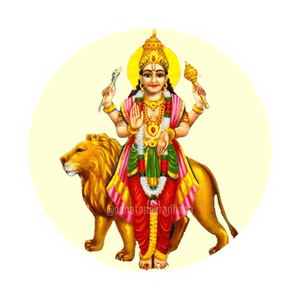
In Sanatana Dharma, Shri Budh Dev is revered among the Navagrahas as the presiding deity of intelligence, wisdom, logical reasoning, discernment, and speech. Known for his calm and gentle nature, Budh Dev represents knowledge, effective communication, thoughtful judgment, and intellectual balance. According to Hindu tradition, his worship inspires devotees to cultivate wisdom, exercise restraint in speech, and use knowledge for righteous purposes.
In Vedic astrology, Budh Graha, known as Mercury, is regarded as the principal significator of intelligence, education, mathematics, writing, business, communication, and analytical ability. According to traditional Jyotisha, a favourably placed Mercury in the birth chart is associated with sharp intellect, eloquence, commercial skills, and sound decision-making.
Introduction
According to Puranic tradition, Budh Dev is the son of Chandra Dev (the Moon) and Tara. As the son of Chandra, he is also known as Saumya. Among the Navagrahas, he is associated with the planet Mercury, which is astronomically the closest planet to the Sun. In Vedic astrology, Mercury is regarded as the prince among the planets, symbolising youthfulness, intelligence, curiosity, and a love of learning.
The worship of Budh Dev teaches us to combine knowledge with humility, speech with kindness, and intelligence with discernment. Wednesday, known as Budhvar, is traditionally dedicated to his worship.
Vedic and Puranic Significance
Puranic narratives describe Budh Dev as the son of Chandra Dev and Tara, the wife of Devguru Brihaspati. His birth story carries symbolic associations with the mind, wisdom, discernment, and Dharma. Budh Dev also holds an important place in the genealogy of the Chandravansha, or Lunar Dynasty. According to the Puranas, Budh and Ila became the parents of Pururava, who is regarded as an important ancestor of the Lunar Dynasty.
In the Vedic Yajna tradition, the following Yajurvedic Mantra is recited during the invocation of Budh Graha in certain Navagraha Puja rituals:
Om Udbudhyasvagne Prati Jagrhi
Tvam Ishtapurte Sam Srjetham Ayam Cha ।
Asmin Sadhasthe Adhyuttarasmin
Vishve Deva Yajamanashcha Sidata ॥
This Mantra originally concerns the awakening of Agni and the sacred consciousness of the Yajna. In certain Navagraha worship traditions, it is also employed in the ritual invocation of Mercury.
Divine Form and Traditional Depiction
In Puranic descriptions and traditional iconography, Shri Budh Dev is depicted as a youthful, radiant, and gentle deity. He is often shown wearing green or yellow garments. In some representations, he has four arms holding a mace, shield, and lotus, while one hand is raised in Varada Mudra, the gesture of blessing. His vehicle is traditionally depicted as a lion or a celestial chariot.
The Navagraha Stotra, traditionally attributed to Maharishi Vedavyasa, offers the following prayer to Budh Dev:
Priyangukalikashyamam Rupenapratimam Budham ।
Saumyam Saumyagunopetam Tam Budham Pranamamyaham ॥
Meaning: I bow to Budh Dev, whose complexion resembles the dark bud of the Priyangu flower, whose form is incomparable, and who is endowed with a gentle nature and auspicious qualities.
Significance of Mercury in Vedic Astrology
In Vedic astrology, Budh is considered the principal significator of intelligence, speech, calculation, commerce, writing, communication, learning, and logical reasoning. Mercury is traditionally regarded as adaptable in nature, and its astrological interpretation is strongly influenced by its conjunctions and relationships with other planets.
Mercury rules Gemini (Mithuna) and Virgo (Kanya). Virgo is its sign of exaltation, while Pisces (Meena) is its sign of debilitation. Mercury reaches its exact exaltation point at 15 degrees of Virgo and its exact debilitation point at 15 degrees of Pisces. According to the Parashari tradition, a portion of Virgo is also considered Mercury's Moolatrikona region.
Principal Significations of Mercury
In traditional Jyotisha, Mercury is associated with education, memory, language, mathematics, writing, commerce, accounting, communication, and interpersonal skills. A favourably placed Mercury is believed to indicate clarity of thought, effective expression, intellectual flexibility, and the ability to make well-considered decisions.
Mercury's Aspect and Planetary Relationships
According to Parashari Jyotisha, Mercury has a seventh-house aspect. Mercury is generally regarded as a naturally benefic planet, although its traditional effects may vary depending on its association with other planets and its placement in the birth chart. Therefore, Mercury should not be considered entirely auspicious or inauspicious solely on the basis of one zodiac sign or house.
Mercury's Nakshatras, Mahadasha, and Transit
Budh is the planetary ruler of three Nakshatras: Ashlesha, Jyeshtha, and Revati. In the Vimshottari Dasha system, Mercury's Mahadasha lasts for 17 years. In Vedic astrology, Mercury's movement from one zodiac sign to another is known as Budh Gochar, or Mercury transit. Its traditional significance is considered in matters related to education, communication, business, and intellectual activities.
Mercury's favourable or unfavourable influence cannot be determined solely from its exaltation, placement in its own sign, or Mahadasha. Its house lordship, planetary strength, conjunctions, aspects, and other conditions in the birth chart are also considered important.
Religious Significance
In Sanatana tradition, Budh Dev is associated with intelligence, clarity of thought, and purity of speech. The worship of Mercury is also connected with the worship of Lord Shri Hari Vishnu. Different Navagraha Puja traditions contain variations regarding Mercury's Adhidevata (presiding deity) and Pratyadhidevata (associated deity). Devotees should therefore follow their own religious tradition and the guidance of a qualified Acharya.
Lord Shri Ganesh is also worshipped for wisdom, learning, and the removal of obstacles. The worship of Budh Dev encourages us to speak truthfully, make thoughtful decisions, cultivate pleasant speech, and use knowledge for the benefit of others.
Puja and Worship of Budh Dev
Wednesday, known as Budhvar, is regarded as especially auspicious for the worship of Shri Budh Dev. Devotees traditionally begin the day with a bath, wear clean green or yellow garments, meditate upon Budh Dev, and offer prayers to Lord Shri Ganesh and Lord Shri Hari Vishnu. Fragrant offerings, Akshata (unbroken rice), flowers, and Sattvic Naivedya may be offered during worship.
Budh Hora and the Nakshatras Ashlesha, Jyeshtha, and Revati are considered favourable for Mantra Japa in traditional astrology. In specific Mercury Graha Shanti rituals, 9,000 repetitions of the Budh Beej Mantra are commonly prescribed. Such elaborate rituals are best performed under the guidance of a qualified Acharya.
Budh Beej Mantra
Om Bram Breem Braum Sah Budhaya Namah ॥
Budh Nama Mantra
Om Bum Budhaya Namah ॥
In addition, certain Tantric worship traditions use the following Mantra:
Om Aim Shreem Shreem Budhaya Namah ॥
Sattvic Remedies and Charitable Offerings
According to religious and astrological traditions, donating whole green Moong Dal, green clothes, green vegetables, bronze utensils, and educational materials to students on Wednesdays is considered auspicious. Such donations should be made to deserving recipients according to one's means and devotion.
Offering Durva grass to Lord Shri Ganesh, reciting the Vishnu Sahasranama, caring for the sacred Tulsi plant, and practising Gau Seva (service to cows) are among the traditional Sattvic practices associated with Mercury. Cultivating gentle speech, truthfulness, regular study, and respectful behaviour towards others may also be regarded as meaningful expressions of Budh Tattva.
In traditional Jyotisha, the emerald (Panna) is associated with Mercury. However, this gemstone is not considered suitable for everyone. Any recommendation to wear it should be based on a comprehensive assessment of the birth chart rather than the zodiac sign alone.
Major Navagraha Temple of Budh Dev
The Shri Swetharanyeswarar Temple (Thiruvenkadu), located in the Mayiladuthurai district of Tamil Nadu, is one of the principal Navagraha pilgrimage sites associated with Budh Dev. This ancient temple is primarily dedicated to Lord Shiva in his Swetharanyeswarar form. The temple complex also contains a separate sacred shrine dedicated to Budh Dev, where devotees offer special prayers and perform Abhishekam.
The temple's usual Darshan timings are from 6:00 AM to 12:30 PM and from 4:00 PM to 8:30 PM. Timings may vary during major festivals and special rituals. Visitors are advised to check the temple's official announcements before planning their pilgrimage.
Major Festivals and Auspicious Occasions
Every Wednesday (Budhvar) is regarded as a special day for the regular worship of Shri Budh Dev. In certain Vrat traditions, the occurrence of Ashtami Tithi on a Wednesday is observed as Budhashtami. The rituals and calendrical customs associated with this observance may vary across regions and religious traditions.
The Nakshatras ruled by Mercury—Ashlesha, Jyeshtha, and Revati—are also considered significant for special worship. At Thiruvenkadu Temple, religious ceremonies associated with Lord Shiva and Budh Dev are performed during Mahashivratri and other important temple festivals.
Spiritual Message
The worship of Shri Budh Dev teaches us that the true value of intelligence lies not merely in acquiring knowledge, but in applying it with wisdom, compassion, and a commitment to Dharma. Gentleness in speech, clarity of thought, humility in conduct, and discernment in decision-making are among the finest qualities associated with Budh Tattva.
The Bhagavad Gita also describes truthful, pleasant, and beneficial speech as an important aspect of Vangmaya Tapas, or austerity of speech. Respecting knowledge, supporting students, honouring family members, and avoiding words that cause unnecessary suffering are meaningful ways to practise the spiritual teachings represented by Budh Dev.