


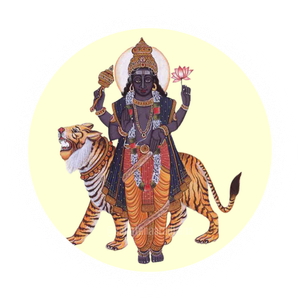
In Sanatana Dharma and traditional Indian astrology, Rahu is regarded as a powerful Chhaya Graha (shadow planet) among the Navagrahas. Astronomically, Rahu is not a physical planet but represents the North Lunar Node, the ascending intersection of the Moon's orbital plane with the ecliptic. In Vedic astrology, Rahu is associated with ambition, material desires, sudden changes, mysteries, and unconventional thinking.
In Hindu religious and astrological traditions, Rahu symbolises Maya (illusion), Moha (attachment), Trishna (craving), and worldly attractions. The spiritual purpose of Rahu worship is to inspire devotees to rise above confusion, greed, and uncontrolled desires, cultivating discernment, truthfulness, self-discipline, and conduct guided by Dharma.
Introduction
According to Puranic tradition, Rahu is associated with the Asura Svarbhanu, the son of Simhika and Viprachitti, and belongs to the lineage of Maharishi Kashyapa. The eighth Skandha of the Shrimad Bhagavata Mahapurana narrates the famous story of Rahu during the distribution of Amrita (the nectar of immortality) following the Samudra Manthan, or Churning of the Ocean.
According to the narrative, Lord Shri Hari Vishnu assumed the enchanting form of Mohini to distribute Amrita among the Devas. During this event, the Asura Svarbhanu disguised himself as a Deva and secretly joined their gathering. He managed to drink the Amrita, but Surya Dev and Chandra Dev recognised him and revealed his identity. Lord Vishnu then severed his head with the Sudarshana Chakra.
Having tasted the nectar of immortality, his severed head became immortal and was recognised as Rahu. In the widely followed Puranic tradition, the remaining body is associated with Ketu. This narrative also explains the mythological belief concerning Rahu's hostility towards the Sun and Moon and his association with eclipses.
Divine Form and Traditional Depiction
In Puranic descriptions and traditional iconography, Rahu is depicted with a dark blue or black complexion, a formidable appearance, and serpent-like features. Various representations show him with a prominent face, a crown, and divine weapons. In some traditions, Rahu is depicted as a severed head, while other forms combine human and serpentine characteristics.
The Navagraha Stotra, traditionally attributed to Maharishi Vedavyasa, offers the following prayer to Rahu Dev:
Ardhakayam Mahaviryam Chandradityavimardanam ।
Simhikagarbhasambhutam Tam Rahum Pranamamyaham ॥
Meaning: I bow to Rahu Dev, who possesses half a body, is endowed with immense power, is traditionally believed to eclipse the Sun and Moon, and was born from the womb of Mata Simhika.
Significance of Rahu in Vedic Astrology
In Vedic astrology, Rahu is classified as a Chhaya Graha and is traditionally considered a natural malefic. Rahu is associated with ambition, foreign lands, unconventional professions, politics, diplomacy, hidden knowledge, technological innovation, unexpected events, and material attractions. In traditional Jyotisha, a favourably placed Rahu is associated with unusual opportunities, investigative ability, original thinking, and unexpected progress.
Different schools of Jyotisha hold varying views regarding Rahu's zodiac rulership, exaltation, and debilitation. Some traditions consider Taurus (Vrishabha) to be Rahu's exaltation sign and Scorpio (Vrishchika) his debilitation sign, while other traditions follow different interpretations. Therefore, Rahu's astrological significance is generally examined through his zodiac placement, house position, dispositor, and relationships with other planets.
Principal Significations of Rahu
In traditional Jyotisha, Rahu is associated with foreign connections, material ambitions, sudden gains and losses, politics, diplomacy, mysteries, research, technological developments, and the desire for social recognition. Under challenging astrological conditions, Rahu is also symbolically associated with confusion, dissatisfaction, deception, excessive ambition, and poor judgment.
Rahu's Aspects and Planetary Relationships
Different traditions of Vedic astrology disagree about Rahu's aspects. Some schools recognise fifth, seventh, and ninth-house aspects, while others consider only the seventh-house aspect. Rahu's traditional interpretation also depends on the lord of the sign he occupies, planets in conjunction with him, and other conditions in the birth chart.
Rahu's Nakshatras, Mahadasha, and Transit
Rahu is the planetary ruler of three Nakshatras: Ardra, Swati, and Shatabhisha. In the Vimshottari Dasha system, Rahu's Mahadasha lasts for 18 years. In Vedic astrology, Rahu generally moves in a retrograde direction through the zodiac, spending approximately 18 months in each sign. This movement is known as Rahu Gochar, or Rahu transit.
Rahu Mahadasha or transit is not regarded as equally favourable or unfavourable for everyone. Traditional interpretations consider Rahu's house placement, dispositor, conjunctions, aspects, and the prevailing Antardasha before drawing conclusions.
Rahu and Solar and Lunar Eclipses
In Puranic tradition, Rahu is described as the celestial being who attempts to swallow the Sun and Moon. This belief is connected with the Samudra Manthan narrative, in which Surya Dev and Chandra Dev reveal Svarbhanu's identity during the distribution of Amrita.
According to astronomy, Rahu and Ketu represent the two intersection points of the Moon's orbital plane with the ecliptic. Solar and lunar eclipses become possible when the Sun, Earth, and Moon align appropriately near these nodes during Amavasya (New Moon) or Purnima (Full Moon).
This astronomical role of the lunar nodes is scientifically established, whereas beliefs concerning Rahu's influence on Karma, personality, and life events belong to the traditional interpretative framework of Jyotisha.
Religious Significance
In Sanatana tradition, the spiritual symbolism of Rahu is connected with Maya, attachment, and the powerful attractions of worldly life. Rahu reminds us that uncontrolled desires, greed, and deceptive conduct can disturb inner peace. Discernment, self-restraint, and adherence to Dharma are regarded as essential for maintaining balance in life.
In different devotional traditions, Rahu worship is associated with Lord Shiva, Lord Kalabhairava, and Mata Durga. Views regarding Rahu's Adhidevata (presiding deity) and Pratyadhidevata (associated deity) vary among Navagraha Puja traditions. Devotees undertaking special worship should therefore follow their own religious tradition and the guidance of a qualified Acharya.
Puja and Worship of Rahu Dev
Various religious traditions consider Saturday, Rahu Kalam, and particular Nakshatra combinations significant for the worship of Rahu Dev. Devotees may begin with a bath, wear clean clothes, meditate upon Rahu Dev, perform Mantra Japa, and worship Lord Shiva or Mata Durga. Sattvic conduct, devotion, and mental concentration are regarded as important aspects of regular worship.
In traditional Rahu Graha Shanti rituals, 18,000 repetitions of the Rahu Beej Mantra are commonly prescribed. Such elaborate rituals are best performed under the guidance of a qualified Acharya.
Rahu Puranic Mantra
Ardhakayam Mahaviryam Chandradityavimardanam ।
Simhikagarbhasambhutam Tam Rahum Pranamamyaham ॥
Rahu Vedic Puja Mantra
Om Kaya Nashchitra A Bhuvaduti Sadavridhah Sakha ।
Kaya Shachishthaya Vrita Om Rahave Namah ॥
This Vedic verse appears in the Rigveda, Mandala 4, Sukta 31, Mantra 1, and is originally addressed to Indra. In certain Navagraha Puja traditions, it is also recited during the Vedic invocation of Rahu.
Rahu Beej Mantra
Om Bhram Bhreem Bhraum Sah Rahave Namah ॥
Rahu Nama Mantra
Om Rahave Namah ॥
In addition, certain Tantric worship traditions use the following Mantra:
Om Aim Hreem Rahave Namah ॥
Sattvic Remedies and Charitable Offerings
According to religious and astrological traditions, donating black sesame seeds, whole Urad Dal (black gram), dark blue clothes, blankets, and other useful items on Saturdays is considered auspicious. Such donations should be made to people in need according to one's means and devotion.
Worshipping Lord Shiva and Mata Durga, practising honesty, avoiding intoxicants and deception, and helping those in need without expecting anything in return are regarded as meaningful Sattvic practices associated with Rahu Tattva. Showing compassion towards animals and birds and providing suitable food and clean water are also valuable acts of service.
In traditional Jyotisha, Hessonite Garnet (Gomed) is associated with Rahu. However, it is not considered equally suitable for everyone. Any decision to wear this gemstone should be based on a comprehensive assessment of the birth chart rather than the zodiac sign or Rahu Mahadasha alone.
Major Navagraha Temple of Rahu Dev
The Shri Naganathaswamy Temple (Thirunageswaram), located near Kumbakonam in the Thanjavur district of Tamil Nadu, is one of the principal Navagraha pilgrimage sites associated with Rahu Dev. This ancient temple is primarily dedicated to Lord Shiva in his Naganathaswamy form. The temple complex contains a special shrine for Rahu Dev, where he is worshipped together with his two consorts.
Special Abhishekam and Puja rituals are traditionally performed during Rahu Kalam at this sacred site. Milk Abhishekam for Rahu Dev is one of the temple's well-known religious observances. The usual Darshan timings are from 6:00 AM to 1:00 PM and from 4:00 PM to 9:00 PM. Timings may vary during festivals and special rituals.
Major Festivals and Auspicious Occasions
Saturday, the Nakshatras Ardra, Swati, and Shatabhisha, and special Graha Shanti rituals hold traditional significance in Rahu worship. During Nag Panchami and Mahashivratri, certain religious traditions also observe Rahu-related worship alongside prayers dedicated to Lord Shiva and serpent deities.
Mantra Japa and meditation during solar and lunar eclipses are considered spiritually significant in various Hindu traditions. However, religious practices and restrictions observed during eclipses differ among communities. At Thirunageswaram Temple, special Puja and Abhishekam ceremonies are regularly performed during Rahu Kalam.
Spiritual Message
The spiritual symbolism of Rahu teaches us that uncontrolled desires, greed, confusion, and pride can lead us away from truth. When the mind becomes clouded by attachment and selfish ambition, it becomes difficult to recognise what is genuinely beneficial and aligned with Dharma.
The essence of Rahu worship is to guide ambition with discernment, strength with righteous conduct, and desires with self-restraint. Cultivating honesty, freedom from intoxicants, compassion, and selfless service helps us maintain balance and inner clarity. This is the deeper spiritual message represented by Rahu Tattva.