


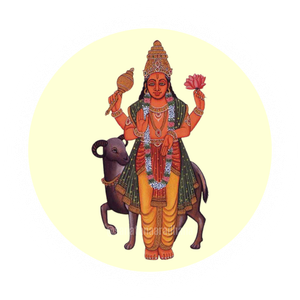
In the Navagraha tradition of Sanatana Dharma, Shri Mangal Dev is revered as the presiding deity of courage, strength, valour, energy, and self-confidence. The planet Mars, known for its striking reddish appearance in the sky, is also called Bhauma, Angaraka, Kuja, and Bhumiputra. According to Hindu tradition, the worship of Mangal Dev inspires devotees to cultivate fearlessness, self-discipline, determination, and the courage to uphold Dharma.
In Vedic astrology, Mars is regarded as a major significator of courage, physical strength, land, property, younger siblings, leadership, and the ability to take decisive action. According to traditional Jyotisha, a favourably placed Mars in the birth chart is associated with confidence, discipline, determination, and the strength to overcome difficult circumstances.
Introduction
According to Puranic tradition, Mangal Dev is regarded as the son of Mother Earth, which is why he is known as Bhauma, Kuja, and Dharaputra. Traditions associated with the Matsya Purana and Skanda Purana connect the origin of Mangal Dev with Lord Shiva and Prithvi Mata (Mother Earth). According to a well-known Puranic narrative, divine drops of perspiration fell from Lord Shiva's forehead onto the Earth. Mother Earth received this sacred energy, from which a radiant, red-complexioned child manifested. As he was nurtured by Mother Earth, he became known as Bhauma, or Mangal.
The sacred Shri Mangalnath Temple, situated near the Shipra River in Ujjain, Madhya Pradesh, is traditionally regarded as the mythological birthplace of Mangal Dev. Ujjain was also an important centre of ancient Indian astronomy and timekeeping. In certain historical systems of Indian astronomical calculation, the meridian passing through Ujjain served as a principal reference for determining celestial positions and time.
Vedic and Puranic Significance
In Puranic narratives, the origin of Mangal Dev is associated with the divine energy of Lord Shiva and Mother Earth. His identity as Bhumiputra symbolises courage, patience, protection, and action guided by Dharma. The energy represented by Mangal Dev is not limited to warfare or conflict; it also signifies resistance to injustice, dedication to duty, and the protection of society.
In Shaiva and Shakta worship traditions, Mars is also associated with the valour and divine power of Lord Kartikeya (Skanda). The worship of Lord Shiva and Shri Hanuman Ji is likewise practised in various traditions connected with Mangal Graha. The specific forms of worship and associated beliefs may differ across religious traditions.
Divine Form and Traditional Depiction
In Puranic descriptions and traditional iconography, Shri Mangal Dev is depicted as a radiant, red-complexioned deity bearing divine weapons. His appearance is compared to the brilliance of blazing fire. In various representations, he wears red garments and carries the Shakti (spear), a mace, and other weapons. In some iconographic traditions, his vehicle is depicted as a ram.
The Navagraha Stotra, traditionally attributed to Maharishi Vedavyasa, offers the following prayer to Mangal Dev:
Dharanigarbhasambhutam Vidyutkantisamaprabham ।
Kumaram Shaktihastam Tam Mangalam Pranamamyaham ॥
Meaning: I bow to Mangal Dev, who was born from the womb of Mother Earth, whose radiance resembles lightning, and who holds the divine Shakti weapon in his hand.
Significance of Mars in Vedic Astrology
In Vedic astrology, Mars is associated with the fire element and the energy of purposeful action. He is regarded as a principal significator of courage, strength, land, immovable property, younger siblings, competition, and leadership. In traditional Jyotisha, a favourably placed Mars is associated with self-confidence, discipline, determination, and the ability to face challenges with courage.
Mars rules Aries (Mesha) and Scorpio (Vrishchika). Capricorn (Makara) is his sign of exaltation, while Cancer (Karka) is his sign of debilitation. Mars reaches his exact exaltation point at 28 degrees of Capricorn and his exact debilitation point at 28 degrees of Cancer. According to the commonly followed Parashari tradition, the first 12 degrees of Aries form Mars's Moolatrikona region.
Principal Significations of Mars
In traditional Jyotisha, Mars is associated with courage, physical strength, land, buildings, protection, administration, technical professions, engineering, and younger siblings. Mars is also known as Bhratri Karaka, the significator of siblings, and is associated with land and property. A favourably placed Mars is traditionally linked with discipline, leadership, bravery, and the ability to act decisively while upholding Dharma.
Special Aspects of Mars
According to Parashari Jyotisha, Mars has special aspects on the fourth, seventh, and eighth houses from his position. The fourth aspect is considered significant in matters involving home, land, and security; the seventh in relationships and partnerships; and the eighth in transformation, conflict, and challenging circumstances. The traditional interpretation of these aspects depends on the houses involved and the overall planetary configuration of the birth chart.
Mars's Nakshatras, Mahadasha, and Transit
Mangal is the planetary ruler of three Nakshatras: Mrigashira, Chitra, and Dhanishtha. In the Vimshottari Dasha system, Mars's Mahadasha lasts for 7 years. In Vedic astrology, the movement of Mars from one zodiac sign to another is known as Mangal Gochar, or Mars transit. Its traditional significance is considered in matters related to courage, professional activities, land, property, and personal efforts.
A strong Mars in the birth chart is generally considered favourable for courage and the ability to take action. However, definite astrological results cannot be determined solely from his exaltation, placement in his own sign, or Mahadasha. House lordship, planetary strength, conjunctions, aspects, and other conditions in the birth chart must also be considered.
Significance of Mangal Dosha in Vedic Astrology
In traditional Vedic marriage astrology, Mangal Dosha, also known as Manglik Dosha or Kuja Dosha, is an important consideration. In commonly followed astrological systems, the placement of Mars in the first, fourth, seventh, eighth, or twelfth house of the birth chart is examined in relation to Mangal Dosha. Some traditions also include the second house.
However, the presence of Mars in these houses does not necessarily indicate marital difficulties or unfavourable outcomes. Traditional Jyotisha also considers exceptions and cancellations of Mangal Dosha, the seventh house, its ruling planet, Venus, Jupiter, the Navamsha chart, and the overall compatibility of both birth charts. Mangal Dosha should therefore be understood as a subject of traditional astrological interpretation rather than a reason for fear.
Religious Significance
In Sanatana tradition, Mangal Dev represents courage, strength, self-protection, and righteous action. Although Mars is classified as a naturally malefic planet in traditional Jyotisha, this does not mean that Mars always produces unfavourable results. His energy is also associated with bravery, constructive action, protection, and the fulfilment of one's duties.
From a spiritual perspective, the worship of Mangal Dev encourages devotees to overcome anger, pride, impulsiveness, and uncontrolled aggression. The worship of Lord Shiva, Shri Hanuman Ji, and Lord Kartikeya is also practised in various traditions as a Sattvic means of cultivating the positive qualities associated with Mars.
Puja and Worship of Mangal Dev
Tuesday, known as Mangalvar, is regarded as especially auspicious for the worship of Shri Mangal Dev. Devotees traditionally begin the day with a bath, wear clean red garments, meditate upon Mangal Dev, and offer red flowers, Akshata (unbroken rice), Kumkum, and Sattvic Naivedya. According to their family traditions, devotees may also worship Lord Shiva or Shri Hanuman Ji.
Mangal Hora and the Nakshatras Mrigashira, Chitra, and Dhanishtha are traditionally considered favourable for Mantra Japa. In specific Mars Graha Shanti rituals, 10,000 repetitions of the Mangal Beej Mantra are commonly prescribed. Such elaborate rituals are best performed under the guidance of a qualified Acharya.
Mangal Puranic Mantra
Dharanigarbhasambhutam Vidyutkantisamaprabham ।
Kumaram Shaktihastam Tam Mangalam Pranamamyaham ॥
Mangal Vedic Mantra
Om Agnirmurdha Divah Kakut Patih Prithivya Ayam ।
Apam Retamsi Jinvati Om Bhaumaya Namah ॥
This Vedic verse is originally a hymn in praise of Agni. In the Navagraha worship tradition, it is also recited during the Vedic invocation of Mars.
Mangal Beej Mantra
Om Kram Kreem Kraum Sah Bhaumaya Namah ॥
Mangal Nama Mantra
Om Bhaumaya Namah ॥
In addition, certain Tantric worship traditions use the following Mantra:
Om Hum Shreem Mangalaya Namah ॥
Sattvic Remedies and Charitable Offerings
According to religious and astrological traditions, donating copper, red Masoor Dal (red lentils), jaggery, wheat, red clothes, red sandalwood, and red flowers on Tuesdays is considered auspicious. Donations should be made to deserving recipients or people in need according to one's means and devotion.
Reciting the Hanuman Chalisa, worshipping Lord Shiva, helping those in need, and treating younger siblings and colleagues with respect are also regarded as meaningful Sattvic practices associated with Mangal Tattva. Controlling anger and avoiding harsh speech are important spiritual aspects of Mangal worship.
In traditional Jyotisha, the red coral gemstone (Moonga) is associated with Mars. However, it is not considered equally suitable for everyone. Any decision to wear this gemstone should be based on a comprehensive assessment of the birth chart rather than the zodiac sign alone.
Major Pilgrimage Site of Mangal Dev
The sacred Shri Mangalnath Temple, located in Ujjain, Madhya Pradesh, is one of the principal religious sites associated with Mangal Dev. According to local traditions connected with the Matsya Purana, this place is regarded as the mythological birthplace of Mars. Lord Shiva is worshipped here in his Mangalnath form, and special Puja rituals are performed for Mangal Graha Shanti.
The temple attracts a large number of devotees, especially on Tuesdays. Bhaat Puja, Abhishekam, and rituals associated with Mangal Shanti form an important part of its religious traditions. Devotees are advised to obtain current information regarding Puja arrangements and Darshan from the temple administration.
Major Festivals and Auspicious Occasions
Every Tuesday (Mangalvar) is regarded as a special day for the regular worship of Shri Mangal Dev. In certain Vrat traditions, devotees observe Tuesday fasts for 21 weeks or another prescribed number of Tuesdays. The duration and method of observance may vary according to regional and family traditions.
When Krishna Paksha Sankashti Chaturthi falls on a Tuesday, it is known as Angaraki Sankashti Chaturthi. This occasion is considered particularly auspicious for the worship of Lord Shri Ganesh. Its name, Angaraki, also connects the observance with Mangal, who is known as Angaraka.
The Nakshatras ruled by Mars—Mrigashira, Chitra, and Dhanishtha—are also considered significant for special Mantra Japa. At the Mangalnath Temple in Ujjain, special Puja and Abhishekam rituals are traditionally performed on Tuesdays and other important religious occasions.
Spiritual Message
The divine form of Shri Mangal Dev teaches us that true courage does not lie merely in defeating external enemies, but in overcoming the anger, fear, pride, and lack of self-control within ourselves. Strength without discipline may lead to destruction, while strength guided by wisdom and Dharma becomes a powerful means of protection and service to society.
The essence of Mangal Dev worship is to cultivate courage without arrogance, strength without its misuse, and determination without cruelty. Even in times of conflict, our actions should remain guided by truth, justice, compassion, and Dharma.