


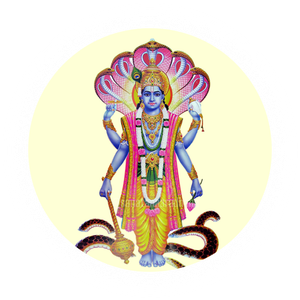
Jai Shri Krishna! Beloved devotees, immerse yourselves in the sacred narratives that reveal the profound glory of Dharma, devotion, and Vratas. Today, let us humbly listen to a beautiful Katha from the Puranas, as narrated by Bhagwan Shri Krishna to Arjuna, illustrating the immense power of faith and the blessings bestowed by the divine.
The Sacred Katha: How Childless King Mahajit Was Blessed with a Son
As the archer Arjuna listened to the glory of Dharma, devotion, and Vratas, his spiritual curiosity grew even more. He humbly said to Shri Krishna, “O Prabhu! O Lotus-Eyed One! My heart has been immensely pleased by all the Ekadashi Kathas You have narrated so far. Now, please graciously narrate the glory of the Ekadashi that falls in the Shukla Paksha of Shravan Maas. What is its name? Which Deity is worshipped on it? What are its prescribed rituals? And what fruits are obtained by observing its Vrat?”
Shri Krishna said, “O Partha! Listen attentively. The Ekadashi that comes in the Shukla Paksha of Shravan Maas is named ‘Putrada Ekadashi’. This Ekadashi is specifically meant for those who desire to be blessed with children. The observance of this Ekadashi’s Vrat, its Puja, and its night-vigil (Ratri-Jagaran) yield such immense fruits that merely hearing about it is said to bestow the merit of countless Yagnas.”
“In the beginning of the Dwapar Yuga, there was a very prosperous city named Mahishmati. In that city, a king named Mahajit reigned. The king was righteous (Dharmatma), affectionate towards his subjects (Prajavatsal), generous (Daani), not one to hoard like a merchant, and he nurtured everyone as his own children – yet, one sorrow gnawed at him day and night: he was childless.
O Arjuna! Not having a son is considered a cause of immense sorrow for a man, for the scriptures state that without a son, neither is this earthly life (Ihalok) fulfilled, nor is the ancestral debt (Pitri-Rin) repaid, nor is lasting happiness attained in the afterlife (Paralok). This very worry consumed King Mahajit. The older he grew, the more his anxiety increased. Despite having a kingdom, wealth, elephants, horses, jewels, and a queen – everything felt meaningless to him, because he had no son.
One day, in his court, the king addressed his ministers, priests, and courtiers, saying, “O esteemed people! In my life, I have neither collected unjust taxes, nor oppressed my subjects, nor insulted any Brahmin or Deity, nor have I ever seized anyone’s possessions for my own enjoyment. Yet, I am deprived of the joy of a son. What sin is this the fruit of? Please deliberate upon this. If there is any solution, please tell me.”
Hearing the king’s heartfelt plea, the ministers, priests, and courtiers all became sorrowful. They deliberated amongst themselves, saying, “The king’s sorrow is our sorrow. The king has nurtured us as his own children; now it is our Dharma to find a remedy for his grief.”
Then, with the king’s permission, they all set off towards the forest, hoping to meet a great ascetic, Rishi, or Yogi who could reveal the means for the king to attain a son. Wandering through the forest, they eventually arrived at the ashram of the highly effulgent, ancient, and wise Maharshi Lomash, who was a knower of the mysteries of Dharma.
The ministers humbly prostrated themselves and said, “O great Sage! Our fortune has truly risen today, for we have been blessed with your Darshan. We have come bearing a message from a righteous, yet childless king. King Mahajit reigns in the city of Mahishmati. He is a righteous soul (Dharmatma), he nurtures his subjects as his own children, and he commits no injustice – yet, he has no son, and for this reason, he is exceedingly sorrowful. O great Sage! We are all his subjects, and therefore we too are grieved by his sorrow. Please graciously tell us – what is the cause of this, and what is its solution?”
Maharishi Lomash, being pleased, said, “Very well, listen. The Ekadashi that falls in the Shukla Paksha of the month of Shravan is known as ‘Putrada Ekadashi’. If all of you observe this Vrat on that day according to the proper Vidhi, keep night vigil, worship Bhagwan Vishnu, and then offer the entire merit of that Vrat to your king with the Sankalp — ‘Etat Phalam Asmat Rajne Mahajitaya Samarpayamah’ — then your king will surely be blessed with a son. The fault of his previous birth will also be removed, and the desire of this birth will be fulfilled.”
Hearing this, the ministers bowed again and again to the sage, received his blessings, and returned to Mahishmati with joyful hearts. After returning, they narrated everything to the king and then had an announcement made throughout the city that everyone should observe the Shravan Shukla Putrada Ekadashi Vrat on the appointed Tithi.
The appointed day arrived. With the welfare of the king in their hearts, the ministers, priests, queens, servants, and citizens all observed the Putrada Ekadashi fast together. They worshipped Bhagwan Vishnu, listened to the Katha, performed Harinam Sankirtan, and kept night vigil with devotion.
On the day of Dwadashi, they all made one collective Sankalp: “O Bhagwan Vishnu! Whatever merit we have received from this Vrat, we offer it to our dharmic, compassionate, and childless king Mahajit. May his faults be destroyed, and may he be blessed with a worthy son.”
By the grace of Bhagwan, this soon came to pass. The queen conceived, and after nine months, she gave birth to a radiant, handsome, intelligent son, blessed with royal qualities and destined to become the light of the dynasty. The king’s heart was filled with joy, the people celebrated, and everyone understood that this was the divine effect of the Shravan Shukla Putrada Ekadashi Vrat.
Shri Krishna said to Arjun, “O son of Pandu! For this reason, this Ekadashi is called ‘Putrada’. Whoever observes this Vrat with the desire for children, or for the blessing of children for a relative or loved one, or with the feeling of satisfying the ancestors, and worships Bhagwan Shri Hari, surely receives the blessing of children. By this Vrat, one receives honor, stable happiness in this world, and the attainment of Swarg in the next.”
Summary of the Katha
This Katha teaches that whether a sin is small or subtle, its fruit must be faced. Just as the act of moving the cow away and drinking water first resulted in childlessness, it also becomes clear that a sacred Vrat like Ekadashi, when performed with the right Sankalp, can remove even the faults of a previous birth. When a dharmic people come together, pray for their king, and dedicate the merit of the Vrat to him, even the king’s sorrow is removed. Therefore, this Ekadashi is called ‘Putrada’ and is considered like a wish-fulfilling Kalpavriksha for those who desire the blessing of children.