


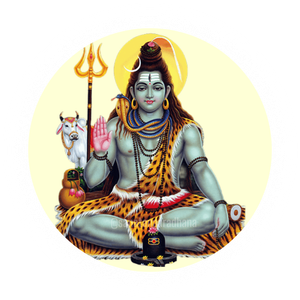
Mahashivratri is one of the most sacred and important festivals dedicated to Lord Shiva. It is observed every year on the Chaturdashi tithi of Krishna Paksha in the month of Phalguna. In Sanatan Dharma, this day holds deep spiritual, religious, and cultural significance. Devotees observe fasting, night-long vigil, Shiva Linga abhishek, mantra chanting, and worship of Lord Shiva to seek His divine grace. It is believed that sincere observance of Shivratri vrat removes many difficulties from life and blesses the devotee with peace of mind, spiritual upliftment, and Lord Shiva’s grace.
The significance of Mahashivratri is described in detail in sacred texts such as the Shiva Purana, Skanda Purana, Linga Purana, and other scriptures. On this day, not only rituals but also self-control, meditation, forgiveness, compassion, and devotion hold great importance. Lord Shiva is known as “Bholenath” because He is quickly pleased by the sincere devotion of His devotees.
There are several traditional stories associated with Mahashivratri. These include the story of King Nishad, the tale of the hunter (Chitrabhanu), the divine marriage of Lord Shiva and Goddess Parvati, and the manifestation of the infinite Jyotirlinga. The central message of all these stories is that Lord Shiva accepts pure devotion and sincere feelings more than external rituals or show.
Why is Mahashivratri Celebrated?
According to various Puranas and traditions, Mahashivratri is associated with several beliefs. Some scriptures state that on this day, the divine marriage of Lord Shiva and Goddess Parvati took place. Others believe that on this sacred night, Lord Shiva manifested in the form of the infinite Jyotirlinga. Another belief is that Lord Shiva consumed the deadly poison (Kalakuta) that emerged during the churning of the ocean (Samudra Manthan), thereby protecting the entire universe.
The essence of all these beliefs is that Mahashivratri is a festival that leads from ignorance to knowledge, from ego to humility, from restlessness to inner peace, and from worldly attachments toward divine consciousness.
The Story of King Nishad and Shivratri Vrat
According to the Shiva Purana, in ancient times there lived a Nishad king named Sundarsen in the region of Arbuda. He sustained himself and his family by hunting. One day, he went into a dense forest with his dogs in search of prey. Despite trying the entire day, he found nothing. As the sun set, darkness spread all around. Hungry and thirsty, the king decided to spend the night in the forest.
At a distance, he found a calm water reservoir. Near it stood a large Bilva tree, beneath which a Shiva Linga was स्थापित. The king had no knowledge of its significance. Fearing wild animals, he climbed the Bilva tree to remain safe for the night.
During the night, unable to sleep, he kept plucking leaves and dropping them down. By coincidence, those Bilva leaves fell on the Shiva Linga below. When he felt thirsty, he sipped water from his vessel, and some drops also fell onto the Shiva Linga. Thus, unknowingly, he performed Shiva worship throughout the night.
Because he remained awake the entire night, the night vigil (jagran) was also completed. In this way, without knowing, he fulfilled all aspects of Mahashivratri observance—fasting, night vigil, water offering, and Bilva leaf offering.
At dawn, the king returned home and continued his life as before. Many years later, when his time of death arrived, the messengers of Yama came to take his soul. At the same time, the attendants of Lord Shiva also arrived. A dispute arose between them regarding who would take him.
The attendants of Shiva declared that the king had unknowingly performed worship of Lord Shiva on Mahashivratri through offering water, Bilva leaves, and night vigil. Even though it was unintentional, Lord Shiva accepts sincere devotion, even in the smallest form.
Finally, by the will of Lord Shiva, the king was taken to Kailash and granted a place among the Shiva Ganas. This story shows that Lord Shiva is pleased by pure devotion and innocent faith.
Teachings from This Story
- Lord Shiva accepts devotion, not just ritual perfection.
- Even actions done unknowingly can bring spiritual merit.
- Night vigil, abhishek, and Bilva leaf offerings hold great importance.
- Small acts of sincere devotion can bring great spiritual results.
- Lord Shiva’s compassion is equal for all beings.
Spiritual Message of Mahashivratri
Mahashivratri is not just a religious festival but also a sacred opportunity for self-reflection and inner purification. Fasting on this day is not merely about abstaining from food, but about purifying thoughts, speech, and actions. Night-long vigil symbolizes awakening from the darkness of ignorance toward the light of self-realization. Meditation on Lord Shiva stabilizes the mind and fills life with positive spiritual energy.
According to scriptures, one who observes the Mahashivratri Vrat with faith, discipline, and devotion is blessed with happiness, peace, prosperity, and spiritual growth. Lord Shiva removes the sufferings of His devotees and guides them toward the path of righteousness.
Story of the Hunter (Chitrabhanu) and Shivratri Vrat
Among the most well-known stories associated with Mahashivratri is that of the hunter, which is described in the Shiva Purana and other sacred texts. The essence of this story is that Lord Shiva is pleased by sincere devotion, truthfulness, and pure intention.
In ancient times, there lived a hunter who supported his family by hunting in the forest. One day, he wandered the entire day in search of prey but found nothing. As evening approached, he could not return home empty-handed, so he decided to wait in the forest through the night.
He climbed a large Bilva tree, beneath which a Shiva Linga was स्थापित. The hunter had no knowledge of its spiritual significance. He also carried a water pot with him.
During the first watch of the night, a pregnant doe came to the water source. The hunter aimed his bow, but the doe pleaded, “Allow me to return after giving birth to my young ones. I promise I will come back.” Moved by her request, he allowed her to go.
While waiting, he remained awake and unknowingly kept plucking Bilva leaves, which kept falling onto the Shiva Linga below. Thus, without intention, Bilva worship continued throughout the night.
In the second watch, another doe arrived and also requested permission to return after meeting her family. The hunter again let her go.
In the third watch, a strong deer appeared and made the same request. He too was allowed to leave.
In the fourth watch, all three deer returned along with their families, faithfully keeping their promises. Seeing this, the hunter’s heart was deeply moved. He realized the value of truth, compassion, and non-violence.
At that moment, he renounced violence and took a vow never to harm any living being again. Lord Shiva then appeared before him in His divine form and, pleased with his repentance and the unknowingly performed worship, blessed him with liberation.
Some scriptures mention that in his next birth, the same hunter was born as King Chitrabhanu, who remembered his past life due to accumulated merit. He then explained the importance of Mahashivratri Vrat to others and observed it with great devotion.
Teachings from the Story of Chitrabhanu
- Truthfulness leads to divine grace.
- Compassion is the highest form of dharma.
- Even unknowingly performed Shiva worship brings great spiritual merit.
- Repentance can transform a person’s entire life.
- Lord Shiva shows equal compassion toward all beings.
Belief of the Divine Marriage of Shiva and Parvati
Another widely held belief associated with Mahashivratri is that this sacred night marks the divine marriage of Lord Shiva and Goddess Parvati. Goddess Parvati performed intense penance for many years to attain Lord Shiva as her consort. Pleased by her devotion, Lord Shiva accepted her and the divine marriage took place in the presence of gods and sages.
This story represents not just a marriage, but the union of Shiva (consciousness) and Shakti (energy), which is considered the foundation of creation and balance in the universe.
Manifestation of the Infinite Jyotirlinga
According to the Linga Purana, once Lord Brahma and Lord Vishnu disputed about who among them was superior. Suddenly, an infinite pillar of light appeared between them, without beginning or end.
Lord Vishnu took the form of a boar and went downward to find its base, while Lord Brahma took the form of a swan and flew upward to find its top. Despite their efforts, neither could find the beginning or end of that infinite light.
Then Lord Shiva emerged from that radiant pillar and revealed that He is the beginning, middle, and end of everything. This infinite form is represented as the Shiva Linga. This is why Shiva worship on Mahashivratri is considered extremely sacred.
This story teaches that the divine is infinite and can only be realized by surrendering ego.
Story of Neelkanth Mahadev (Samudra Manthan)
According to the Puranas, during the churning of the ocean (Samudra Manthan), a deadly poison called Kalakuta emerged, threatening all existence. Neither gods nor demons could bear it.
To protect the universe, Lord Shiva compassionately consumed the poison. Goddess Parvati held it in His throat to prevent it from spreading further. The poison turned His throat blue, and hence He is known as Neelkanth.
The tradition of offering water to the Shiva Linga on Mahashivratri is symbolically linked to this event, representing the cooling of Lord Shiva’s divine energy.
Spiritual Message of All These Stories
The essence of all Mahashivratri stories is one—truth, compassion, renunciation, humility, self-control, and unwavering devotion to God. Whether it is the hunter, King Chitrabhanu, Goddess Parvati, or Neelkanth Mahadev, all narratives highlight that Lord Shiva is pleased not by external rituals but by pure devotion and sincere heart.
One who observes fasting, chanting, meditation, night vigil, and Shiva abhishek on this day while practicing truth, compassion, and discipline in life becomes eligible for Lord Shiva’s divine grace. This is the true spiritual essence of Mahashivratri.
Mahashivratri Vrat Method
The Mahashivratri Vrat symbolizes devotion, discipline, and spiritual purity. Observing this vrat with sincerity brings immense spiritual merit. Preparation ideally begins a day before by maintaining a sattvic lifestyle and mental purity.
Method to Begin the Vrat
- On the day before Shivratri, consume sattvic food and avoid anger, false speech, and tamasic (impure) food.
- Wake up during Brahma Muhurta and take a bath. Wear clean clothes.
- In your home temple or a Shiva temple, take a vow (sankalp) of fasting while remembering Lord Shiva.
- If possible, observe a complete fast or take only fruits (phalahar).
- Throughout the day, chant “Om Namah Shivaya” or the Mahamrityunjaya Mantra.
Shiva Linga Abhishek Method
First, bathe the Shiva Linga with clean water or Ganga water. Then perform abhishek with Panchamrit (milk, curd, ghee, honey, and sugar). After that, again bathe it with pure water and offer sandalwood paste, rice grains, flowers, dhatura, datura flowers, sacred ash (bhasma), and Bilva leaves. Finally, offer incense, lamps, and naivedya, and chant Shiva mantras with devotion.
Mahashivratri Puja Materials
- Clean water or Ganga water
- Panchamrit
- Milk
- Curd
- Ghee
- Honey
- Sugar or misri
- Bilva leaves (with three leaflets)
- Dhatura
- Bhang (as per tradition)
- Aak flowers
- White flowers
- Sandalwood paste
- Sacred ash (bhasma)
- Rice grains (akshat)
- Incense and oil lamp
- Fruits and naivedya
- Rudraksha mala (if available)
Significance of the Four Prahars of Worship
The night of Mahashivratri is divided into four prahars (watches). Worshipping Lord Shiva during all four prahars is considered highly auspicious. It is believed that this grants the merit of an entire year of Shiva worship.
First Prahar
In the first prahar, perform abhishek with pure water or Ganga water. Offer Bilva leaves, sandalwood, and white flowers while chanting “Om Namah Shivaya.”
Second Prahar
In the second prahar, perform abhishek with milk and Panchamrit. Offer incense, lamps, and naivedya, and recite Shiva Chalisa or Rudrashtadhyayi.
Third Prahar
In the third prahar, abhishek is traditionally done with curd, ghee, or honey. Chanting the Mahamrityunjaya Mantra during this time is considered highly beneficial.
Fourth Prahar
In the final prahar, again perform abhishek with Ganga water. Offer Bilva leaves, dhatura, and fruits. After performing aarti, pray for family happiness, health, and spiritual growth.
Rules of Shivratri Vrat
- Remain pure in thoughts, speech, and actions throughout the day.
- Avoid anger, arguments, and harsh words.
- Do not consume tamasic food, meat, alcohol, or intoxicants.
- Observe fasting if health permits, otherwise take fruits.
- Stay awake at night and engage in mantra chanting and bhajans.
- Help the needy and perform acts of charity.
- Respect elders and parents.
- Ensure Bilva leaves offered in worship are clean, unbroken, and not upside down.
Completion of the Vrat (Parana)
On the next morning, after taking a bath, worship Lord Shiva again. Donate food, clothes, or dakshina to Brahmins or the needy as per your capacity. Then take prasad of Lord Shiva and complete the fast with sattvic food. This is considered the proper way to conclude the vrat.
Importance of Mahashivratri Vrat
It is believed that observing Mahashivratri vrat brings the special grace of Lord Shiva. This vrat is not only for material benefits but also for spiritual upliftment. With faith and discipline, it stabilizes the mind, develops positive thinking, and strengthens devotion toward God.
Unmarried individuals observe this vrat for an ideal life partner, married couples for marital harmony, and spiritual seekers for inner growth.
Results of Mahashivratri Vrat
- One receives the blessings of Lord Shiva and Goddess Parvati.
- The mind attains peace and positive energy.
- Progress is made in spiritual practice.
- Harmony and happiness increase within the family.
- Faith, discipline, and self-confidence grow stronger.
- One is inspired to follow righteousness and virtue in life.
Conclusion
Mahashivratri is not just a festival or ritual, but a sacred occasion for self-reflection, spiritual practice, and complete devotion to Lord Shiva. The stories of the Nishad king, the hunter, King Chitrabhanu, the divine marriage of Shiva and Parvati, and the manifestation of the infinite Jyotirlinga all teach us that Lord Shiva values a pure heart and sincere devotion above all external rituals.
One who observes Mahashivratri vrat with faith, discipline, truth, and compassion becomes eligible for Lord Shiva’s divine grace, and his life moves toward spiritual upliftment.
Frequently Asked Questions about Mahashivratri Vrat Katha