


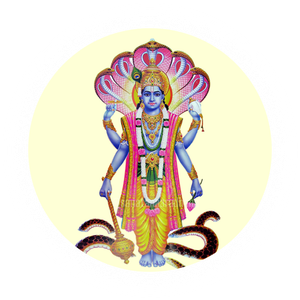
Let us humbly listen to the sacred narration of the Padmini Ekadashi, as recounted by Bhagwan Shri Krishna to Arjuna in the scriptures. This divine Vrat holds the power to fulfill the most cherished desires and overcome the greatest challenges.
The Sacred Katha: How Kartavirya Arjun Captured Ravana
Arjuna humbly inquired, “O Madhav! What is the sacred name of the Ekadashi that falls during the bright fortnight of the Adhik Maas (Purushottam Maas)? How should its Vrat be observed, and what divine fruits does it bestow? If even a regular Ekadashi yields such immense merit, then how profound must be the power of this special Ekadashi?”
Bhagwan Shri Krishna replied, “O Partha! This sacred Adhik Maas, which appears periodically, is exceedingly dear to My heart. The Ekadashi that occurs during its bright fortnight is known as ‘Padmini Ekadashi’. This divine Vrat has the power to incinerate sins, fulfill all cherished desires, and render even the most impossible tasks attainable. Its sacred fruit is never, ever in vain.”
The Suffering of the King
In the Treta Yuga, there was a radiant and righteous king of the city of Mahishmati. He was virtuous, generous, and devoted to his people. Yet he had one sorrow in life — he had no son. He performed many yajnas, gave abundant charity, satisfied the Brahmins, and worshipped the gods, but still he did not receive a child. His queen, named Pramada, was equally chaste, devoted, and spiritually disciplined.
One day the king said to the queen: “O Devi! I have a kingdom, wealth, and an army, but no heir. Without a child, everything feels incomplete. Now I shall go to the forest and perform penance; perhaps the Lord will be pleased there.”
The queen replied: “O Lord, wherever you go, I shall accompany you. I cannot remain without you even for a moment.”
Severe Penance in the Forest
Both of them went to the Gandhamadana mountain. There they had no concern for cold or heat — only one thought remained: “When will the Lord become pleased?” The king performed intense penance, enduring heat and rain. Thousands of years passed, yet still the blessing of a son did not arrive.
In that forest was the hermitage of the great ascetic Devi Anasuya, wife of Sage Atri. Queen Pramada approached her and fell at her feet, saying: “Mother, why has our penance not yet borne fruit? Is our effort incomplete? Is our method incorrect? Kindly show us the right path.”
Instruction of Devi Anasuya
Anasuya said: “O daughter, your penance is not in vain — it is only that the time has not yet come. Listen carefully. Every thirty-six months, an additional month called Adhik Maas appears, which is extremely dear to Lord Vishnu. The Ekadashi that falls in the bright fortnight of this month is called Padmini Ekadashi.
On this day, men and women who observe discipline, bathing, restraint, worship of the Lord, night vigil, and charity receive even impossible boons. You both should observe this Ekadashi. Then you will see that Lord Hari Himself will come to grant the boon.”
Observance of the Vrat
Hearing the words of the noble sage, the king and queen waited for the arrival of Adhik Maas. As soon as Padmini Ekadashi arrived, they began their observance from the previous day (Dashami):
- They renounced the use of metal utensils
- They gave up meat, lentils, chickpeas, coarse grains, honey, and food prepared by others
- They observed sleeping on the ground and celibacy
On the morning of Ekadashi, both bathed in pure water, purified their bodies with earth, remembered the holy rivers, and installed the idol of Lord Vishnu on a sacred seat. They worshipped Him with incense, lamps, offerings, flowers, and Tulsi leaves, and observed a complete fast throughout the day.
At night, they listened to the Lord’s stories, performed kirtan, offered lamps, and observed night-long vigil (jagran), as this Ekadashi is especially associated with night vigil.
Grace of the Lord
Seeing their determination, discipline, and devotion, Lord Vishnu became extremely pleased. Divine music echoed in the sky, flowers rained down, and the Lord appeared and said:
“O King and O noble queen! Your vow has reached Me directly. Ask for any boon you desire.”
The king folded his hands and said: “O Lord, I do not desire heaven, wealth, or fame. I only wish for a son who is victorious over all, devoted to You, and fearless before gods, demons, and humans.”
The Lord smiled and said: “So be it. A son like this shall be born to you. This blessing has come not through ordinary effort, but through this very Padmini Ekadashi.”
Birth of Kartavirya and His Victory over Ravana
In due time, the queen gave birth to a radiant and extraordinary child. He later became known as Kartavirya Arjuna (Sahasrabahu). He conquered many lands with his thousand arms and even captured the mighty Ravana.
When Sage Narada witnessed this, he asked how Ravana, so powerful and illusionary, had been captured. Sage Pulastya revealed that it was the effect of Padmini Ekadashi that made this possible.
Essence of the Story
This is the essence of the story: Sometimes effort is correct, devotion is present, and intention is pure — yet the result is delayed because the sacred timing is missing. When effort, devotion, and the Lord’s beloved time come together, even the impossible is achieved. Padmini Ekadashi is that divine time which brings delayed results into fruition.
Therefore, O Arjuna — and all listeners — those who feel their desires are blocked should observe this Ekadashi with faith. It revives hope and opens the path forward.
Summary
- It destroys sins of past lives
- It removes obstacles in destiny and fulfilled desires
- It eliminates poverty, childlessness, and misfortune
- It ultimately leads the soul toward Vaikuntha, the abode of Lord Vishnu