


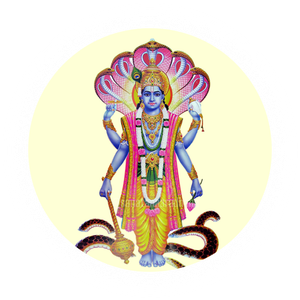
Let us immerse ourselves in the sacred narrative of one of Bhagwan Vishnu’s most beloved Vrats, a tale that cleanses the heart and bestows immense blessings. This is the divine conversation between Bhagwan Shri Krishna and Arjuna, revealing the profound glory of Aparā Ekadashi.
The Sacred Aparā Ekadashi Vrat Katha: Bestower of Faith, Devotion, and Punya
Arjuna’s Question: Arjuna humbly asked, “O Prabhu! What is the name of the Ekadashi that falls during the Krishna Paksha (dark fortnight) of the Jyeshtha month? What is its profound glory (Mahatmya)? Which Deity is worshipped on this day, and what is the prescribed method (Vidhan) for observing its Vrat? Please, out of Your divine grace, explain everything in detail.”
Bhagwan Shri Krishna’s Reply: Shri Krishna said, “O Dhananjaya! The Ekadashi of Jyeshtha Krishna Paksha is known as ‘Aparā’ or ‘Achalā’ Ekadashi. It is called ‘Aparā’ because it bestows boundless (apar) Punya (merit), fame (Yash), glory (Kirti), and the destruction of sins upon the devotee. This Vrat is so potent that even the gravest transgressions dissolve and are eradicated by its divine influence.”
The Bountiful Fruits of Aparā Ekadashi
Shri Krishna continued, “O Partha! The devotee who observes this Ekadashi Vrat with utmost faith, his name spreads like a sweet fragrance throughout the world. Through this Vrat, even the most grievous sins are purified, such as –
• heinous sins akin to Brahmahatya (killing of a Brahmin),
• the blemish of being born as a ghost or in a lower species,
• the defilement accumulated by slandering others,
• illicit relations with another’s wife,
• giving false testimony,
• misleading people by propagating false scriptures or corrupt astrology,
• deceiving people for wealth by posing as a false physician or Guru
– all these sinful deeds are burnt to ashes.”
Furthermore, even a Kshatriya who flees from the battlefield – a deed considered most ignoble by the Shastras – if he observes the fast of Aparā Ekadashi, he too finds the path to Swargagaman (attaining heaven).
Similarly, disciples who acquire knowledge from a Guru and later slander their Guru – who are normally destined for sorrowful realms – even for them, this Ekadashi becomes a means of purification.
The Merit Equal to Innumerable Pious Deeds
O Arjuna! The supreme merit obtained by bathing in all three Pushkar Tirthas, by taking a sacred bath early in the morning during the month of Kartik, by offering Tarpana to ancestors on the banks of Maa Ganga, or by bathing in the Gomati River on a Thursday – that very same fruit is bestowed by this single Ekadashi alone.
Bathing in Kurukshetra during a solar or lunar eclipse, residing in Badarikashram, having the Darshan of Shri Kedarnath, donating elephants and horses, donating land or gold – the combined merit of all these acts is attained solely through Aparā Ekadashi.
Therefore, it is said – this Vrat is like an axe that fells the tree of sin, and like the sun that illuminates the darkness of sinful deeds.
Simple Steps for Observing the Vrat
• From Dashami itself, refrain from sensual pleasures, lies, slander, and anger.
• On the day of Ekadashi, after taking a morning bath, perform Puja of Shri Vishnu with Tulasi, Dhup, (incense) Deep (lamp), and Naivedya (offerings).
• Observe a fast throughout the day with the sentiment, ‘O Hari! Please remove all my sins, known and unknown.’
• At night, chant Hari Nama, listen to Katha, or perform Kirtan according to your capacity.
• On Dwadashi, offer food and Dakshina to Brahmins / Vipras / Sadhus, and then break your fast (Pāran).
The Profound Essence of Aparā Ekadashi
Shri Krishna said, “O Arjuna! This Vrat truly bestows ‘additional devotion’. A person who performs Puja with a lax mind on ordinary days, this Ekadashi grants him steadfast faith. One who was previously entangled in sin, this Vrat turns him towards Vishnu Dhama. It is for the welfare of all beings that I have thus narrated its profound Mahatmya.”
Even one who listens to or narrates this sacred Katha has their sins destroyed, and they attain merit equivalent to donating a thousand cows (Go-dān).”
Summary of the Divine Katha
• The meaning of ‘Aparā’ is – that which enhances further – this Vrat amplifies faith (Shraddha), devotion (Bhakti), and merit (Punya), all three.
• This Vrat is especially compassionate for those who have strayed, stumbled, or committed offenses.
• It reveals that there is no greater penance than devotion to Vishnu – no matter how grave the transgression.