

Let us immerse ourselves in the sacred narrative of Utpanna Ekadashi, a day of profound spiritual significance. This divine Katha, originally revealed by Bhagwan Shri Krishna to Arjuna, illuminates the immense glory of observing the Ekadashi Vrat and the miraculous origin of this powerful Tithi itself.
The Sacred Origin of Utpanna Ekadashi
Shri Sutji said: O learned Sages! The profound glory of this Ekadashi was narrated by Bhagwan Shri Krishna Himself to Arjuna. Devotees, both men and women, who observe this Vrat with faith and listen to its sacred Katha with love, experience joy in this world and ultimately attain the divine abode of Vaikuntha.
Arjuna asked: “O Janardana! Why is such immense glory attributed to the Ekadashi Vrat? What merits are gained by observing it, and what is its proper method? Please enlighten me.”
Shri Krishna replied: “O Partha! One should first observe the Ekadashi Vrat that falls during the Krishna Paksha of the Margashirsha month in the Hemant season. The Vrat is considered to begin on the evening of Dashami. On that night, one should avoid heavy meals, clean their teeth, and maintain self-control. On the day of Ekadashi, wake up early in the morning, take a Sankalp (vow) to observe the Vrat, and perform a sacred bath at midday. Applying mud (mruttika) to the body before the bath, and then applying Chandan Tilak after the bath – these are all prescribed methods for this Vrat.”
Mantra for Applying Chandan (Sandalwood Paste):
Uddhritasi Varahena Krishnena Shatabahuna॥
Mrittike Hara Me Papam Yan Maya Dushkritam Kritam.
Tvaya Puta Vasundhare Gaccha Devi Suralayam॥
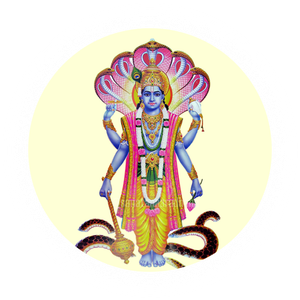
Thereafter, one should perform Puja to Bhagwan Vishnu with incense (Dhup), lamps (Deep), and offerings (Naivedya). At night, one should perform Deepdan (offering of lamps), observe Jagaran (night vigil), and protect the mind from any form of lustful desire, worldly indulgence, or impure thoughts. On this day, offering Dana (charity) and Dakshina to Brahmins with devotion, seeking forgiveness for transgressions, and chanting the divine names of Hari are extremely fruitful. Those who are learned in the Shastras consider the Ekadashis of both Shukla Paksha and Krishna Paksha to be equally significant, making no distinction between them.
O Arjuna! The merit gained from bathing in the sacred tirtha of Shankhoddhara is not even equal to one-sixteenth of the merit obtained from this Ekadashi Vrat. The Punya (merit) attributed to Dana during Vyatipata Yoga, Sankranti, solar or lunar eclipses, or bathing in Kurukshetra – all these are equivalent to the Punya that sincere observance of Ekadashi bestows. The fruit received from donating a thousand cows is ten times less than the Punya obtained from the Ekadashi Vrat. The merit gained from feeding ten excellent Brahmins is also only one-tenth of the Punya of Ekadashi. Therefore, it is said – “All other Vrats, acts of charity (Dana), and Yajnas become truly meaningful only through the observance of Ekadashi.”
Prohibitions during the Vrat: On this day, one should not drink water from a conch shell. Consumption of meat and Tamasic (impure) food is strictly forbidden during this Vrat. This Vrat is superior even to a thousand Yajnas.
The Divine Manifestation of Ekadashi
Arjuna further asked: “O Glorious One! Why have you described this Ekadashi as superior to so many sacred tirthas? Please reveal its fundamental origin as well.”
Shri Krishna narrated: “O son of Pandu! In the Satya Yuga, there lived an exceedingly cruel and mighty demon named Mura. He defeated Indra and the Devas, expelled them from Swarga, and seated other Asuras in their place. Distraught, the Devas first prayed to Bhagwan Shankar. Mahadev told them – ‘This task will be accomplished by Vishnu; you should go to Ksheersagar (the Ocean of Milk).’ So, the Devas approached Shri Hari, sought refuge in Him with humility, and recounted the entire story of the demon.”
Bhagwan Vishnu asked – “Which demon is it that is conquering the Devas?” Indra humbly submitted – “O Prabhu! Mura, the son of an Asura named Nadi-Jangam, born in the lineage of Brahma, resides in the city of Chandravati. He is ruling over the celestial realms. He himself burns like the sun and showers rain like the clouds. Please slay him.”
Bhagwan Vishnu, accompanied by the Devas, set forth to battle that demon. Meanwhile, Mura, sensing their arrival through his prowess, came forth with his army of Asuras to fight. A fierce battle ensued. Shri Hari annihilated countless demons, but the demon-king Mura continued to fight steadfastly against Him. The battle raged for a thousand years, yet he remained undefeated. Bhagwan Vishnu’s weapons, upon striking him, fell like mere flowers.
Finally, Bhagwan Vishnu entered a long cave named Hemavati, located in the Himalayas, to rest and reclined there. The demon Mura also followed Him into the cave, contemplating – “Now that He is asleep, I shall slay Him.”
But at that very moment, from the divine form of Bhagwan Vishnu, an astonishing, radiant, armed, and enchanting maiden manifested. She challenged Mura and began to fight him. Mura was astonished by her prowess, wondering where such radiance came from, yet he continued to fight. In the end, the maiden broke his weapons, shattered his chariot, and with a powerful strike, severed his head. The demon Mura fell lifeless there, and his Asura soldiers, terrified, fled to Patala.
By then, Bhagwan Vishnu awoke from His Yogic slumber. He saw the formidable Mura demon lying slain. He asked with surprise – “Who has slain this mighty being?”
Then the radiant maiden replied: “O Jagannatha! This demon had come to slay You. I have manifested from Your own divine essence, and I alone have slain him.”
Shri Hari, pleased, said: “Devi! You have relieved the distress of the Devas, and therefore, I grant you a boon. Whoever observes your Vrat shall have their sins destroyed, and they shall attain Swarga and Vaikuntha – I fulfill this wish of yours. Half the fruit of your Vrat will be received by those who perform Jagaran (night vigil), and the other half by those who partake food only once during the day.”
The maiden prayed: “O Prabhu! May those who observe my Vrat be endowed with wealth and prosperity, may no calamity ever befall them, and may they ultimately attain Your divine abode – please grant this.”
Bhagwan Vishnu declared: “So be it! From today onwards, you shall be worshipped in the world by the name ‘Ekadashi’, for you manifested on the Ekadashi Tithi. As you have originated from My own essence, you shall also be renowned as ‘Utpanna Ekadashi’. Whoever observes a Vrat on this day shall have all their sins uprooted and absolved. You are dearer to Me than Tritiya, Ashtami, Navami, Chaturdashi, and all other Tithis. The fruit of observing your Vrat is superior to visiting all sacred tirthas. This is My unchangeable word.” Having said this, Bhagwan disappeared.
Shri Krishna’s Concluding Words
Shri Krishna told Arjuna: “O son of Kunti! You have now heard the origin of Ekadashi. This Vrat is the foremost among all Vrats, superior to all pilgrimages. Whoever observes it, I Myself destroy their enemies, remove the sufferings from their life, and ultimately grant them Moksha (liberation). A wise person should observe the Ekadashi of both Pakshas – Shukla and Krishna – with equal reverence and without discrimination, following the prescribed rules. One who reads or listens to the glory of this Ekadashi obtains the fruit equivalent to performing an Ashwamedha Yajna.”
The Essence of the Sacred Story
Ekadashi is, in truth, the manifested divine power of Bhagwan Vishnu Himself. The divine Shakti (power) that slayed the demon Mura, whom even the Devas and Bhagwan Vishnu Himself could not defeat in a thousand years of battle – how can such a power allow the small demons of human sins to persist? Therefore, those who observe this Vrat with faith, even partially, easily attain happiness, prosperity, peace, detachment, and ultimately, Moksha.