


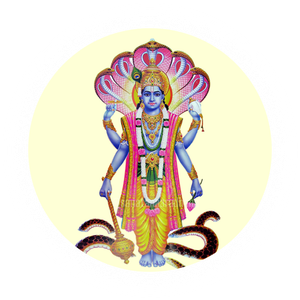
जय Shri Krishna! Beloved devotees, we humbly present the profound and inspiring Katha of Param Ekadashi, as narrated by Bhagwan Shri Krishna to Arjuna. This sacred tale illuminates the immense power of faith, devotion, and virtuous deeds, showing how even dire poverty can be overcome by divine grace and sincere observance of Vratas. Let us immerse ourselves in this uplifting story and seek the blessings of Bhagwan Vishnu.
The Sacred Story of Brahmin Sumedha’s Deliverance from Poverty
The brave archer of Mahabharata, Arjuna, humbly submitted, “O Lotus-Eyed Shri Krishna! What is the name of the Ekadashi that falls during the Krishna Paksha of Adhimas (also known as Adhik Maas or Laund Maas)? Which deity is worshipped on this day, what is its prescribed method (vidhan), and what fruits does one obtain by observing it? Please, in your grace, reveal all this to me.”
Bhagwan Shri Krishna replied, “O Partha! This Ekadashi of Adhimas is known as ‘Param Ekadashi’. By observing its Vrat, a person’s accumulated sins are burnt to ashes, the planetary influence causing poverty is dispelled, and they attain both comfort in this world and a virtuous destiny (sadgati) in the next. This Ekadashi should be observed as usual: morning bath, pure conduct, chanting Hari Naam in the evening, and performing Puja of Bhagwan Vishnu with incense (dhup), lamp (deep), sacred food (naivedya), flowers (pushp), and Tulasi leaves. Now, listen to its sacred Katha, which took place in the city of Kampilya.”
In ancient times, in a city named Kampilya, there lived a Brahmin called Sumedha, who was exceedingly virtuous and well-versed in the Vedas and Shastras. His conduct was pure, and his heart was filled with devotion. However, due to some sins committed in a previous birth (purva-krita paap), he was enduring days of terrible poverty.
His wife was equally virtuous – a devoted wife (pativrata), patient, and steadfast in Dharma. Their home lacked sufficient clothing and even enough food to eat, yet she never faltered in her service to her husband. If a guest arrived, she would even offer her own share of food, but she never complained to her husband.
One day, feeling utterly despondent, Brahmin Sumedha said to his wife, “O fortunate one (Subhage)! Whenever I seek help from a wealthy person, they turn me away. A household cannot function without wealth. If you permit, I wish to go to a foreign land, perform some virtuous deeds, so that this scarcity may be removed.”
The Brahmani replied with a very gentle voice, “O my Lord! I am your humble servant; your word itself is my Dharma. But listen – whatever fruit is destined by fate, that alone a person receives. Without acts of charity (daan) and without accumulated merit (punya), even one seated on Mount Sumeru cannot obtain gold. If in our previous births we had given charity of food, land, knowledge, or cows, then today its flow would be abundant. Please do not leave – I will not be able to bear your separation. Whatever is destined for us will find us right here.”
Considering her words as Dharma, the husband also abandoned the idea of going abroad. Thus, both of them continued to live their days with devotion, patience, and meager meals.
Meanwhile, one day, the revered great sage Sage Kaundinya arrived in that city. Brahmin Sumedha and his devoted wife quickly rose, bowed to him, offered him a seat to the best of their ability, presented whatever meager food they had, and said, “O greatest among sages! Today, our lives have been blessed; you have transformed our humble abode into a sacred hermitage (tapovan). Now, please, in your grace, tell us one thing – what divine path can remove this unending poverty that afflicts us?”
Hearing their humble prayer, Sage Kaundinya was pleased and said, “O virtuous lady (Sati)! The Ekadashi that falls during the Krishna Paksha of Adhimas is named Param Ekadashi. It cuts through misfortune, debt, poverty, and disease – all of them. One who observes it gradually becomes prosperous. On that day, the devotee (vrati) should fast with complete faith, perform the Shodashopachara Puja of Bhagwan Vishnu, and at night engage in Hari Naam chanting, bhajans, kirtans, listening to sacred stories (katha), and keeping vigil (jagaran). This is not just for one day – it is a gateway to further merits (punyas).”
Then the sage revealed a profound truth: “Listen! It was through the power of this very Vrat that Bhagwan Shankar made Kubera the lord of wealth (Dhanadhyaksha); and it was through the merit (punya) of this Vrat that the truth-loving King Harishchandra regained his lost kingdom, wife, and son – everything was restored to him.”
Sage Kaundinya continued, “And if one has the capacity, one should observe not just for one day, but also the ‘Pancharatri Vrat’ – starting from Param Ekadashi and continuing for five days. One who can remain without water (nirjal) for five days can make their parents, wife – everyone – a partaker of the celestial realms (Devlok). One who partakes only of fruits (phalahar) in the evening for five days also goes to Svarga (heaven). One who bathes and feeds Brahmins for five days receives such a fruit as if they have satisfied all the worlds. One who performs Ashwadan (donation of a horse) during these five days obtains the fruit of donating all three worlds. One who donates sesame seeds (til) for five days resides in Vishnudham for as many years as the number of sesame seeds. One who donates a vessel of ghee (ghrit-patra) attains Suryalok (the sun realm). And one who observes celibacy (brahmacharya) for five days enjoys Svarga with celestial maidens (Devanganas). Therefore, O devoted wife of Sumedha! Both of you should observe this Vrat – your scarcity will be destroyed.”
The words of the sage fell like nectar into the hearts of the couple. With full devotion, they observed the Supreme Ekadashi of the Adhimas on the appointed day. They fasted as per scriptural injunctions, spent the night in chanting the holy name of the Lord, bhajans, and kirtan, and also observed the Panchratri Vrat for five days as instructed by the sage.
As soon as the vrata was completed, it felt as though the bonds of past karma had begun to loosen. One day, they saw a radiant young prince standing at their doorstep. He had come by the inspiration of Lord Brahma Himself. With great respect, he bowed before the couple and said:
“It is not fitting for noble Brahmins like you to live in such a dilapidated hut. Please accept this well-furnished divine residence and this village for your livelihood.”
In an instant, their humble hut transformed into a divine and spacious abode. Along with it came means of livelihood, honor, and effortless comfort. The couple understood that all of this was the result of the Supreme Ekadashi and the Panchratri Vrat. They continued to live in remembrance of Lord Vishnu and ultimately attained the heavenly realms.
At the end, Lord Shri Krishna said to Arjuna:
“O son of Kunti! Adhimas is not called ‘extra’ without reason. Just as among two-legged beings the Brahmin is श्रेष्ठ, among four-legged beings the cow is श्रेष्ठ, and among the gods Indra is श्रेष्ठ, similarly among months this Adhimas is the most auspicious. In this sacred month, both Padmini and Parama Ekadashi grant prosperity, spiritual power, and liberation. One who neglects fasting and devotion in this month is said to harm his own soul. Therefore, both the poor and the wealthy should observe this vow with devotion.”
Spiritual Summary
Those who honor sages and saints find that poverty does not remain in their lives for long. True fortune awakens through charity and righteous action, not merely through effort alone. Parama Ekadashi teaches that when vow, service, and devotion come together, only then does Goddess Lakshmi truly reside in one’s life.