


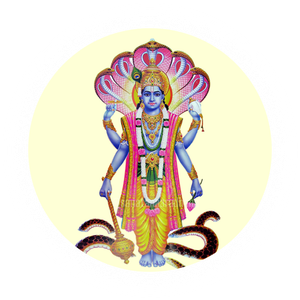
Beloved devotees, we humbly present the sacred narrative of Mohini Ekadashi, a day of immense spiritual significance dedicated to Bhagwan Vishnu. As recounted in our revered Puranas, this divine Vrat holds the power to cleanse even the gravest sins and liberate the soul from worldly attachments. Let us immerse ourselves in this uplifting Katha, which illuminates the boundless compassion of the Lord and the transformative power of sincere devotion.
The Sacred Tale of a Merchant’s Erring Son’s Redemption
Arjuna’s Question to Shri Krishna: One day, Arjuna humbly entreated Bhagwan Shri Krishna, ‘O Madhav, what is the sacred name of the Ekadashi that falls in the bright fortnight of the Vaishakh month? How should one observe its Vrat, and what spiritual merits does it bestow? Please, narrate this in detail for my understanding.’
Shri Krishna’s Divine Reply: Bhagwan Shri Krishna responded, ‘O Partha, I personally heard this sacred narrative from the revered Maharshi Vashishtha, who in turn had recounted it to Prabhu Shri Ram. This Ekadashi is renowned as ‘Mohini Ekadashi’. Whosoever observes this Vrat with utmost faith and devotion finds their sins, worldly afflictions (klesh), and all forms of delusion (moh) dispelled.’
The Divine Dialogue: Prabhu Shri Ram and Maharshi Vashishtha
Once, Prabhu Shri Ramchandra ji addressed His revered Guru Vashishtha, saying, ‘O Gurudev, I have endured immense sorrow due to my separation from Janaknandini Sita. Please instruct me on a Vrat that can alleviate all mental anguish, remove obstacles, cleanse past sinful actions, and dissolve all hindrances from the heart.’
Maharshi Vashishtha replied, ‘O Raghunandan, you have indeed asked a question of profound welfare! The Ekadashi that falls in the bright fortnight of Vaishakh is known as ‘Mohini Ekadashi’. This sacred Ekadashi liberates individuals from worldly attachments (mayik asakti), evil associations, and sinful actions, gently guiding them towards the Divine. Any soul who is afflicted by sorrow, entangled in sin, or has strayed from the righteous path, must undoubtedly observe this powerful Vrat.’
The Virtuous Merchant Dhanpal of Bhadravati
In ancient times, on the sacred banks of the Saraswati River, there flourished a prosperous city named Bhadravati. King Dyutiman, a devout follower of Dharma, reigned there. In this very city lived a Vaishya, a merchant named Dhanpal. He was renowned for his generosity, unwavering adherence to Dharma, deep devotion to Bhagwan Vishnu, and selfless service to all. For the comfort of travelers, he had endowed the land with numerous wells, beautiful gardens, refreshing water stations (pyaau), rest houses (dharmashalas), ponds, and shade-giving trees.
This virtuous merchant had five sons. However, his eldest son possessed a character entirely contrary to his father’s noble qualities. He was deeply immoral, addicted to alcohol, frequented places of ill repute, gambled excessively, and kept company with wicked individuals. He squandered his father’s hard-earned wealth on frivolous pleasures and had no faith whatsoever in the Devas, Brahmins, or his ancestors (Pitrus).
Despite countless attempts by his father, brothers, and other family members to reason with him, he remained unyielding. Finally, with heavy hearts, they collectively decided to cast him out of their home.
The Further Descent of the Errant Son
After being expelled from his home, for a short while, he managed to survive by selling his remaining ornaments and clothes. But as soon as his wealth was exhausted, those who had frequented his company—the courtesans and so-called friends—all deserted him, turning their backs completely.
Tormented by hunger, he resorted to thievery. One night, he was apprehended, but the guards, recognizing him as Dhanpal’s son, let him go. However, his repeated acts of theft eventually led him to be brought before the king. Upon hearing of his persistent misdeeds, the king ordered him to be cast into prison, where he was duly punished, and subsequently banished from the city.
Cast out from the city, he wandered into the dense forest, where he began to live like a hunter (baheliya), killing animals and birds for sustenance. His life had fallen to its lowest ebb; he had no regard for Dharma, no sense of shame, and no thought for his future.
A Chance Encounter with Maharshi Kaundinya
One day, during the auspicious month of Vaishakh, as he wandered, famished and parched, through the forest, he stumbled upon the ashram of the revered Maharshi Kaundinya. Coincidentally, the Rishi had just returned from his holy bath in the Ganga. As he walked, a few sacred drops from his wet garments happened to sprinkle upon the sinful man. In that very instant, a spark of good sense (sadbuddhi) ignited within him—such is indeed the transformative power of saintly association!
Overcome with shame, he prostrated himself at the Rishi’s feet and pleaded, ‘O revered Muni! My entire life has been a succession of sins—gambling, intoxication, visiting courtesans, theft, and violence. Now, I possess neither wealth nor any spiritual merit (punya). Please, in your infinite compassion, show me a path that requires no material wealth, yet can cleanse me of all my accumulated sins.’
Maharshi Kaundinya gently replied, ‘My child, the sacred Mohini Ekadashi of the bright fortnight of Vaishakh is approaching. On that auspicious day, after taking a purifying bath, make a solemn Sankalp (vow), perform Puja to Bhagwan Shri Hari, observe a complete Upvas (fast) throughout the day, keep vigil (Jagran) through the night to the best of your ability, and on the following day, Dwadashi, break your fast (Paran) according to the prescribed rituals. By the observance of this single Vrat, even your most ancient and gravest sins shall be completely washed away.’
The Miraculous Effect of Mohini Ekadashi
The fallen son of the merchant accepted the Muni’s divine command as the very purpose of his life. He meticulously observed the Mohini Ekadashi Vrat exactly as instructed—eschewing meat, alcohol, and all misconduct, dedicating himself solely to the remembrance of Bhagwan, strict Upvas, and profound humility.
Through the profound efficacy of this sacred Vrat, his heart was purified, all his sinful actions were cleansed, and upon leaving his mortal coil, he attained the divine abode of Bhagwan Vishnu, who is carried by Garuda.
Shri Krishna’s Conclusion
Shri Krishna said — “O Arjun! Mohini Ekadashi is so powerful that even a person who has fallen very low, become trapped in sin, been cast out from a noble family, or been ruined by bad company can be uplifted by observing this Ekadashi.
Listening to and narrating the glory of this Ekadashi both grant merit equal to the donation of a thousand cows. This Vrat frees a person from moha — attachment, attraction, bad company, and the bondage of worldly desires. That is why it is called ‘Mohini’.”
Summary of the Katha
- The effect of company — Bad company can lead even a righteous person toward downfall, while good company can uplift even a sinful person.
- The compassionate form of Ekadashi — Ekadashi is not only for ascetics; it is also for those who are lost, fallen, hopeless, or burdened by sins.
- A simple practice with a high spiritual fruit — Without wealth or grand yajnas, even one day of sattvic discipline can help a devotee receive Bhagwan’s grace and purification from sins.
- Surrender — When a person accepts their weakness and approaches a saint or Guru with humility, the path begins to open.