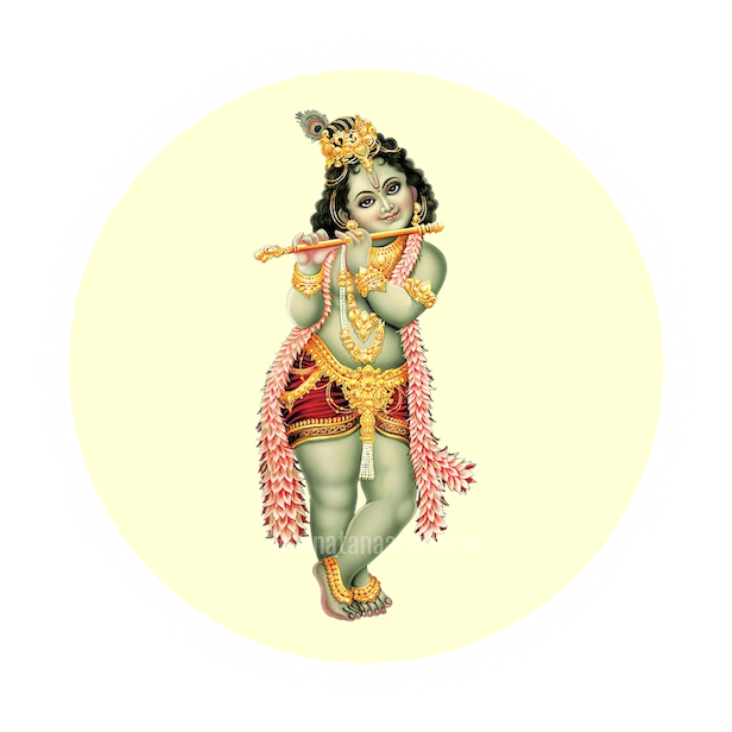
स्कंद पुराण तथा भागवत महापुराण में वर्णित है कि द्वापर युग में यदुवंश के महान और धर्मप्रिय राजा उग्रसेन मथुरा पर राज्य करते थे। उनके शासन में प्रजा सुखी और संतुष्ट थी। परंतु कालचक्र के अनुसार, उनके ही पुत्र कंस ने सिंहासन हड़पने के लिए छल और बल का मार्ग अपनाया। कंस अत्यंत बलवान, युद्धकला में निपुण, परंतु क्रूर और स्वार्थी स्वभाव का था। उसने अपने पिता को बंदी बनाकर स्वयं मथुरा का राजा बन बैठा।
कंस की एक बहन देवकी थी, उनका विवाह यदुवंशी वीर और धर्मनिष्ठ वसुदेव के साथ हुआ। कंस अपनी बहन से अत्यंत प्रेम करता था, अतः उसने स्वयं रथ हांककर देवकी को उनके ससुराल पहुँचाने का निश्चय किया। भाई-बहन के प्रेम और स्नेह का वह दृश्य देखने योग्य था। लेकिन जैसे ही कंस ने रथ हांका एक आकाशवाणी हुई,
“हे कंस! जिस देवकी को तु बड़े प्रेम से विदा करने जा रहा है उसका आठवां पुत्र तेरा संहार करेगा।”
यह वाणी सुनते ही कंस का हृदय भय और क्रोध से भर गया। उसका प्रेम लोभ और प्राणरक्षा की लालसा में बदल गया।। उसने सोचा — “यदि देवकी जीवित नहीं रहेगी, तो उसका कोई संतान भी नहीं होगी, और मेरा मृत्यु का भय समाप्त हो जाएगा।” वह तुरंत अपनी तलवार की ओर बढ़ा और देवकी की हत्या करने को उद्यत हुआ। रथ में बैठे वासुदेव यह देखकर विचलित तो हुए, परंतु उन्होंने धैर्य और बुद्धि का परिचय दिया। उन्होंने शांत स्वर में कहा —
“हे कंस! तुम्हें देवकी से भय करने की आवश्यकता नहीं है। मैं वचन देता हूँ कि समय आने पर देवकी से उत्पन्न होने वाली प्रत्येक संतान को स्वयं तेरे हाथों में सौंप दूँगा।”
उनके समझाने पर कंस का गुस्सा शांत हो गया। वासुदेव के वचन की सत्यता से कंस भलीभांति परिचित था। वह जानता था कि वसुदेव धर्मनिष्ठ हैं और कभी असत्य नहीं बोलते।
इसलिए उसने तलवार वापस रख दी, परंतु साथ ही एक कठोर निर्णय लिया और वसुदेव व देवकी को कारागार में बन्द कर दिया और सख्त पहरा लगवा दिया। कारागार के चारों ओर लोहे के दरवाजे, ऊँची दीवारें, और चारों पहरों में चुस्त प्रहरी तैनात कर दिए गए। उसका आदेश था —
“इनके प्रत्येक संतान के जन्म होते ही मुझे सूचित किया जाए, और मैं स्वयं उनका अंत करूँगा।”
आठवें पुत्र के रूप में भगवान का जन्म
समय के साथ कंस ने देवकी की एक-एक करके सातों संतानों का वध कर दिया। जब आठवीं संतान का समय आया, उसने कारागार की सुरक्षा और भी कड़ी कर दी। भाद्रपद मास के कृष्ण पक्ष की अष्टमी, रोहिणी नक्षत्र की मध्यम रात्रि में, कारागार के भीतर श्रीकृष्ण ने अवतार लिया। उसी क्षण गोकुल में यशोदा के गर्भ से एक कन्या का जन्म हुआ, जो कोई साधारण बालिका नहीं, बल्कि स्वयं योगमाया थीं। शिशु के जन्म होते ही कारागार में दिव्य प्रकाश छा गया और चारभुजधारी भगवान विष्णु प्रकट हुए। उन्होंने मधुर वाणी में वसुदेव से कहा —
“मैं ही बालक रूप में तुम्हारे पुत्र के रूप में अवतरित हुआ हूँ। अभी इसी क्षण मुझे अपने मित्र नंदजी के घर गोकुल पहुँचा दो, और वहाँ जो कन्या जन्मी है, उसे लाकर कंस को सौंप दो।”
खुल गई बेड़ियां, यमुना ने दिया रास्ता
भगवान का आदेश सुनकर वसुदेव ने नवजात श्रीकृष्ण को एक सूप में रखा और कारागार से निकल पड़े। आश्चर्यजनक चमत्कार घटने लगे — पहरेदार गहरी नींद में सो गए, कारागार के विशाल दरवाजे स्वयं खुल गए, हाथों-पाँवों की बेड़ियाँ टूटकर गिर पड़ीं। वसुदेव ने अंधेरी, वर्षा से उफनती यमुना का रुख किया।
जैसे ही वे यमुना में उतरे, उफनती लहरें शांत हो गईं और बीच में मार्ग बन गया। यमुना ने बढ़कर श्रीकृष्ण के चरणों का स्पर्श किया और फिर शांत हो गई। गोकुल पहुँचकर वसुदेव ने बालक को यशोदा के पास सुला दिया और वहाँ जन्मी कन्या को लेकर मथुरा लौट आए।
भगवान कृष्ण द्वारा कंस का अंत
जब कंस को सूचना मिली कि वसुदेव और देवकी को संतान हुई है, वह क्रोध से तमतमाता हुआ बंदीगृह में पहुँचा। उसने देवकी के हाथ से नवजात कन्या को छीन लिया और पूरी शक्ति से उसे पृथ्वी पर पटकने का प्रयास किया। लेकिन वह कन्या अचानक उसके हाथों से छूटकर आकाश में उठ गई। वह दिव्य रूप धारण कर आकाशवाणी के समान बोली — “अरे मूर्ख कंस! मुझे मारकर तेरा क्या होगा? तुझे मारने वाला तो पहले ही जन्म ले चुका है और इस समय वृंदावन में है। बहुत शीघ्र ही वह तेरे पापों का अंत करेगा।”
यह सुनकर कंस का हृदय भय और क्रोध से भर उठा। उसने तुरंत अपने राक्षस सेनापतियों और असुरों को आदेश दिया कि वे हर संभव उपाय से गोकुल के बालक कृष्ण का वध करें। पूतना, शकटासुर, त्रिणावर्त, अघासुर, बकासुर जैसे अनेक दैत्य एक-एक कर कृष्ण द्वारा मारे गए।
समय बीतता गया, और जब भगवान कृष्ण लगभग 11 वर्ष के थे, तब वे अपने बड़े भाई बलराम के साथ मथुरा पहुँचे। वहाँ धनुषयज्ञ के बहाने कंस ने उन्हें बुलाया था। मल्लयुद्ध में चाणूर और मुष्टिक जैसे पहलवानों को परास्त कर कृष्ण ने स्वयं कंस को उसके राजसिंहासन से खींचकर भूमि पर गिराया और उसके पापों का अंत कर दिया।
कंस के वध के बाद मथुरा में धर्म और शांति की स्थापना हुई, और उग्रसेन को पुनः मथुरा का राजा बनाया गया। इस प्रकार श्रीकृष्ण ने अपनी जन्मभूमि को अत्याचार से मुक्त कराया।
जन्माष्टमी व्रत विधि
भविष्य पुराण और स्कंद पुराण में वर्णित है कि श्रीकृष्ण जन्माष्टमी का व्रत न केवल भगवान कृष्ण की कृपा प्राप्त करने का माध्यम है, बल्कि यह पापों के नाश और मोक्ष प्राप्ति का भी श्रेष्ठ साधन है।
१. व्रत का संकल्प: व्रत वाले दिन प्रातः ब्रह्ममुहूर्त में उठकर स्नान करें, स्वच्छ वस्त्र धारण करें और पूर्व दिशा की ओर मुख करके हाथ में जल, अक्षत, पुष्प लेकर व्रत का संकल्प करें — “मैं श्रीकृष्ण जन्माष्टमी व्रत पूर्ण श्रद्धा एवं नियम से करूंगा।”
२. सूतिका गृह की सजावट: मध्याह्न में माता देवकी के लिए एक सूतिका गृह (प्रसव कक्ष) तैयार करें। इसे स्वच्छ कपड़ों, आम के पत्तों, बंदनवार और विभिन्न पुष्पों से सजाएँ। घर के उत्तर-पूर्व (ईशान कोण) में इसे बनाना शुभ माना जाता है।
३. मूर्ति स्थापना: सूतिका गृह में माता देवकी के साथ बाल गोपाल की मूर्ति स्थापित करें। साथ ही नन्दबाबा, यशोदा माता, देवी लक्ष्मी और भगवान विष्णु की प्रतिमाएं भी रखें।
४. पूजन विधि: किसी सुयोग्य पंडित या ज्ञानी व्यक्ति के निर्देशन में, वैदिक मंत्रों और श्रीकृष्ण के नामों का जप करते हुए पूजन करें। पंचोपचार या षोडशोपचार विधि से स्नान, वस्त्र, आभूषण, चंदन, अक्षत, पुष्प, धूप, दीप और नैवेद्य अर्पित करें।
५. रात्रि जागरण: सूर्यास्त के बाद भजन-कीर्तन, श्रीकृष्ण की लीलाओं का वर्णन और जन्माष्टमी की कथा का श्रवण करें। आधी रात (निशीथ काल) में जब रोहिणी नक्षत्र हो, तब श्रीकृष्ण जन्मोत्सव मनाएं — घंटा, शंख, नगाड़े, मृदंग आदि बजाकर आरती करें।
६. वसोर्धारा एवं षष्ठी पूजन: आधी रात को गुड़ और घी से ‘वसोर्धारा’ (लगातार आहुति देने की क्रिया) करें और षष्ठी देवी की पूजा करें, ताकि बालक की आयु, बल और सौभाग्य की रक्षा हो।
७. अर्पण एवं दान: अगले दिन नवमी को माता भगवती की पूजा करें और ब्राह्मणों को यथाशक्ति दक्षिणा, वस्त्र, अनाज और प्रसाद दें।
८. व्रत पारण: नवमी के दिन ब्राह्मण भोजन कराने के बाद स्वयं फलाहार या सात्त्विक भोजन ग्रहण करके व्रत का पारण करें।
फलश्रुति: शास्त्रों में कहा गया है कि इस विधि से जन्माष्टमी व्रत करने वाले के सात जन्मों के पाप नष्ट हो जाते हैं, वह वैकुण्ठ लोक में स्थान पाता है और जीवन में सुख, शांति और समृद्धि प्राप्त करता है।
Let us immerse ourselves in the divine narrative of Shri Krishna Janmashtami, a sacred tale that illuminates the glory of Bhagwan Shri Krishna’s birth and His divine leelas. This revered Katha, cherished by devotees, reminds us of Dharma’s triumph over Adharma and the eternal compassion of the Lord.
As narrated in the Skanda Purana and Srimad Bhagavatam, in the Dvapara Yuga, the great and righteous King Ugrasena of the Yadava dynasty ruled over Mathura. Under his benevolent reign, the subjects lived in peace and contentment. But as the wheel of time turned, his own son, Kamsa, driven by deceit and force, seized the throne. Kamsa was exceedingly powerful and skilled in warfare, yet his nature was cruel and selfish. He imprisoned his father and declared himself the king of Mathura.
Kamsa had a sister named Devaki, who was married to the valiant and righteous Vasudeva from the Yadava clan. Kamsa deeply loved his sister, and so he decided to personally drive the chariot to escort Devaki to her in-laws’ home. The scene of brotherly and sisterly affection was truly heartwarming. However, as Kamsa began to drive the chariot, a divine voice from the heavens (Akashvani) echoed,
“O Kamsa! The eighth child born to this Devaki, whom you are so lovingly seeing off, shall be the cause of your demise!”
Upon hearing these words, Kamsa’s heart was filled with fear and rage. His affection instantly transformed into greed and a desperate desire to save his own life. He thought to himself — “If Devaki does not live, she will have no children, and my fear of death will vanish.” He immediately reached for his sword, ready to kill Devaki. Vasudeva, seated in the chariot, was naturally distressed by this sight, but he displayed immense patience and wisdom. In a calm voice, he said —
“O Kamsa! There is no need for you to fear Devaki. I promise you that when the time comes, I shall personally hand over every child born to Devaki into your own hands.”
Pacified by Vasudeva’s words, Kamsa’s anger subsided. Kamsa was well aware of the truthfulness of Vasudeva’s promise. He knew that Vasudeva was a man of Dharma and would never speak a lie. Thus, he put his sword back, but simultaneously made a harsh decision: he imprisoned Vasudeva and Devaki and placed them under strict guard. Iron doors, high walls, and vigilant guards were stationed around the prison at all four watches. His command was —
“Inform me immediately upon the birth of each of their children, and I myself shall bring about their end.”
The Divine Incarnation of Bhagwan Shri Krishna
As time passed, Kamsa mercilessly slew seven of Devaki’s children, one by one. When the time for the eighth child arrived, he intensified the prison’s security even further. On the Ashtami (eighth day) of the Krishna Paksha (dark fortnight) in the month of Bhadrapada, under the Rohini Nakshatra, in the deep hours of midnight, Shri Krishna incarnated within the prison cell. At that very moment, in Gokul, a baby girl was born from the womb of Yashoda, who was no ordinary child, but Yogamaya Herself. Immediately upon the infant’s birth, a divine light filled the prison, and Bhagwan Vishnu, in His four-armed form, appeared. In a sweet voice, He spoke to Vasudeva —
“I have incarnated as your son in the form of this child. At this very moment, take Me to the home of your friend Nandji in Gokul, and bring back the girl who has just been born there, to hand over to Kamsa.”
Miraculous Escape: Fetters Released, Yamuna Parts Her Waters
Obeying Bhagwan’s command, Vasudeva placed the newborn Shri Krishna in a basket and set out from the prison. Astonishing miracles began to unfold — the guards fell into a deep slumber, the massive prison doors opened on their own, and the iron fetters on his hands and feet broke and fell away. Vasudeva then headed towards the dark, rain-swollen Yamuna River.
As he stepped into the Yamuna, the surging waves calmed down, and a path formed in the middle. The Yamuna rose to touch the divine feet of Shri Krishna and then subsided peacefully. Upon reaching Gokul, Vasudeva gently placed the divine child beside Yashoda and returned to Mathura with the baby girl born there.
Bhagwan Krishna Ends Kamsa’s Reign of Terror
When Kamsa received the news that Vasudeva and Devaki had a child, he rushed to the prison, seething with rage. He snatched the newborn girl from Devaki’s hands and attempted to smash her against the ground with all his might. But the child suddenly slipped from his grasp and ascended into the sky. Assuming a divine form, she spoke like a celestial voice — “O foolish Kamsa! What will you gain by killing me? Your slayer has already taken birth and is presently in Vrindavan. Very soon, he will put an end to your sinful deeds!”
Hearing this, Kamsa’s heart was once again filled with terror and fury. He immediately ordered his demon generals and Asuras to employ every possible means to kill the child Krishna in Gokul. Many demons like Putana, Shakatasura, Trinavarta, Aghasura, Bakasura, were vanquished by Krishna, one after another.
Time passed, and when Bhagwan Krishna was approximately 11 years old, He arrived in Mathura with His elder brother, Balarama. Kamsa had summoned them there under the pretext of a grand ‘Dhanush Yagya’ (bow sacrifice). In a wrestling match, Krishna defeated mighty wrestlers like Chanura and Mushtika, then personally dragged Kamsa from his royal throne, threw him to the ground, and brought an end to his sinful life.
After Kamsa’s demise, Dharma and peace were re-established in Mathura, and Ugrasena was once again crowned as its king. Thus, Shri Krishna liberated His birthplace from tyranny.
The Sacred Janmashtami Vrat Vidhi
As described in the Bhavishya Purana and Skanda Purana, observing the Shri Krishna Janmashtami Vrat is not merely a means to receive the grace of Bhagwan Krishna, but also a supreme path for the annihilation of sins and the attainment of Moksha (liberation).
1. Taking the Sankalp (Pledge) for the Vrat: On the day of the Vrat, rise during the Brahma Muhurta (early morning), take a purifying bath, wear clean clothes, and facing east, hold water, Akshat (uncooked rice), and flowers in your hand to take the Sankalp — ‘I shall observe the Shri Krishna Janmashtami Vrat with complete faith and adherence to its rules.’
2. Decorating the Sutika Griha (Birthing Chamber): By midday, prepare a Sutika Griha for Mata Devaki. Decorate it with clean cloths, mango leaves, Bandanwar (door hangings), and various flowers. It is considered auspicious to set this up in the North-East (Ishaan Kon) direction of the home.
3. Installing the Deities: In the Sutika Griha, install an idol of Bal Gopal along with Mata Devaki. Also place idols or images of Nandbaba, Yashoda Mata, Devi Lakshmi, and Bhagwan Vishnu.
4. Puja Rituals: Under the guidance of a qualified Pandit or a knowledgeable person, perform the Puja while chanting Vedic Mantras and the sacred names of Shri Krishna. Offer a sacred bath, clothes, ornaments, sandalwood paste, Akshat, flowers, incense (Dhup), lamp (Deep), and food offerings (Naivedya) using either the Panchopchar or Shodashopchar methods.
5. Night Vigil (Ratri Jagaran): After sunset, engage in Bhajan-Kirtan, narrations of Shri Krishna’s divine Leelas, and listen to the Janmashtami Katha. At midnight (Nishith Kaal), when the Rohini Nakshatra is ascendant, celebrate Shri Krishna’s birth — ringing bells (Ghanta), conch shells (Shankh), drums (Nagare), Mridang, and performing Aarti.
6. Vasordhara and Shashti Puja: At midnight, perform ‘Vasordhara’ (a continuous offering of oblations) with jaggery and ghee, and worship Shashti Devi, to protect the child’s longevity, strength, and good fortune.
7. Offerings and Charity: On the next day, Navami, worship Mata Bhagwati and offer Dakshina, clothes, grains, and Prasad to Brahmins according to your capacity.
8. Breaking the Vrat (Vrat Paran): On Navami, after feeding the Brahmins, break your fast by consuming Phalahar (fruit-based diet) or a Sattvic meal.
Phalashruti (Fruits of Observance): The scriptures declare that one who observes the Janmashtami Vrat with this prescribed method is absolved of sins accumulated over seven lifetimes, attains a place in Vaikuntha Loka, and experiences happiness, peace, and prosperity in this life.