

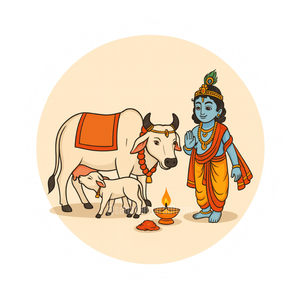
जब भगवान विष्णु ने श्रीकृष्ण रूप में अवतार लिया, तब देव-देवियों ने भी गोप-गोपियों का रूप धारण कर उनकी लीलाओं में सहभाग किया। दिव्य गौ माता कामधेनु ने भी प्रभु सेवा हेतु अपने अंश से बहुला नाम की गाय के रूप में नंद बाबा की गौशाला में अवतार लिया।
श्रीकृष्ण का बहुला से अत्यंत स्नेह था। एक दिन प्रभु ने उसकी सत्यनिष्ठा परखने के लिए सिंह रूप धारण किया। वन में चरती बहुला के सामने सिंह आ खड़ा हुआ। बहुला विनम्रता से बोली— “हे वनराज! मेरा बछड़ा भूखा है, पहले उसे दूध पिला आऊँ, फिर आपके भोजन हेतु स्वयं लौट आऊँगी।”
सिंह (स्वयं श्रीकृष्ण) ने कहा— “सामने आए आहार को कैसे जाने दूँ?” बहुला ने सत्य और धर्म की शपथ ली कि वह अवश्य लौटेगी। उसकी प्रतिज्ञा से प्रसन्न होकर सिंह ने मार्ग दे दिया। बहुला बछड़े को दूध पिलाकर प्रतिज्ञानुसार लौट आई।
बहुला की सत्यव्रता देखकर श्रीकृष्ण अपने वास्तविक स्वरूप में प्रकट हुए और आशीर्वाद दिया— “भाद्रपद कृष्ण चतुर्थी को तुम्हारी गौ-माता रूप में पूजा होगी। श्रद्धापूर्वक पूजन करने वालों को धन-धान्य, संतान-सौभाग्य और गो-सेवा का पुण्य प्राप्त होगा।”
बहुला चतुर्थी व्रत विधि (चरणबद्ध)
1) तैयारी व संकल्प
प्रातः स्नान कर स्वच्छ/सफेद या पीले वस्त्र धारण करें। पूजा स्थान स्वच्छ कर वहाँ गौ माता/बहुला की प्रतिमा या चित्र रखें; साथ में श्रीकृष्ण का चित्र/विग्रह रखें।
हाथ में जल, अक्षत, पुष्प लेकर संकल्प करें— “आज मैं बहुला चतुर्थी का व्रत श्रीकृष्ण एवं गौ माता बहुला को समर्पित कर रही/रहा हूँ; नियमपूर्वक उपवास व पूजन करूँगा/करूँगी।”
2) पूजन सामग्रियाँ
रोली-कुमकुम, अक्षत, हल्दी, चंदन, दूब/घास, पुष्प-माला, धूप-दीप, नैवेद्य (दूध, दही, घी, मिश्री, गुड़), शुद्ध जल, रक्षासूत्र, ताँबे/पीतल का कलश, अगर संभव हो तो गो-चारा (हरी घास/चारा)।
3) मूल पूजा-विधि
कलश स्थापना कर मंगल दीप जलाएँ। श्रीकृष्ण और गौ माता बहुला का आह्वान करें— “ॐ गोमाते नमः, ॐ कृष्णाय नमः।”
चंदन, अक्षत, पुष्प से बहुला (गौ) एवं श्रीकृष्ण की पूजा करें; दूब अर्पित करें; नैवेद्य में दूध-दही-माखन-मिश्री अर्पित करें।
बहुला कथा का श्रद्धापूर्वक पाठ करें (ऊपर दी गई कथा)। कथा के पश्चात आरती करें— “ॐ जय गोमाते माता…” या “ॐ जय श्रीकृष्ण हरे…”
4) विशेष अनुष्ठान
यदि संभव हो, गौ-सेवा करें: चारा-रोटी, गुड़-चना, जल सेवा, गोशाला दान। यह व्रत का प्रधान अंग माना गया है।
संध्या/सायंकाल पुनः दीप प्रज्वलित कर संक्षिप्त पूजन और आरती करें।
5) उपवास व नियम
क्षमता अनुसार निर्जल/फलाहार/सात्त्विक व्रत रखें। लहसुन-प्याज, तामसिक पदार्थ व नशे से बचें।
“गौ-अहिंसा” का संकल्प लें— किसी जीव को कष्ट न पहुँचाएँ, मधुर वाणी रखें, क्रोध-द्वेष त्यागें।
6) पारण (समापन)
अगली तिथि (पंचांगानुसार) में ब्राह्मण/गौ-सेवा/दानी-कर्म के साथ व्रत का पारण करें; प्रसाद-वितरण करें।
7) फलश्रुति
शास्त्रीय परंपरा के अनुसार बहुला चतुर्थी का विधिवत व्रत— धन-समृद्धि, संतान-सौभाग्य, रोग-शोक से रक्षा, और गौ-सेवा का अखंड पुण्य प्रदान करता है; गृह में सौभाग्य और शांति बढ़ती है।
संक्षिप्त मंत्र/प्रार्थना
गो-मंत्र: “ॐ गोमाते नमः।”
कृष्ण मंत्र: “ॐ नमो भगवते वासुदेवाय।”
प्रार्थना: “हे गो-माते बहुला! सत्य, धर्म और करुणा का संकल्प मेरी जीवन-नाड़ी में प्रवाहित हो; मेरे घर-आँगन में सुख-समृद्धि और संतति-सौभाग्य स्थिर रहे।”
Beloved devotees, we humbly present the sacred Katha and observance of Bahula Chaturthi, a revered Vrat dedicated to Gau Mata Bahula and Bhagwan Shri Krishna. This auspicious day reminds us of the profound virtues of truth, Dharma, and compassion, and the divine grace bestowed upon those who uphold them. Let us delve into this beautiful narrative and understand the traditional way to seek blessings on this holy occasion.
When Bhagwan Vishnu incarnated as Shri Krishna, the Devas and Devis also took the forms of Gops and Gopis to participate in His divine pastimes. The celestial cow, Gau Mata Kamadhenu, too, for the service of the Prabhu, took birth from her own essence as a cow named Bahula in Nand Baba’s cowshed.
Shri Krishna had immense affection for Bahula. One day, to test her truthfulness and steadfastness, the Prabhu assumed the form of a lion. As Bahula grazed in the forest, the lion appeared before her. Bahula humbly said, “O King of the Forest! My calf is hungry; let me first feed him milk, and then I shall return myself for your meal.”
The lion (who was Shri Krishna Himself) replied, “How can I let go of the meal that has come before me?” Bahula took an oath on truth and Dharma, vowing that she would certainly return. Pleased by her solemn promise, the lion allowed her to pass. Bahula, after feeding her calf, returned as she had pledged.
Witnessing Bahula’s unwavering adherence to truth, Shri Krishna manifested in His true form and bestowed His blessings, saying, “On the Chaturthi of the Krishna Paksha in the month of Bhadrapada, you shall be worshipped in the form of Gau Mata. Those who devoutly perform your Puja shall receive wealth, prosperity, the fortune of children, and the sacred merit of serving cows.”
Bahula Chaturthi Vrat Vidhi (Step-by-Step Guide for Devotion)
1) Preparations and Sankalp (Sacred Resolve)
In the morning, after bathing, wear clean white or yellow clothes. Cleanse the Puja area and place an idol or image of Gau Mata/Bahula there, along with a picture or idol of Shri Krishna.
Hold water, Akshat (rice grains), and flowers in your hand and make the Sankalp, saying: “Today, I am dedicating the Bahula Chaturthi Vrat to Shri Krishna and Gau Mata Bahula; I shall observe the fast and perform the Puja according to the prescribed rules.”
2) Puja Samagri (Items for Worship)
Roli-Kumkum, Akshat, Turmeric, Chandan (sandalwood paste), Durva grass, flower garland, Dhoop (incense) and Deep (lamp), Naivedya (offerings of milk, curd, ghee, Mishri (rock sugar), jaggery), pure water, Rakshasutra (sacred thread), a Kalash made of copper or brass, and if possible, Go-Chara (green fodder/grass) for the cows.
3) Mool Puja Vidhi (Main Worship Procedure)
Establish the Kalash and light the auspicious Deep. Invoke Shri Krishna and Gau Mata Bahula with the Mantras: “Om Gomate Namah,” and “Om Krishnaya Namah.”
Worship Bahula (Gau Mata) and Shri Krishna with Chandan, Akshat, and flowers; offer Durva grass; present milk, curd, butter, and Mishri as Naivedya.
Simple Japa (11/21/108 times): “Om Gomate Namah” and “Om Namo Bhagavate Vasudevaya.”
Devoutly recite the Bahula Katha (the story provided above). After the Katha, perform Aarti using “Om Jai Gomate Mata…” or “Om Jai Shri Krishna Hare…”
4) Vishesh Anushthan (Special Observances)
If possible, perform Gau-Seva (service to cows): offer fodder, roti, jaggery and gram, provide water, or donate to a Goshala (cow shelter). This is considered a primary part of the Vrat.
In the evening/dusk, light the Deep again and perform a brief Puja and Aarti.
5) Upvas (Fasting) and Regulations
Observe the Vrat according to your capacity, either Nirjal (without water), Phalahar (fruit-based), or Satvik (pure and wholesome). Avoid garlic-onion, Tamasic (impure) foods, and intoxicants.
Take the Sankalp of “Gau-Ahimsa” (non-violence towards cows and all beings)—do not cause harm to any creature, speak sweetly, and renounce anger and malice.
6) Paran (Conclusion of the Vrat)
On the next auspicious date (as per the Panchang), break the Vrat by serving Brahmins or cows, or by engaging in acts of charity; distribute Prasad.
7) Phalashruti (Benefits of Observing the Vrat)
As per scriptural tradition, observing the Bahula Chaturthi Vrat with proper rituals bestows wealth, prosperity, the fortune of children, protection from diseases and sorrow, and the unending merit of Gau-Seva; it enhances good fortune and peace in the home.
Brief Mantras and Prayers
Gau Mantra: “Om Gomate Namah.”
Krishna Mantra: “Om Namo Bhagavate Vasudevaya.”
Prayer: “O Gau Mata Bahula! May the resolve of truth, Dharma, and compassion flow through the veins of my life; may happiness, prosperity, and the fortune of progeny remain steadfast in my home and courtyard.”