


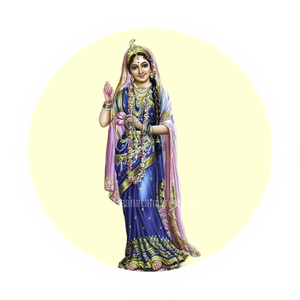
Radhashtami celebrates the sacred appearance of Shri Radha Rani. It is observed with deep devotion on the Ashtami Tithi of Shukla Paksha in the month of Bhadrapada. The festival holds special significance in Braj, particularly in Barsana, Vrindavan, Mathura and the surrounding areas, where devotees celebrate with special worship of Shri Radha-Krishna, bhajans, kirtans and various devotional festivities.
In Vaishnava traditions, Shri Radha Rani is revered as the dearest beloved of Lord Krishna and the embodiment of the highest form of divine love and devotion. In Gaudiya Vaishnava philosophy especially, Shri Radha is described as the Hladini Shakti of Lord Krishna — His internal potency of divine bliss. Radhashtami, therefore, is not simply a celebration of Her appearance; it is also a sacred occasion to understand selfless love, service and complete surrender to Bhagwan.
Why is Radhashtami Celebrated?
Radhashtami is celebrated as the divine appearance day of Shri Radha Rani. Just as devotees celebrate the appearance of Lord Krishna on Krishna Janmashtami, on Bhadrapada Shukla Ashtami they remember, worship and celebrate Shri Radha Rani.
In the Bhakti tradition, Shri Radha is not regarded merely as Krishna’s beloved companion. She represents the highest form of love in which a devotee gives up ego, selfishness and personal expectations and surrenders completely to Bhagwan. The spiritual message of Radhashtami is that closeness to God is attained not merely through rituals, but through pure love and sincere devotion.
The Divine Appearance of Shri Radha Rani
Several accounts of the appearance of Shri Radha Rani are found in the traditions of Braj and different Vaishnava communities. Although some details vary from one tradition to another, Shri Radha is universally remembered as the beloved daughter of Maharaj Vrishabhanu and Mata Kirti, and as the dearest beloved of Shri Krishna.
The Story of Radha Rani Appearing on a Lotus
According to a popular Vaishnava tradition of Braj, Maharaj Vrishabhanu once went near the banks of the Yamuna. There, he saw a radiant and divine lotus. In the centre of that lotus was an extraordinarily beautiful baby girl. Maharaj Vrishabhanu brought the child home, and Mata Kirti lovingly accepted Her as their daughter.
It is said that the child was extraordinarily beautiful, but She had not opened Her eyes. This worried Mata Kirti and Maharaj Vrishabhanu. Some time later, a celebration was held at their home, and Nanda Baba, Mata Yashoda and little Shri Krishna came to visit.
Radha Rani Opened Her Eyes Upon Seeing Shri Krishna
According to a beloved tradition of Braj, when little Shri Krishna came close to Shri Radha, Radha Rani opened Her eyes for the very first time. Devotees believe that the first person She chose to behold in this world was Her beloved Shri Krishna. This beautiful episode is remembered as a symbol of Shri Radha’s exclusive and eternal love for Krishna.
The story expresses the devotional understanding that Shri Radha’s vision, consciousness and love are centred entirely upon Shri Krishna. For this reason, Radha and Krishna are worshipped together as inseparable expressions of divine love.
Radha Rani’s Connection with Rawal and Barsana
Different traditions of Braj give different accounts of the place associated with Shri Radha Rani’s appearance. One well-known Vaishnava tradition connects Rawal with Her early appearance and childhood, while Barsana is widely revered as the sacred town of Radha Rani and the residence of Maharaj Vrishabhanu.
Even today, Barsana remains one of the most important centres of devotion to Shri Radha Rani. The famous Shri Radha Rani Temple located here is lovingly known by devotees as the Ladli Ji Temple and the Shriji Temple. On Radhashtami, large numbers of devotees visit Barsana to take darshan and participate in the celebrations.
The Spiritual Nature of Shri Radha Rani
Different Vaishnava traditions explain the spiritual identity of Shri Radha Rani according to their respective philosophical teachings. In Gaudiya Vaishnava philosophy, Shri Radha is especially understood as the Hladini Shakti of Lord Krishna — the divine internal potency through which Bhagwan experiences spiritual bliss and love.
From this perspective, the relationship between Radha and Krishna should not be viewed as ordinary worldly romance. It represents the highest ideal of complete love, attachment and surrender between the individual soul and the Supreme. For this reason, the divine pastimes of Radha and Krishna are traditionally understood through the vision of Bhakti rather than through an ordinary material perspective.
The True Meaning of Radha-Krishna’s Love
Shri Radha’s love is not based on any desire for personal reward. Her only concern is the happiness of Shri Krishna. This is why devotees regard Radha Bhava as the highest example of selfless love and complete surrender.
For us, its message is simple: devotion should not become merely a means of asking Bhagwan to fulfil our wishes. We should remember Him with love, gratitude, service and trust. Radhashtami inspires us to awaken this pure devotional feeling within our own hearts.
To remember Shri Radha is to remember divine love, and to remember Shri Krishna is to remember divine bliss.
The worship of Radha-Krishna is the remembrance of the sacred union of love and bliss.
Significance of Radhashtami Vrat
Many devotees observe a fast on Radhashtami and worship Shri Radha-Krishna. The purpose of fasting is not simply to avoid food. Its deeper purpose is to discipline the mind and senses and dedicate more time to remembrance of Bhagwan, Naam Japa, bhajan and seva.
The method of observing the Radhashtami Vrat may vary across regions and Vaishnava traditions. In the Gaudiya Vaishnava tradition, many devotees fast until midday and then honour Prasad. Some families observe Phalahar or follow other fasting practices according to their family or local tradition.
One should also keep personal health and physical capacity in mind while fasting. Devotees belonging to a particular spiritual tradition may follow the practices advised by their Guru, Acharya or temple.
Radhashtami Puja Samagri
- Picture or Vigraha of Shri Radha-Krishna
- A clean Asana
- Water and a Puja vessel
- Roli or sandalwood paste
- Akshat
- Fresh flowers and a flower garland
- Tulsi leaves — to be offered to Shri Krishna
- Incense and a lamp
- Fruits and sweets
- Panchamrit, if Abhishek is part of your tradition
- Satvik food for Bhog
Even if all the Puja materials are not available, devotees can worship Shri Radha-Krishna with a pure heart by simply offering a lamp and flowers and performing Naam Japa. In Bhakti, sincere devotion and loving feeling are considered more important than elaborate offerings.
Radhashtami Puja Vidhi
1. Morning Bath and Sankalp
Take a bath in the morning and wear clean clothes. Clean the place of worship and install a picture or Vigraha of Shri Radha-Krishna. Take a Sankalp to observe Radhashtami and perform the Puja, and pray to Shri Radha Rani for the blessing of pure devotion.
2. Light the Lamp
Begin the Puja by lighting a ghee or oil lamp. Remember Shri Ganesha and your Ishta Devata, and then meditate upon Shri Radha-Krishna.
3. Worship Shri Radha-Krishna
Offer sandalwood paste, Akshat, flowers and a flower garland to Shri Radha-Krishna. If you have a Vigraha suitable for Abhishek and your family traditionally performs it, you may perform the Abhishek with devotion. It is not necessary to perform Abhishek on a picture or an ordinary decorative Murti.
4. Offer Bhog
Offer fruits, sweets or homemade Satvik food to Bhagwan. Tulsi is considered especially dear to Shri Krishna, so if available, a Tulsi leaf may be offered with His Bhog.
5. Perform Naam Japa and Bhajan
After the Puja, sit peacefully for some time and chant the holy names of Shri Radha and Shri Krishna. You may also sing Radha-Krishna bhajans, perform Kirtan or sing their Aarti.
6. Aarti and Prayer
Conclude with the Aarti of Shri Radha-Krishna. Rather than praying only for worldly desires, ask for wisdom, pure devotion, compassion and the blessing to remember Bhagwan throughout your life.
Which Mantra Should Be Chanted on Radhashtami?
Devotees may chant the simple Naam Mantra of Shri Radha Rani with faith and devotion on Radhashtami.
ॐ राधायै नमः॥
You may also lovingly chant “Radhe Radhe”. In Naam Japa, concentration and devotion are more important than simply completing a particular number of repetitions.
Hare Krishna Mahamantra
In the Gaudiya Vaishnava tradition, chanting and Kirtan of the Hare Krishna Mahamantra are especially important on Radhashtami.
हरे कृष्ण हरे कृष्ण, कृष्ण कृष्ण हरे हरे।
हरे राम हरे राम, राम राम हरे हरे॥
Any special Diksha Mantra received through a Guru tradition should be chanted according to the guidance of that Guru and tradition. For general worship, simple Naam Japa is sufficient.
What Can You Eat During Radhashtami Vrat?
The fasting rules for Radhashtami may differ according to family and Sampradaya. Devotees observing Phalahar generally take fruits, milk, curd, Makhana and foods traditionally permitted during a Vrat. Some devotees consume only fruit and water, while others fast until midday.
Ordinary grains, non-vegetarian food, alcohol, Tamasic food and intoxicating substances should be avoided while observing the Vrat. Anyone with a medical condition, someone who needs regular medication, a pregnant woman, or a person for whom prolonged fasting is unsuitable should observe the Vrat according to their capacity. Harming the body is not a requirement of Bhakti.
Radhashtami Celebrations in Barsana
Radhashtami is celebrated with extraordinary devotion throughout Braj, and Barsana is one of its main centres. Known as the sacred town of Radha Rani, Barsana is home to the famous Shriji or Ladli Ji Temple, where large numbers of devotees gather for darshan.
The temples are beautifully decorated with flowers, and special Puja, bhajans and Kirtan are organised. In Vrindavan, Mathura and other parts of Braj, the Vigrahas of Shri Radha-Krishna are also adorned with special Shringar. Celebration practices may differ between temples, so devotees visiting a particular temple should follow its prescribed timings and arrangements.
Radhashtami in the Gaudiya Vaishnava Tradition
Shri Radha Rani holds an exceptionally exalted position in the Gaudiya Vaishnava tradition. She is understood as the Hladini Shakti of Shri Krishna and the highest manifestation of Krishna Prema. On Radhashtami, devotees observe fasting, participate in Harinam Sankirtan, perform Abhishek of Shri Radha-Krishna, sing Bhajans and hear about the glories of Shri Radha.
In many Gaudiya Vaishnava temples, devotees fast until midday and honour Prasad after the Puja and festival celebrations. Exact practices may vary according to the temple and spiritual tradition.
What Should You Do on Radhashtami?
Radhashtami is not only about observing a fast. It is an opportunity to turn the mind towards Bhagwan. Begin the day by remembering Shri Radha-Krishna, spend some time performing Naam Japa, visit a temple if possible, or sing Bhajans and Kirtan at home.
Try to avoid anger, criticism, harsh speech and causing distress to others. You may help someone in need, feed cows, serve saints and spiritual practitioners, or offer charity according to your capacity. Most importantly, set aside some time from worldly responsibilities and dedicate it to the remembrance of Bhagwan.
What Should You Pray for on Radhashtami?
In the worship of Shri Radha Rani, devotees traditionally pray for pure devotion rather than merely asking for material things. You may pray simply from the heart:
O Shri Radha Rani! Please remove ego, hatred and selfishness from our hearts and bless us with sincere love and devotion at the lotus feet of Shri Krishna.
Please purify our hearts and bless us with the vision to see the presence of Bhagwan within every living being, so that we may treat everyone with love, kindness and compassion.
What Does Radhashtami Teach Us?
The deepest message of Radhashtami is selfless love. Ordinary worldly love is often connected with expectations, but Shri Radha’s love exists solely for the happiness of Shri Krishna. A devotee tries to cultivate this same spirit within their own spiritual practice.
Devotion to Shri Radha teaches humility, service, compassion and surrender. When ego begins to decrease and love begins to grow, worship is no longer merely an external religious practice — it becomes an inner transformation of one’s life.
Radhe Radhe!
May the grace of Shri Radha Rani and Lord Shri Krishna always remain upon all devotees.