


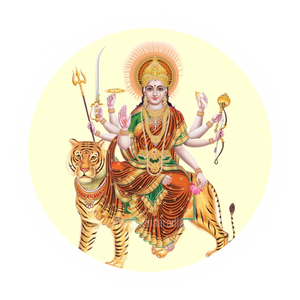
The recitation of Durga Saptashati is traditionally believed to grant extraordinary spiritual strength to devotees. During Navratri, devotees perform different forms of worship to please the Divine Mother, believing that Her grace can bestow special spiritual blessings. It is also traditionally believed that regular and methodical recitation of Durga Saptashati during Navratri greatly pleases the Goddess. Durga Saptashati contains seven hundred verses and associated ritual applications.
Traditional descriptions classify certain ritual applications as Maran, Mohan, Uchchatan, Stambhan, Vidveshan and Vashikaran. The name “Saptashati” itself means “seven hundred”.
- First, the practitioner should bathe and purify themselves.
- After performing Asana Shuddhi, sit on the purified Asana.
- Apply a Tilak of Bhasma, sandalwood paste or Roli on the forehead according to one’s tradition.
- Tie the Shikha, face east and perform Achaman four times.
- After Pranayama, remember and offer respect to Shri Ganesha, other Deities and one’s Gurus. Then wear the sacred Kusha ring while reciting the “Pavitreshtho Vaishnavyau” Mantra. After this, take a red flower, Akshat and water in the hand, offer them to the Goddess and take the Sankalp with the prescribed Mantras.
- While meditating upon the Goddess, worship the Durga Saptashati book according to the Panchopachar method.
- Through the Mool Navarna Mantra, establish Adhara Shakti in the sacred seat and place the book upon it. After this, perform Shapoddhar.
- Then chant the Utkeelan Mantra. Traditionally, it is recited 21 times at the beginning and 21 times at the end.
- Finally, the Mritasanjivani Vidya is traditionally recited.
After this, Durga Saptashati is recited with full concentration while remembering Mata Durga. Traditional belief holds that sincere recitation brings the blessings of the Goddess.
Traditionally, four Navratris are recognised in a year: Chaitra, Ashadha, Ashwin and Magh. Chaitra and Ashwin Navratri are widely celebrated in North India, while some traditions also give special importance to Ashadha and Magh Navratri. Devotees who follow all four Navratris perform special worship during each of them.
The name Durga is traditionally associated with “Durg”, meaning a fortress or an inaccessible place. “Saptashati” means “seven hundred” — a scripture consisting of seven hundred verses is therefore called Saptashati.
Significance — Devotees believe that those who study and recite this sacred scripture receive the grace of Maa Jagadamba.
Katha — King Suratha and a Vaishya named Samadhi meet in a forest. Both wonder why, despite having been rejected by their own people, their minds remain attached to them. At the same time, they are amazed to see that in the Rishi’s Ashram, different creatures live peacefully together — even a lion and a cow without fear.
Through the Rishi, they come to understand that this attachment is connected with the power of Mahamaya. They then begin worshipping Goddess Durga. In the later part of the Saptashati narrative, they receive the blessings of the Divine Mother.
Bhav — The devotional message is that whoever takes refuge in Maa Jagadamba receives Her grace. Devotees therefore recite Durga Saptashati with faith and are traditionally advised to seek proper guidance from a knowledgeable Guru or family priest for its detailed ritual procedures.
- For Lakshmi, prosperity and wealth-related worship, yellow Asana is traditionally used.
- Different Tantric traditions prescribe different colours of Asana for specialised ritual practices. Red is generally associated with strength and Shakti.
- For Satvik Sadhana and worship, an Asana made of Kusha grass is traditionally recommended.
Clothing — In Lakshmi-related worship, yellow garments are traditionally preferred. If yellow clothing is unavailable, a clean Dhoti and shawl may be worn. Some traditions also colour a white Dhoti using saffron water.
Traditional Havan Offerings
- Nutmeg and raisins are traditionally offered in certain Havan practices.
- Amla, banana and other fruits may also be offered according to the prescribed ritual tradition.
- Khand, Ghee, wheat, honey, barley, sesame, Bilva leaves, coconut, raisins and Kadamba may be used in traditional Havan offerings.
- Wheat is traditionally associated with prayers for Lakshmi and prosperity.
- Kheer and Champa flowers are offered in certain traditions for family prosperity and happiness.
- Amla and banana are also mentioned in traditional ritual applications.
- Lotus and raisins are used in certain traditional offerings connected with honour, happiness and prosperity.
- Khand, Ghee, coconut, honey, barley, sesame and fruits may be used in Havan according to one’s ritual tradition.
Traditional texts describe Navratri observance and Durga worship as highly meritorious. The deeper purpose of the Vrat is devotion, discipline and surrender to the Divine Mother.
Traditional Association of Durga Saptashati Chapters with Devotional Intentions
- Chapter 1 — Traditionally recited for relief from anxiety and mental distress.
- Chapter 2 — Traditionally associated with overcoming disputes and difficulties.
- Chapter 3 — Traditionally recited for protection from opposition.
- Chapter 4 — For Bhakti, inner strength and divine grace.
- Chapter 5 — For Bhakti, spiritual strength and divine grace.
- Chapter 6 — Traditionally recited for overcoming fear, doubt and obstacles.
- Chapter 7 — Traditionally associated with fulfilment of righteous wishes.
- Chapter 8 — Traditionally associated with harmony and reconciliation.
- Chapter 9 — Traditionally recited for difficult circumstances and fulfilment of wishes.
- Chapter 10 — Traditionally recited for difficult circumstances and fulfilment of wishes.
- Chapter 11 — Traditionally associated with prosperity, business and well-being.
- Chapter 12 — Traditionally associated with honour and beneficial results.
- Chapter 13 — For devotion and spiritual attainment.
Traditional Vedic Havan Materials
- Chapter 1 — Traditional offerings may include lotus seed, betel nut, cloves, cardamom, Guggul, honey and Ghee according to the prescribed ritual method.
- Chapter 2 — Uses similar materials, with special importance given to Guggul.
- Chapter 3 — Similar offerings are described, with honey mentioned in connection with a specific verse.
- Chapter 4 — Mishri and Kheer are traditionally offered during specific verses. Some traditions substitute specific verses with the offering Mantra “Om Namah Chandikayai Swaha” rather than using them directly in Havan.
- Chapter 5 — Camphor, flowers and seasonal fruits are traditionally offered.
- Chapter 6 — Bhojpatra is mentioned in some traditional ritual instructions.
- Chapter 7 — Traditional offerings include nutmeg, white sandalwood and other prescribed materials for particular verses.
- Chapter 8 — Red sandalwood is traditionally used in connection with certain verses.
- Chapter 9 — Bilva fruit and sugarcane are mentioned among the traditional offerings.
- Chapter 10 — Certain specialised materials are prescribed in traditional ritual manuals for particular verses.
- Chapter 11 — Flowers, Kheer, Giloy, Bhojpatra, yellow mustard, Makhan-Mishri, pomegranate, spinach, rice and other offerings are mentioned for specific verses.
- Chapter 12 — Traditional materials mentioned include lemon, Roli, Petha, black pepper, Kusha, nutmeg, lotus seeds, seasonal fruits, flowers, rice, sandalwood, Halwa, Puri, Makhana, almonds and fragrance.
- Chapter 13 — Fruits and flowers are traditionally offered.
In traditional Aarti practice, the lamp is moved before the Deity in a prescribed sequence. Different traditions may vary in the exact number of rotations and lamps used. Devotees should preferably follow the method taught in their family, temple or Guru tradition.
Method of Reciting Shri Durga Saptashati
The Chidambara Samhita prescribes the order of Argala first, followed by Keelak and then Kavach. Yogaratnavali gives a different sequence, describing the Kavach as the Beej, Argala as the Shakti and Keelak as the Keelak.
The practitioner should bathe, purify themselves and perform Asana Shuddhi before sitting on a clean Asana. Keep clean water, Puja materials and a copy of Shri Durga Saptashati nearby. Place the book respectfully on a clean wooden or other suitable sacred seat. Apply Bhasma, Chandan or Roli Tilak according to one’s tradition, tie the Shikha and face east. Then perform Achaman four times for Tattva Shuddhi while reciting the following Mantras.
Om Aim Atmatattvam Shodhayami Namah Swaha.
Om Hreem Vidyatattvam Shodhayami Namah Swaha.
Om Kleem Shivatattvam Shodhayami Namah Swaha.
Om Aim Hreem Kleem Sarvatattvam Shodhayami Namah Swaha.
After this, perform Pranayama and offer respects to Shri Ganesha, the other Deities and one’s Gurus. Then recite:
Om Pavitreshtho Vaishnavyau Savitur Vah Prasavah
Utpunamyachchidrena Pavitrena Suryasya Rashmibhih.
Tasyate Pavitrapate Pavitraputasya Yatkamah Pune Tachchhakeyam.
After wearing the sacred Kusha ring with this Mantra, take a red flower, Akshat and water in the hand and make the Sankalp in the prescribed form.
Om Vishnur Vishnur Vishnuh.
Om Namah Paramatmane Shripuranapurushottamasya Shrivishnorajnaya
Pravartamanasyadya Shri Brahmano Dvitiyaparardhe Shri Shvetavarahakalpe
Vaivasvatamanvantare Ashtavimshatitame Kaliyuge Prathamacharane Jambudvipe Bharatavarshe
Bharatakhande Aryavartantargata Brahmavartaikadeshe Punyapradeshe BauddhavatarE Vartamane
Yathanama Samvatsare Amukayane Mahamangalyaprade
Masanam Uttame Amukamase Amukapakshe
Amukatithau Amukavasaranvitayam Amukanakshatre Amukarashisthite Surye
Amukamukarashisthiteshu Chandrabhaumabudhagurushukrashanishu Satsu Shubhe Yoge ShubhakaranE
Evamgunavisheshanavishishtayam Shubhapunyatithau
Sakalashastra Shruti Smriti Puranokta Phalapraptikamah Amukagotrotpannah Amukanama Aham
Mamatmanah Saputrastribandhavasya Shri Navadurganugrahato Grahakrita Rajakrita Sarvavidha Peeda
Nivrittipoorvakam Nairujya Deerghayuh Pushti Dhanadhanya Samriddhyartham
Shri Navadurgaprasadena Sarvapannivritti Sarvabhishta Phalavapti Dharmartha
Kama Moksha Chaturvidha Purushartha Siddhidvara Shri Mahakali Mahalakshmi Mahasaraswati Devatapreetyartham
Shapoddhara Purassaram Kavachargala Keelaka Patha Veda Tantrokta
Ratri Sukta Pa Devi Atharvashirsha Patha Nyasa Vidhisahita Navarna Japa Saptashati Nyasa Dhyanasahita
Kavachargala Keelaka Patha Veda Tantrokta Charitra Sambandhi Viniyoga Nyasa Dhyanapoorvakam
Cha “Markandeya Uvacha
Savarnah Suryatanayo Yo Manuh Kathyate Ashtamah
Ityadyarabhya Savarnir Bhavita Manuh Ityantam Durga Saptashati Patham Tadante
Nyasavidhisahita Navarna Mantrajapam Veda Tantrokta Devi Sukta Patham Rahasyatraya Pathanam
Shapoddharadikam Cha Karishye / Karishyami.
After taking the Sankalp in this way, meditate upon the Goddess and worship the Durga Saptashati book according to Panchopachar Puja. Then offer Pranam to Bhagavati. After establishing Adhara Shakti through the Mool Navarna Mantra and placing the sacred book upon the seat, Shapoddhar is traditionally performed according to the method followed by one’s lineage.
After this Japa, some traditions prescribe recitation of Mritasanjivani Vidya seven times at the beginning and seven times at the end:
Om Hreem Hreem Vam Vam Aim Aim Mritasanjivani Vidye MritamutthapayOtthapaya Kreem Hreem Hreem Vam Swaha.
According to Marichakalpa, the traditional Saptashati Shapavimochan Mantra is:
Om Shreem Shreem Kleem Hum Om Aim Kshobhaya Mohaya Utkeelaya Utkeelaya Utkeelaya Tham Tham.
Traditional manuals prescribe specific counts for this Mantra. Such specialised ritual practices are generally followed under the guidance of a knowledgeable Guru or Acharya.
Om Asya Shri Chandikaya Brahma Vashishtha Vishwamitra Shapavimochana Mantrasya Vashishtha-Narada Samvada Samavedadhipati Brahmana Rishayah Sarvaishwaryakarini Shri Durga Devata Charitratrayam Beejam Hreem Shaktih Trigunatmasvarupa Chandika Shapavimuktau Mama Sankalpitakarya Siddhyarthe Jape Viniyogah.
Om Hreem Reem Retah-Svarupinyai Madhukaitabha Mardinyai
Brahma Vashishtha Vishwamitra Shapad Vimukta Bhava. ॥1॥
Om Shreem Buddhi-Svarupinyai Mahishasura Sainya Nashinyai
Brahma Vashishtha Vishwamitra Shapad Vimukta Bhava. ॥2॥
Om Ram Rakta-Svarupinyai Mahishasura Mardinyai
Brahma Vashishtha Vishwamitra Shapad Vimukta Bhava. ॥3॥
Om Kshum Kshudha-Svarupinyai Devavanditayai
Brahma Vashishtha Vishwamitra Shapad Vimukta Bhava. ॥4॥
Om Chham Chhaya-Svarupinyai Dutasamvadinyai
Brahma Vashishtha Vishwamitra Shapad Vimukta Bhava. ॥5॥
Om Sham Shakti-Svarupinyai Dhumralochana Ghatinyai
Brahma Vashishtha Vishwamitra Shapad Vimukta Bhava. ॥6॥
Om Trim Trisha-Svarupinyai Chandamunda Vadhakarinyai
Brahma Vashishtha Vishwamitra Shapad Vimukta Bhava. ॥7॥
Om Ksham Kshanti-Svarupinyai Raktabeeja Vadhakarinyai
Brahma Vashishtha Vishwamitra Shapad Vimukta Bhava. ॥8॥
Om Jam Jati-Svarupinyai Nishumbha Vadhakarinyai
Brahma Vashishtha Vishwamitra Shapad Vimukta Bhava. ॥9॥
Om Lam Lajja-Svarupinyai Shumbha Vadhakarinyai
Brahma Vashishtha Vishwamitra Shapad Vimukta Bhava. ॥10॥
Om Sham Shanti-Svarupinyai Devastutyai
Brahma Vashishtha Vishwamitra Shapad Vimukta Bhava. ॥11॥
Om Shram Shraddha-Svarupinyai Sakalaphaladatryai
Brahma Vashishtha Vishwamitra Shapad Vimukta Bhava. ॥12॥
Om Kam Kanti-Svarupinyai Rajavarapradayai
Brahma Vashishtha Vishwamitra Shapad Vimukta Bhava. ॥13॥
Om Mam Matri-Svarupinyai Anargala Mahima Sahitayai
Brahma Vashishtha Vishwamitra Shapad Vimukta Bhava. ॥14॥
Om Hreem Shreem Dum Durgayai Sam Sarvaishwaryakarinyai
Brahma Vashishtha Vishwamitra Shapad Vimukta Bhava. ॥15॥
Om Aim Hreem Kleem Namah Shivayai Abhedya Kavacha-Svarupinyai
Brahma Vashishtha Vishwamitra Shapad Vimukta Bhava. ॥16॥
Om Kreem Kalyai Kali Hreem Phat Swahayai Rigveda-Svarupinyai
Brahma Vashishtha Vishwamitra Shapad Vimukta Bhava. ॥17॥
Om Aim Hreem Kleem Mahakali Mahalakshmi
Mahasaraswati-Svarupinyai Trigunatmikayai Durgadevyai Namah. ॥18॥
Ityevam Hi Mahamantran Pathitva Parameshwara.
Chandipatham Diva Ratrau Kuryadeva Na Samshayah. ॥19॥
Evam Mantram Na Janati Chandipatham Karoti Yah.
Atmanam Chaiva Dataram Kshinam Kuryan Na Samshayah. ॥20॥
After completing Shapoddhar, traditional Nyasa such as Antarmatrika and Bahirmatrika is performed. The practitioner then meditates upon Shri Devi and worships Mahalakshmi and the other forms according to the prescribed Yantra and Rahasya tradition. Durga Saptashati is then recited together with its six traditional Angas. Kavach, Argala, Keelak and the three Rahasyas are regarded as the six Angas of the Saptashati.
Different traditions prescribe different sequences. Chidambara Samhita gives the order Argala, Keelak and then Kavach, while Yogaratnavali interprets Kavach as Beej, Argala as Shakti and Keelak as Keelak. Accordingly, some traditions recite Kavach first, followed by Argala and then Keelak.
॥ Devi Mahatmyam ॥
Shri Chandika Dhyanam
Bandhuka Kusumabhasam Panchamundadhivasinim.
Sphurachchandra Kalaratna Mukutam Mundamalinim.
Trinetram Raktavasanam Peenonnata Ghata-Stanim.
Pustakam Chakshamalam Cha Varam Chabhayakam Kramat.
Dadhatim Samsmarennityam Uttaramnaya ManitAm.
Ya Chandi Madhukaitabhadi Daitya Dalani Ya Mahishonmulini Ya Dhumrekshana Chandamunda Mathani Ya Raktabeejashani.
Shaktih Shumbha Nishumbha Daitya Dalani Ya Siddhidatri Para Sa Devi Navakoti Murti Sahita Mam Patu Vishveshwari.